

When you’re trying to find the best probiotic, it’s easy to get lost in a sea of generic bottles. The real secret for women is to skip the one-size-fits-all formulas and zero in on specific strains that are proven to help with our unique biology. I’m talking about powerhouses like Lactobacillus rhamnosus, Lactobacillus reuteri, and Lactobacillus crispatus—all of which have solid science backing their benefits for vaginal pH, urinary health, and digestion.
Why Probiotics Are a Game Changer for Women’s Health
Think of your microbiome as your body’s own internal ecosystem. For women, this ecosystem faces a unique set of challenges thanks to hormonal cycles, pregnancy, and a higher natural risk for things like urinary tract infections (UTIs) and digestive upset. A generic probiotic just doesn’t have the right tools for those specific jobs.

The right probiotics act more like specialists you’ve hired to handle very specific tasks. These good bacteria aren’t just hanging around; they’re actively working to maintain balance and strengthen your body’s first line of defense.
Targeted Support for Unique Challenges
A woman’s microbiome is constantly in flux, shifting with everything from her monthly cycle and stress levels to major life events like pregnancy and menopause. This is where a specialized probiotic formula can step in and provide reinforcement exactly where it’s needed most.
- Vaginal Health: Certain strains are the natural guardians of a healthy vaginal environment. Lactobacillus crispatus, for example, helps keep the vaginal pH acidic, which makes it incredibly difficult for bad bacteria and yeast to take hold. This is a game-changer for preventing issues like bacterial vaginosis (BV) and yeast infections.
- Urinary Tract Defense: Other strains, like Lactobacillus rhamnosus, can actually set up shop in the urinary tract. They form a protective barrier that helps block the pathogenic bacteria responsible for those painful, recurrent UTIs.
- Digestive Harmony: Anyone who’s dealt with hormonally-triggered bloating knows how frustrating it can be. Probiotics like Bifidobacterium lactis are well-known for their ability to ease that discomfort, promote regularity, and support overall gut comfort.
This kind of targeted approach is really catching on. The global market for probiotic supplements aimed at vaginal health is expected to climb to US$ 1,195.08 million by 2032. That huge number reflects a growing understanding of just how critical the microbiome is for women’s wellness. It’s driven in part by the sheer prevalence of conditions like bacterial vaginosis, which affects nearly 29% of women between 14 and 49 in the U.S. alone. You can explore more data on this market trend and its drivers.
“Increasing probiotic intake through the diet as well as supplements may help manage symptoms associated with PCOS by restoring the natural balance of the microbiome.” – Tala Ajmi, Nutritionist
By choosing a probiotic made for women, you’re not just reacting to problems—you’re being proactive. You’re helping cultivate a resilient internal environment that’s ready to support you for the long haul. That’s why finding the best probiotics for women isn’t about a single magic pill, but about understanding the power of using the right strains for the right job.
Our Vetting Process: How We Chose the Best Probiotics for Women
Walking down the supplement aisle feels a lot like navigating a maze, doesn’t it? With so many bottles making bold claims, it’s tough to know what’s marketing hype and what’s actually backed by science. Before we jump into our top recommendations, we want to pull back the curtain and show you exactly how we vetted each product.
We didn’t just grab the most popular brands off the shelf. Our team dug deep, applying a strict, evidence-based framework to every single option. This is the same process we use ourselves, and it’s designed to help you see past the flashy labels to find a probiotic that will genuinely support your health goals—from digestion to vaginal and urinary wellness.
Looking Beyond the Blend: Strain-Specific Benefits
The first thing we look at is the most important: the specific bacterial strains inside the capsule. It’s a common misconception that all probiotics do the same thing. Think of it like this: you wouldn’t hire a plumber to fix your car. In the same way, you need the right bacterial “specialists” for the right job.
We immediately filter out products with vague “probiotic blends.” Instead, we look for clinically-researched superstars known to benefit women’s health. For vaginal and urinary tract support, that means strains like Lactobacillus rhamnosus GR-1® and Lactobacillus crispatus, which have solid evidence showing they help maintain a healthy vaginal pH and crowd out harmful bacteria.
This expert insight really drives home the point—matching the right bacteria to a specific health concern is what delivers real results.
Strength and Survival: CFU Count and Delivery Method
Next, we look at potency, or CFU (Colony-Forming Units). This number tells you how many live, active bacteria are in each dose. While a massive CFU count isn’t the only thing that matters, a probiotic needs enough horsepower to make an impact. We set our baseline at a minimum of 5 billion CFU from relevant, well-studied strains.
But a high CFU count is useless if the bacteria don’t make it to your gut alive. Your stomach is a harsh, acidic environment. The best probiotics have a plan for this. Think of it like an armored transport vehicle protecting its precious cargo.
We prioritized products with smart delivery systems that ensure the bacteria arrive where they need to be:
- Delayed-release capsules: These special capsules are designed to bypass the stomach acid and dissolve later in the more hospitable environment of your intestines.
- Shelf-stable formulas: This technology ensures the bacteria are alive and kicking at the time of purchase, with no refrigeration required.
Clean Labels and Trustworthy Testing
Finally, we turn the bottle over and scrutinize the “other ingredients.” What’s not in a probiotic is just as important as what is. We look for clean formulations, flagging products that contain unnecessary fillers, binders, artificial colors, or common allergens like gluten, soy, or dairy.
A clean label is a good start, but we also demand proof. Independent, third-party testing is non-negotiable for us. Certifications from reputable organizations like NSF or USP provide unbiased confirmation that the product is pure and that the CFU count on the label is what’s actually in the bottle.
Getting the timing right can also influence how well your probiotic works. You can learn more by checking out our guide on the best time to take a probiotic.
To give you a clear summary of our criteria, we’ve put together this checklist. It’s the exact rubric we use to evaluate and score every product we review.
Our Probiotic Evaluation Checklist
| Evaluation Factor | What We Look For | Why It Matters for Women |
|---|---|---|
| Strain Specificity | Clinically-studied strains like L. rhamnosus, L. reuteri, L. crispatus, and L. gasseri. | These specific strains are scientifically validated to support vaginal pH, urinary tract health, and common digestive issues. |
| CFU Potency | Minimum of 5 billion CFU per serving. | Ensures a sufficient dose of live bacteria to colonize the gut and exert a beneficial effect. |
| Delivery System | Delayed-release capsules, shelf-stable technology, or other methods to protect bacteria from stomach acid. | Guarantees the live cultures survive the journey to your intestines, where they do their work. |
| Ingredient Purity | No unnecessary fillers, binders, artificial colors, or common allergens (gluten, soy, dairy). | Reduces the risk of adverse reactions and ensures you’re only ingesting beneficial ingredients. |
| Third-Party Testing | Verification from independent labs (e.g., NSF, USP) for purity and potency. | Provides unbiased proof that the product is safe, effective, and meets its label claims. |
By holding every probiotic to these standards, we can confidently separate the truly effective supplements from the rest of the pack.
The 7 Best Probiotics for Women Available on Amazon
Walking down the supplement aisle (or scrolling through Amazon) can feel like a pop quiz you didn’t study for, especially when it comes to probiotics. To cut through the noise, we rolled up our sleeves and did the legwork, applying a strict, science-backed rubric to dozens of options. We focused on what actually matters: specific strains proven to work, a potent CFU count, smart delivery methods, and verifiable purity.
The result is our shortlist of the top seven probiotics for women. For each one, we’ll get into what makes it special, who it’s really for, and give you an honest look at the good and the not-so-good. We’ve even dug through user reviews to give you a sense of real-world results, so you can feel confident you’re choosing the right support for your gut, vaginal, and immune health.
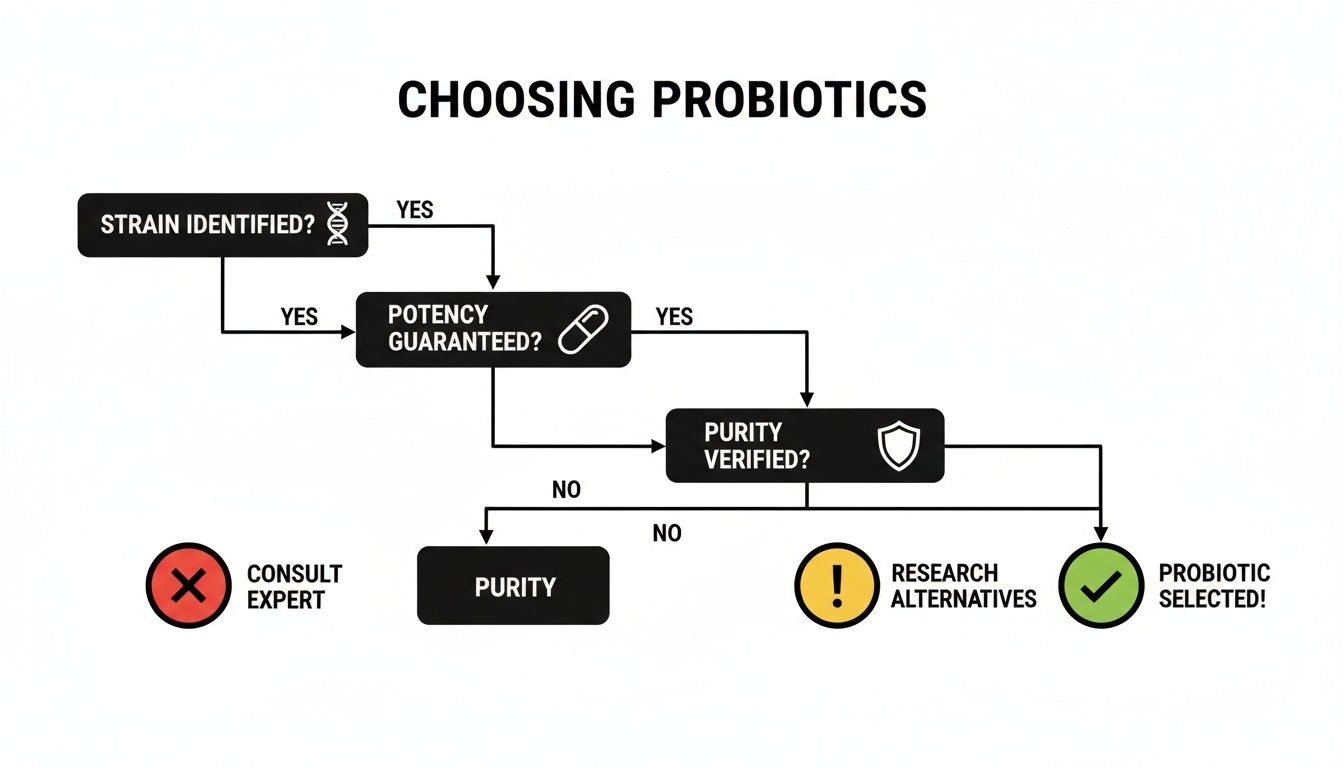
As you can see, a great choice starts with clearly identified strains, has the strength to be effective, and comes with proof of its quality and safety.
1. Garden of Life Raw Probiotics for Women
Garden of Life is a major player in the supplement space for a reason, and their Raw Probiotics for Women is a perfect example of why. This isn’t just a probiotic; it’s a powerhouse, packing a staggering 85 billion CFU from 32 different probiotic strains. It’s one of the most diverse formulas you can find.
It goes way beyond basic gut health by including strains specifically for vaginal support, like Lactobacillus reuteri and Lactobacillus fermentum. They also add a “Yogurt and Kefir” blend plus a fruit and veggie blend, which provide natural prebiotics to feed all those good bacteria. It’s a true whole-food approach to supplementation.
One reviewer shared: “I’ve struggled with bloating for years, and this is the first probiotic that has made a noticeable difference. My digestion feels smoother, and I just feel more balanced overall. I also appreciate that it’s raw and doesn’t require refrigeration.”
Best For: Women who want a high-potency, multi-strain formula for powerful, all-around support covering digestion, vaginal health, and immunity.
Pros:
- Extremely High Potency: A massive dose of 85 billion CFU in every serving.
- Diverse Strain Profile: With 32 unique strains, it offers a very broad spectrum of benefits.
- Targeted Women’s Health Strains: Includes bacteria specifically selected for vaginal and urinary tract wellness.
- Whole-Food Ingredients: Contains a fruit and veggie blend that doubles as a food source for the probiotics.
Cons:
- Higher Cost: All those premium ingredients and the high CFU count mean it’s on the pricier side.
- Pill Size: Some people find the capsules a bit large and harder to swallow.


Click here to buy this product on Amazon.
2. Physician’s Choice Women’s Probiotic
Physician’s Choice takes a more targeted approach, proving that you don’t always need the highest numbers to get results. This formula delivers a solid 50 billion CFU from a blend of 6 specific strains, focusing on quality and proven efficacy. It features well-studied strains like Lactobacillus acidophilus La-14 and Lactobacillus plantarum Lp-115, both respected for their role in digestive and immune health.
One of its smartest features is the built-in prebiotic fiber blend from organic Jerusalem artichoke and chicory root. Think of it as packing a lunch for the probiotics, helping them set up shop once they arrive in your gut. The delayed-release capsules are another critical touch, protecting the live cultures from destructive stomach acid.
Best For: Women looking for a balanced and affordable daily probiotic for gut, vaginal, and urinary health without an overwhelming number of strains.
Pros:
- Clinically Studied Strains: It uses specific strains that have solid research behind them for women’s health.
- Integrated Prebiotics: The formula includes organic prebiotic fibers to help nourish the good bacteria.
- Delayed-Release Technology: Acid-resistant capsules give the probiotics a much better chance of reaching your intestines alive.
- Third-Party Tested: Verified for purity and potency, which gives you essential peace of mind.
Cons:
- Fewer Strains: With just six strains, it’s not as diverse as some of the powerhouse formulas out there.
- Potential for Initial Gas: For some people, the prebiotic fiber can cause a bit of temporary gas or bloating when they first start.
3. Culturelle Women’s Healthy Balance
Culturelle is a household name for a reason—they focus on science and get straight to the point. Their Women’s Healthy Balance formula is a perfect example. Instead of throwing dozens of strains at the wall to see what sticks, it zeroes in on a smart blend of the world’s most-studied probiotic, Lactobacillus rhamnosus GG, combined with four other strains known to dominate a healthy vaginal microbiome.
This makes it an absolute standout for women who want to focus on vaginal health. Clocking in at 15 billion CFU, this probiotic is designed to work with your body to maintain a healthy bacterial balance, which in turn helps keep pH levels in check and wards off common frustrations like yeast infections and BV.
A verified buyer noted: “After dealing with recurring issues for months, my doctor recommended I try a probiotic with specific strains for vaginal health. I chose Culturelle, and it has been a total game-changer. I feel so much more comfortable and balanced.”
Best For: Women whose primary goal is to support and maintain vaginal health and a healthy pH balance, with the added bonus of digestive and immune support.
Pros:
- Highly Targeted Formula: It laser-focuses on the five most important strains for vaginal wellness.
- Clinically Proven Strains: Features the legendary Lactobacillus rhamnosus GG strain, backed by hundreds of studies.
- Once-Daily Convenience: Just one simple capsule a day makes it incredibly easy to stick with.
- From a Trusted Brand: Culturelle is one of the most recognized and respected names in the game.
Cons:
- Lower CFU Count: At 15 billion CFU, it’s not as potent as some of its competitors.
- Narrow Focus: It’s fantastic for vaginal health, but might not be the heavy hitter you need for more serious digestive issues.
4. Renew Life Women’s Care Probiotic
Renew Life brings another high-potency contender to the table, delivering a formidable 90 billion CFU from 12 diverse strains. This formula was clearly designed with women’s urinary and digestive health in mind, with a heavy emphasis on the Lactobacillus strains needed to maintain a healthy vaginal environment.
The delayed-release capsules are key here, acting like a shield to get the delicate probiotics safely past the stomach’s acid bath. Renew Life also guarantees its CFU count all the way to the expiration date—not just at the time it was made—which speaks volumes about the formula’s quality and stability.
It’s no surprise that women are a huge part of the probiotic market, projected to be 41.85% of all consumers by 2025. This growth is driven by the real-world success of strains like Lactobacillus crispatus in helping reduce recurrent UTIs, a condition that affects millions of women. You can discover more insights about these probiotic market trends here.
Best For: Women who are dealing with recurrent urinary tract issues or need serious digestive support from a high-potency, multi-strain formula.
Pros:
- Very High Potency: A powerful 90 billion CFU dose for a significant impact.
- Guaranteed Potency: You get the full CFU count through the expiration date, which isn’t always the case.
- Urinary Health Focus: The blend of strains is specifically geared toward supporting the urinary tract.
- Delayed-Release Capsules: These protect the live cultures from stomach acid, ensuring they get where they need to go.
Cons:
- Requires Refrigeration: To maintain that guaranteed potency, this one has to live in the fridge, making it less ideal for travel.
- Premium Price Point: The high CFU count and quality formulation come with a higher price tag.
5. OLLY Probiotic + Prebiotic Gummy
If you’re someone who just can’t stand swallowing another pill, OLLY has you covered. These peach-flavored gummies are a tasty and surprisingly effective alternative. They contain 500 million CFU of Bacillus coagulans, a tough, spore-forming strain that’s famously good at surviving the harsh journey through the gut.
They also include a dose of prebiotic fiber to help those good bugs thrive. While the CFU count looks low compared to capsules, Bacillus coagulans‘s natural resilience means it’s highly effective even at smaller doses. This is a genuinely fun and easy way to support your daily digestive health.
Best For: Anyone who prefers gummies to capsules and is looking for a gentle, daily boost for their digestive system.
Pros:
- Great Taste and Texture: Let’s be honest, a tasty peach gummy is more appealing than a pill.
- Resilient Strain: The spore-forming Bacillus coagulans is naturally built to survive stomach acid.
- Includes Prebiotics: It has Fructooligosaccharides to serve as fuel for the beneficial bacteria.
- No Artificial Flavors or Colors: Made with natural ingredients and is gluten-free.
Cons:
- Lower CFU Count: With 500 million CFU, this isn’t the right choice for tackling severe digestive or vaginal health concerns.
- Contains Sugar: As a gummy, it comes with 2 grams of sugar per serving.
6. Wholesome Wellness Women’s Raw Probiotic
When it comes to sheer power, Wholesome Wellness takes the crown, packing an almost unbelievable 100 billion CFU into every serving. With 34 different strains, this is an incredibly diverse formula designed to do it all. It’s formulated with a three-in-one blend of probiotics, prebiotics, and digestive enzymes to help with everything from bloating and gas to immune support.
The formula also includes important strains for women’s health like Lactobacillus gasseri and Lactobacillus jensenii, both tied directly to a healthy vaginal microbiome. As a raw, organic, and vegan product, it ticks all the boxes for those with specific dietary needs.
One user writes: “I’ve tried a dozen probiotics, and this is the only one that has made a real dent in my chronic bloating and digestive discomfort. The high CFU and strain diversity seem to be the key. I feel lighter and more energetic.”
Best For: Women looking for the highest potency and maximum strain diversity available to address a wide range of health goals at once.
Pros:
- Highest CFU on This List: An enormous 100 billion CFU for truly powerful support.
- Extensive Strain Diversity: With 34 strains, it offers the widest possible range of benefits.
- Includes Digestive Enzymes: These help your body break down food and absorb nutrients more effectively.
- Organic and Vegan: Made with clean ingredients that fit a variety of dietary lifestyles.
Cons:
- Potential for Overwhelm: A dose this high might be too intense for someone brand new to probiotics.
- Cost: As you’d expect from such a potent and complex formula, it’s a premium-priced product.
7. Garden of Life Dr. Formulated Probiotics for Women
This is another winner from Garden of Life, this time developed by Dr. David Perlmutter, a neurologist and renowned expert on the human microbiome. It offers a solid 50 billion CFU from 16 distinct probiotic strains, with a special focus on Lactobacillus reuteri and Lactobacillus fermentum for vaginal health.
What really makes this one stand out is its “once daily,” shelf-stable convenience—no refrigeration required. This is a huge plus for busy women or anyone who travels. It’s a reliable, science-first probiotic that’s easy to stick with. The addition of organic prebiotic fiber ensures those beneficial bacteria have the fuel they need to do their job.
Best For: Women who value convenience and want a shelf-stable, expert-formulated probiotic for daily maintenance of gut, vaginal, and immune health.
Pros:
- Expertly Formulated: It was created by a leading microbiome expert, Dr. David Perlmutter.
- Shelf-Stable and Convenient: You can throw it in your bag without worrying about refrigeration.
- Strong Vaginal Health Support: Includes specific strains that research has shown can support a healthy vaginal microbiome.
- Organic Prebiotic Fiber: Comes with acacia fiber to nourish the probiotics.
Cons:
- Moderate Strain Count: While very well formulated, it doesn’t have the sheer number of strains as some other premium options.
- Slightly Higher Price for Convenience: You pay a little extra for the shelf-stable technology compared to some refrigerated brands.
The Winning Product
After carefully weighing all our top contenders, Garden of Life’s Raw Probiotics for Women ultimately earns our top spot.
While other products on this list offer fantastic, targeted support, the Raw Probiotics formula delivers an unparalleled trifecta: extreme potency (85 billion CFU), incredible strain diversity (32 strains), and a whole-food philosophy that even includes natural prebiotics. It provides the kind of comprehensive, heavy-duty support that addresses not just digestive wellness, but also the specific vaginal and immune health needs unique to women. Its thoughtful, powerful formulation makes it the most versatile and effective choice for anyone serious about investing in their overall health.
Frequently Asked Questions About Women’s Probiotics
Q: How long does it take to feel the effects of a probiotic?
A: It really depends on the person and the benefit you’re looking for. For digestive issues like bloating, many people start to feel a difference within the first 1-2 weeks. For benefits tied to vaginal or immune health, you’ll want to give it at least 4-8 weeks of consistent use. It takes time for the new bacteria to colonize and create a meaningful shift in your microbiome.
Q: Can I take probiotics with other supplements or medications?
A: For the most part, yes. Probiotics are generally safe to take with other supplements. The main thing to watch out for is antibiotics. If you’re on an antibiotic, make sure to take your probiotic at least two hours apart from your medication, otherwise the antibiotic will just wipe out the good bacteria. And as always, it’s smart to check with your doctor before starting a new supplement, especially if you have a compromised immune system or are on other prescriptions.
Q: Are there any side effects?
A: When you first start, it’s possible to have some minor, temporary side effects like a little gas, bloating, or an upset stomach. This is usually just a sign that the new bacteria are getting to work and rebalancing your gut. These symptoms almost always go away within a few days as your body gets used to the change.
Understanding Key Probiotic Strains for Female Health
Let’s move past the product marketing for a moment and get to what really matters: what’s inside the capsule. Think of a probiotic label like a team roster. Each individual strain is a player with a very specific position and job to do. Knowing who these players are helps you match the right supplement to your personal health goals.

This kind of targeted approach is why the probiotics market is booming. It was valued at USD 76.59 billion in 2025 and is on track to hit USD 114.95 billion by 2030. The vast majority of that growth—a full 81.4%—is driven by human probiotics, as more and more of us understand the powerful connection between our gut and overall well-being. Learn more about the rapid growth in the probiotics industry.
The Vaginal Health Guardians
A healthy vaginal microbiome isn’t random; it’s actively maintained by specific bacteria, primarily from the Lactobacillus family. These are your body’s frontline defenders. They work by producing lactic acid, which keeps the vaginal pH low and creates an unwelcoming environment for troublemakers like yeast and bad bacteria.
Here are the key players for vaginal health:
-
Lactobacillus rhamnosus: This is a superstar when it comes to preventing recurring UTIs. It’s incredibly good at sticking to the walls of the vaginal and urinary tracts, forming a living, protective shield.
-
Lactobacillus reuteri: Think of this one as your microbiome’s bouncer. It’s known for producing antimicrobial compounds that help fight off the pathogens responsible for bacterial vaginosis (BV), keeping the delicate ecosystem in balance.
-
Lactobacillus crispatus: Often seen as the gold standard of a healthy vaginal microbiome. When this strain is abundant, it’s strongly associated with a lower risk of BV, yeast infections, and even some STIs.
The Digestive Health Heroes
Of course, probiotics do more than support vaginal health. Certain strains are absolute masters at improving gut comfort and function. They’re your best allies against frustrating issues like bloating, gas, and irregularity.
“Increasing probiotic intake through the diet as well as supplements may help manage symptoms associated with PCOS by restoring the natural balance of the microbiome.” – Tala Ajmi, Nutritionist
This expert insight shows just how profound the ripple effects of a balanced gut can be, even influencing conditions like PCOS.
These are the digestive champions to look for:
-
Bifidobacterium lactis: This is a true “bloat buster.” It has a fantastic track record for improving stool consistency and transit time, bringing welcome relief from constipation and general discomfort.
-
Lactobacillus acidophilus: Probably the most famous probiotic strain, and for good reason. It’s a workhorse for overall digestion and helps you absorb more nutrients from your food. It also doubles as a key immune ally in your gut.
-
Lactobacillus plantarum: A remarkably versatile strain known for its ability to calm gut inflammation. This makes it particularly helpful for anyone with a sensitive digestive system, as it can significantly reduce gas and bloating.
Once you learn to spot these key names on a label, you’re no longer guessing. You’re making an informed choice for your body.
Common Questions About Women’s Probiotics
Alright, so you’ve picked out a probiotic. But once the bottle is in your hand, the practical questions start popping up. Let’s walk through some of the most common things people wonder about when they’re getting started.
What Is the Best Time of Day to Take Probiotics?
This is a great question, and the answer usually comes down to the capsule technology. If your probiotic is in a delayed-release or acid-resistant capsule, you have a lot of flexibility. The capsule does the hard work of protecting the bacteria, so you can take it whenever you’ll remember it most consistently.
For standard capsules, however, timing matters a bit more. The goal is to get those beneficial microbes past the harsh acid of your stomach. Taking them about 20-30 minutes before a meal, or even with a light meal, can act as a buffer, giving them a much better shot at surviving the trip to your intestines where they get to work.
How Long Until I Notice a Difference?
This is where a little patience goes a long way. Probiotics aren’t a quick fix; they’re about gradually shifting your body’s microbial landscape. While some women feel a welcome change in bloating or digestion within the first 1-2 weeks, the more profound benefits take time to build.
- For digestive health, you might be one of the lucky ones who notices a difference fairly quickly.
- For vaginal or urinary health, you really need to give it 4-8 weeks of daily use. That’s how long it generally takes for the right strains to colonize and build up a strong, protective presence.
- For immune support, the effects are more subtle and are built over several months of consistent intake.
Think of it like tending a garden. You can’t just throw seeds on the ground and expect a full bloom the next day. You have to water them consistently and give them time to sprout, grow, and flourish.
Are Probiotics Safe During Pregnancy?
For many women, taking the right probiotic during pregnancy is not only safe but can be incredibly helpful for both mom’s gut health and the baby’s developing microbiome. But this is one area where you absolutely want to be cautious.
During pregnancy or while breastfeeding, it is essential to talk with your doctor or a registered dietitian before starting any new supplement. They can point you toward specific strains that have been studied and proven safe for this critical time. For a deeper dive, you can review our guide on the best probiotics to consider while pregnant.
What Are the Possible Side Effects?
When you first start taking probiotics, you’re introducing a whole new crew of bacteria to your gut’s established community. It’s normal for there to be a brief “settling in” period.
Some common, temporary side effects you might notice include:
- A bit of extra gas
- A temporary feeling of fullness or bloating
- Minor changes in your bowel habits
Don’t be alarmed! This is usually just a sign that your microbiome is adjusting. These symptoms should fade within a few days to a week. If they feel severe or don’t go away, simply stop taking the supplement and have a chat with your healthcare provider.