
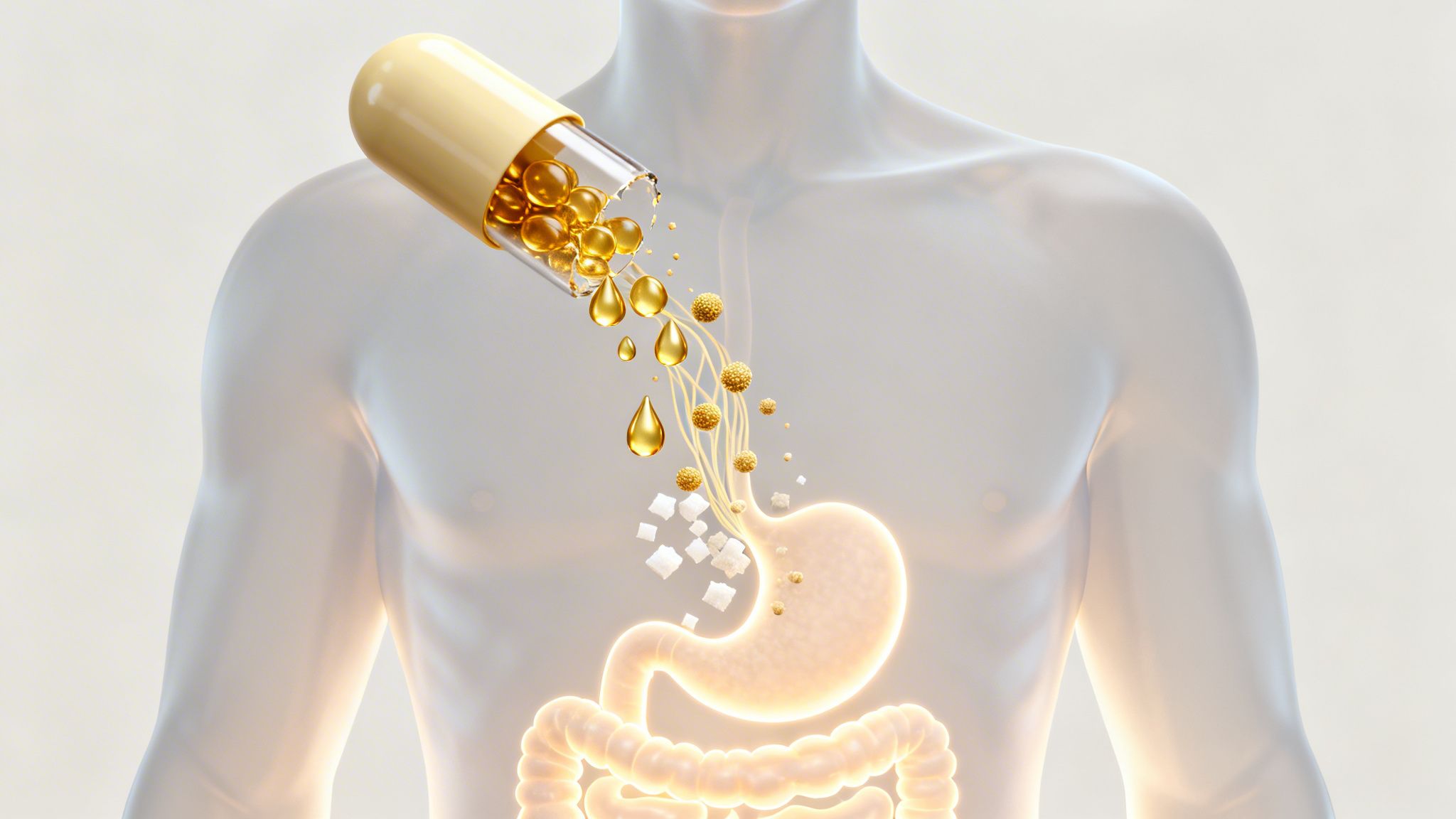
That post-meal bloating, gas, and general discomfort is an all-too-common story. If you’re tired of feeling like your food is just sitting there, you’ve probably wondered what is the best digestive enzyme to finally get some relief. The truth is, for most people, a well-rounded, broad-spectrum formula is the perfect place to start.
Your Guide to Finding the Best Digestive Enzymes
Turning a great meal into a miserable afternoon is no way to live. So, let’s get to the bottom of what’s going on and find the right digestive support to help you feel your best.
At their core, digestive enzymes are the unsung heroes of your gut. Think of them as a highly efficient assembly line crew, where each worker has a single, crucial task: to break down the fats, proteins, and carbohydrates in your food. This process turns large food molecules into tiny nutrients your body can actually absorb and use.
Why You Might Need Enzyme Support
Our bodies are designed to produce these enzymes naturally. However, things like aging, persistent stress, or even just our modern diets can cause our internal “assembly line” to slow down. When you don’t have enough workers on the job, food doesn’t get processed properly, leading directly to those familiar digestive complaints.
That’s where a well-formulated supplement steps in to fill the gaps. And you’re not the only one looking for a solution; the global digestive enzyme market is projected to hit an incredible $2.12 billion by 2030. This surge reflects a growing awareness of just how critical gut health is for our overall well-being.
“Digestive enzymes are not just for people with diagnosed conditions. For many, they are a key to unlocking better nutrient absorption and ending daily discomfort.” – Dr. Alana Biggers, M.D.
We’ve spent countless hours sifting through the options to bring you the best of the best. The table below gives you a quick snapshot of our top picks, each with its own standout qualities. You can also see how these fit into the bigger picture with our guide to the best supplements for overall digestive health.
Top 7 Digestive Enzyme Supplements at a Glance
Here’s a quick summary of our top picks, their primary benefits, and who they are best suited for. This should help you quickly narrow down the best option for your specific needs.
| Product Name | Best For | Amazon Rating |
|---|---|---|
| Enzymedica Digest Gold | High-potency, comprehensive relief | 4.7 / 5.0 |
| Zenwise Health Digestive Enzymes | All-in-one enzyme + probiotic support | 4.5 / 5.0 |
| NOW Super Enzymes | Fat digestion and gallbladder support | 4.6 / 5.0 |
| Physician’s CHOICE Enzymes | Gut-soothing with added herbs | 4.5 / 5.0 |
| NewRhythm Digestive Enzymes | High-CFU probiotic combination | 4.5 / 5.0 |
| Ancient Nutrition Enzymes | Plant-based diets and fermented botanicals | 4.5 / 5.0 |
| MaryRuth’s Ultra Digestive Enzymes | Liquid form for easy absorption | 4.4 / 5.0 |
Each of these formulas has been carefully evaluated for its quality, ingredient profile, and customer feedback. Dive into our full reviews to understand the nuances of each one.
How Digestive Enzymes Work in Your Body
Imagine every meal you eat is a complex puzzle. Your body’s job is to take it apart, piece by piece, so it can actually use the nutrients locked inside. Digestive enzymes are the specialized tools it uses to do just that.
When you have all the right tools, digestion feels effortless. But if some of those tools are missing or not working properly, you’re left with undigested food that can cause gas, bloating, and general discomfort. Getting to know these enzymes is the key to figuring out what is the best digestive enzyme to get your system back on track.
The Three Main Digestive Powerhouses
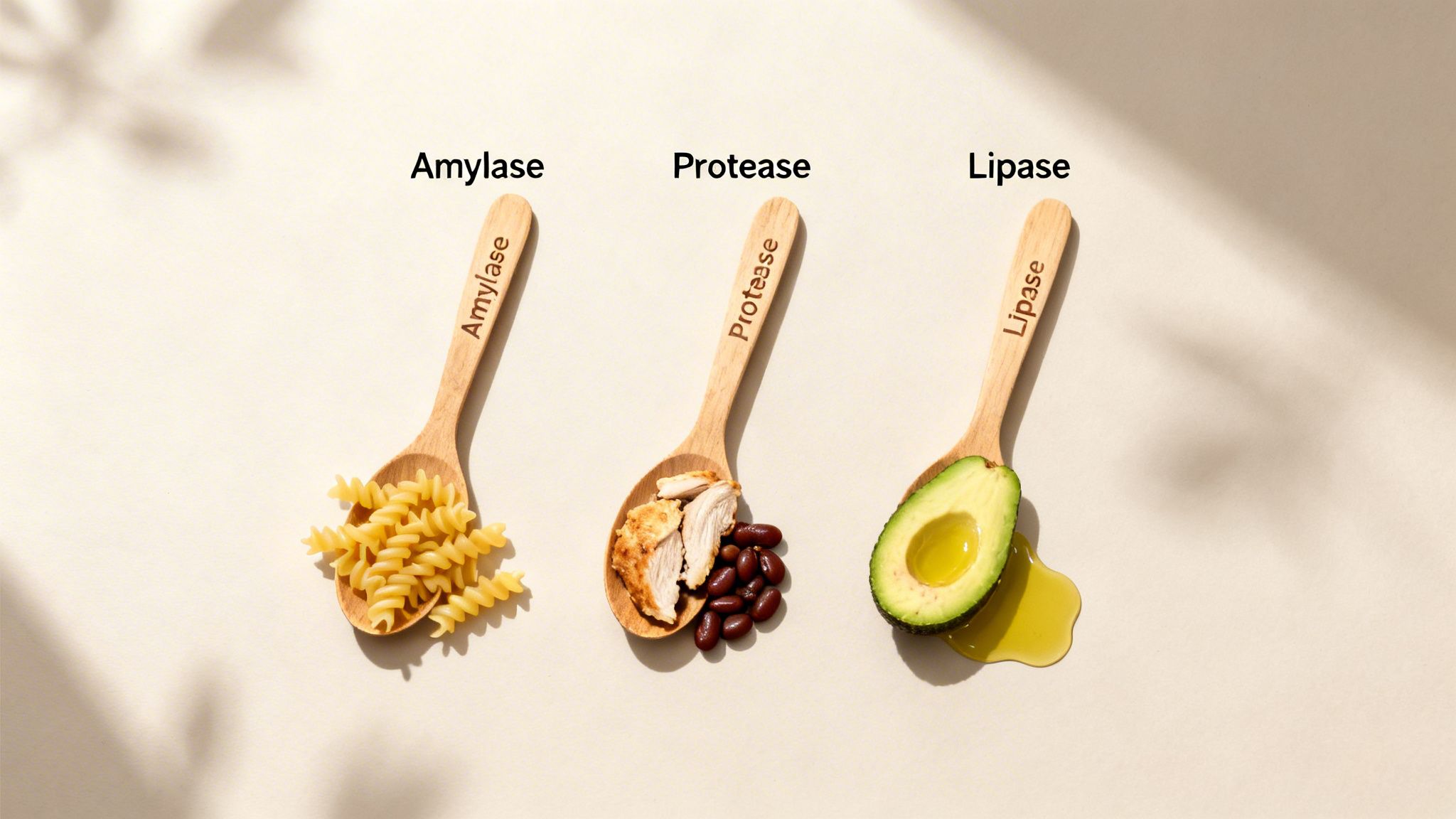
Your body makes a whole host of enzymes, but three specific types handle the bulk of the work. Each one is a specialist, targeting one of the three macronutrients in your food. Think of it like a lock and key—the amylase key won’t fit the protein lock.
-
Amylase (for carbohydrates): Found in your saliva and made by your pancreas, amylase gets to work on carbs immediately. It’s responsible for breaking down starches from bread, potatoes, and pasta into simple sugars that your body can easily absorb for energy.
-
Protease (for protein): This enzyme, produced mainly in the pancreas, has the tough job of dismantling large protein molecules from foods like meat, beans, and eggs. It snips them into smaller amino acids, which are the fundamental building blocks for everything from muscle tissue to hormones.
-
Lipase (for fats): Also hailing from the pancreas, lipase focuses exclusively on fats and oils. It breaks down the fats from foods like avocados, nuts, and cheese into fatty acids and glycerol. This process is crucial for producing hormones and absorbing essential fat-soluble vitamins.
A shortfall in any one of these can lead to tell-tale symptoms. For instance, if you feel gassy and bloated after a carb-heavy meal, you might be low on amylase. If you notice greasy or floating stools, a lipase deficiency could be the culprit.
The Specialized Support Crew
Beyond those big three, other enzymes step in to handle very specific, and often troublesome, foods. They act as a support crew to make sure nothing gets left behind.
“A full-spectrum enzyme supplement is like having a complete culinary team in your gut. It ensures every component of your meal is expertly handled, reducing the burden on your digestive system and maximizing nutrient absorption.”
Some of the most important supporting enzymes you’ll find in supplements include:
- Lactase: This is the enzyme you need to break down lactose, the sugar found in milk and dairy products. Its production naturally declines in many adults, leading to lactose intolerance.
- Cellulase: Humans don’t produce cellulase on their own. This enzyme is needed to break down cellulose, the fibrous material that makes up plant cell walls. Adding it helps your body extract more nutrients from fruits, vegetables, and whole grains.
- Bromelain and Papain: These are natural plant-based proteases sourced from pineapple and papaya, respectively. They provide an extra protein-digesting boost and are also known for their soothing properties in the gut.
When things like age, stress, or health conditions cause your own enzyme production to dip, a well-formulated supplement can step in to provide the reinforcements your digestive system needs.
The 7 Best Digestive Enzyme Supplements of 2026
Walking down the supplement aisle can feel overwhelming, especially when you’re staring at dozens of bottles that all promise digestive relief. To cut through the noise, we’ve dug into the research, formulas, and real-world feedback on today’s top sellers.
This guide will help you figure out what is the best digestive enzyme for you. We’ve broken down the top 7 supplements you can find on Amazon, spotlighting what makes each one stand out, who it’s best for, and where it might fall short.
1. Enzymedica Digest Gold + ATPro
When it comes to raw power, Enzymedica Digest Gold is often considered the gold standard. This is a maximum-strength formula designed for people who aren’t just dealing with a little post-meal bloating but are facing significant digestive struggles.
Amazon Review: “I have struggled with bloating and gas for years after almost every meal. Digest Gold was a game changer from day one. It’s expensive, but for me, the relief is worth every penny. I can finally eat a normal meal without feeling miserable afterward.”
Pros:
- High Potency: One of the most powerful and comprehensive enzyme formulas you can buy over the counter.
- Broad-Spectrum Activity: Thera-blend® enzymes work throughout the entire digestive tract for maximum breakdown of foods.
- Clean and Certified: It’s vegan, non-GMO, and certified by the Clean Label Project, so you know it’s free from contaminants.
Cons:
- High Cost: You’re paying for premium quality, and the price reflects that. It can be a significant monthly expense.
- Potentially Too Strong: If your digestive issues are mild, this high-octane formula might be overkill.
- No Probiotics: This is a pure enzyme supplement. If you also want microbiome support, you’ll need a separate product.
2. Zenwise Health Digestive Enzymes
Zenwise Health takes a different approach, bundling enzymes with prebiotics and probiotics. Think of it as a multitool for your gut—it doesn’t just help you break down your food, but also works to support the long-term health of your microbiome.
Amazon Review: “I love that this has enzymes AND probiotics. I used to buy two separate bottles, but this simplifies everything. My daily bloating has gone way down, and I just feel more ‘regular’ overall. It’s not the strongest enzyme out there, but it’s perfect for my everyday needs.”
Pros:
- Comprehensive Formula: It’s an all-in-one approach, combining enzymes, prebiotics, and probiotics for total gut support.
- Affordable: Compared to high-potency specialty brands, this supplement offers fantastic value for the money.
- Great for Maintenance: An excellent starting point for those with mild to moderate issues or anyone looking for daily support.
Cons:
- Lower Enzyme Potency: The enzyme strength isn’t as high as in products like Digest Gold, so it may not be enough for more severe cases.
- Probiotic Specifics: The label isn’t as detailed about the specific CFU counts for each strain as a dedicated probiotic would be.
3. NOW Super Enzymes
NOW Super Enzymes has been a trusted staple for years, and for good reason. Its secret weapon is ox bile, making it a go-to for anyone who struggles to digest fats—especially people living without a gallbladder.
Amazon Review: “After my gallbladder was removed, digesting any kind of fat was a nightmare. A friend recommended this because it has ox bile. It has completely changed my life. I take one with every meal, and I no longer have to fear eating foods with healthy fats.”
Pros:
- Contains Ox Bile: Provides exceptional support for fat digestion, which is a game-changer for people with gallbladder issues.
- Trusted Brand: NOW Foods has a decades-long reputation for quality, testing, and affordability.
- Cost-Effective: You get a powerful, specialized formula without the premium price tag.
Cons:
- Not Vegan-Friendly: Because it contains ox bile and pancreatin (from a pig source), it’s unsuitable for vegans or vegetarians.
- Can Cause Discomfort: The potent blend can sometimes cause mild stomach upset if not taken with a substantial meal.
4. Physician’s CHOICE Digestive Enzymes
Physician’s CHOICE stands out by adding a botanical twist to the enzyme-probiotic combo. The formula is built on a three-pronged strategy: break down food, support your microbiome, and actively soothe the gut lining with extracts of ginger and peppermint.
Amazon Review: “I bought this for the enzymes, but the added ginger and peppermint have been a pleasant surprise. It seems to calm my stomach down after eating, in addition to preventing the usual bloat. It feels gentle but effective.”
Pros:
- Soothing Herbal Extracts: The inclusion of ginger and peppermint provides an extra layer of gut-calming relief.
- Multi-Action Formula: You get the benefits of enzymes, probiotics, and soothing botanicals all in one capsule.
- Third-Party Tested: The brand is committed to transparency and has its products tested by independent labs for purity and potency.
Cons:
- Probiotic Count Not Specified: As with other combo products, the exact CFU count isn’t clearly broken down.
- Moderate Potency: While great for general wellness, the enzyme levels are moderate and might not be enough for those with diagnosed malabsorption.
5. NewRhythm Digestive Enzymes
If you’re looking for an answer to what is the best digestive enzyme that also packs a serious probiotic punch, NewRhythm’s formula is a top contender. It boasts a massive 20 billion CFUs per serving, aiming to actively support your gut microbiome while helping with digestion.
Amazon Review: “I was looking for a strong probiotic and decided to try this since it had enzymes too. The difference has been incredible. My digestion is smoother, and I have way less gas. The high CFU count really seems to make a difference.”
Pros:
- High Probiotic Dose: A whopping 20 billion CFUs is significantly more than you’ll find in most combination formulas.
- Targeted-Release Technology: This special capsule design boosts the survival rate of the probiotics through stomach acid.
- Excellent Value: For a high-CFU, dual-action supplement, the price is very competitive.
Cons:
- Enzyme Potency is Moderate: While the probiotic count is impressive, the enzyme blend itself is more of a standard, moderate strength.
- Potential for Probiotic Side Effects: If you’re not used to high-CFU probiotics, you might experience some temporary gas as your gut flora adjusts.
6. Ancient Nutrition Digestive Enzymes
Ancient Nutrition brings a unique, food-centric philosophy to its enzyme formula. It pairs 10 key enzymes with a soil-based probiotic and a blend of organic fermented botanicals like turmeric and ginger.
Amazon Review: “I chose this because I trust the brand and liked the idea of the fermented herbs. It’s gentle on my stomach and has helped me digest vegetables much better. I feel less ‘heavy’ after meals, and I appreciate the added anti-inflammatory ingredients like turmeric.”
Pros:
- Includes Fermented Herbs: The blend of turmeric, ginger, and other botanicals offers added gut-soothing and anti-inflammatory properties.
- Shelf-Stable Probiotic: Bacillus coagulans is a tough probiotic that doesn’t need to be refrigerated to stay effective.
- Good for Plant-Based Diets: Extra enzymes for breaking down plant fiber make it ideal for those eating lots of vegetables, legumes, and grains.
Cons:
- Enzyme Quantities Not Specified: The label doesn’t list the specific activity units (e.g., HUT, FIP) for each enzyme, making direct potency comparisons difficult.
- Lower Probiotic CFU: At 2 billion CFUs, the probiotic dose is on the lower side compared to other combo supplements.
7. MaryRuth’s Ultra Digestive Food Enzymes
For anyone who can’t stand swallowing pills, MaryRuth’s liquid enzymes are a breath of fresh air. This clean, straightforward liquid formula offers a full spectrum of plant-based enzymes in a format that’s easy to take and fast to act.
Amazon Review: “I hate taking capsules, so finding these liquid enzymes was a lifesaver. I just put a dropperful in a little water before I eat. It works fast, and I’ve noticed a big reduction in bloating. The taste is mild and very easy to take.”
Pros:
- Liquid Form: Perfect for kids, adults who have trouble with pills, or anyone who wants a faster-acting option.
- Clean and Simple Formula: Free from just about every common allergen and additive, a hallmark of the MaryRuth’s Organics brand.
- Easy to Dose: The dropper makes dosing flexible—you can easily adjust how much you take based on your meal.
Cons:
- Taste: It’s designed to be mild, but some people just don’t like the taste of liquid supplements, no matter what.
- Less Convenient for Travel: Carrying a glass bottle is more cumbersome and risky than throwing a bottle of capsules in your bag.
The Winning Product: Our #1 Pick
After weighing the strengths of all seven supplements, Zenwise Health Digestive Enzymes comes out on top as our overall winner. It strikes the perfect balance between effectiveness, comprehensive support, and outstanding value.
While Enzymedica’s potency is unmatched and NOW’s formula is a lifesaver for fat malabsorption, Zenwise is the ideal choice for the average person seeking reliable, daily digestive improvement. Its three-in-one blend of enzymes, prebiotics, and probiotics provides a holistic approach that builds better gut health over time.
For anyone new to this world and asking what is the best digestive enzyme to start with, Zenwise delivers a powerful, well-rounded, and budget-friendly solution that’s hard to beat.
How to Choose the Right Digestive Enzyme for Your Needs
Walking down the supplement aisle can be overwhelming, but picking the right digestive enzyme doesn’t have to be. Forget the marketing hype for a moment. The best approach is to listen to your body and learn how to read a supplement label like a pro.
It all starts with connecting the dots between what you eat and how you feel. If a big bowl of pasta leaves you feeling bloated and gassy, your body is likely struggling with carbohydrates, which points to a need for amylase. Or maybe rich, fatty foods—like a cheesy pizza or even healthy fats from avocado—sit like a rock in your stomach. That’s a classic sign you could use more lipase. By simply tracing your symptoms back to a specific food group, you’ve already done most of the work.
Understanding Enzyme Potency and Labels
Once you have an idea of what enzyme you need, the next step is figuring out how much. This is where most people get tripped up. When you look at an enzyme supplement, your eyes might go straight to the milligram (mg) weight. Ignore it. Instead, look for the enzyme activity units.
These are the strange-looking abbreviations you see next to each enzyme, like HUT (for protease), FIP (for lipase), or DU (for amylase).
Activity units measure an enzyme’s power, not its weight. A product with a lower milligram dose but higher activity units is always the more potent and effective choice. This is the single most important detail when comparing two different bottles.
The demand for high-quality enzymes is exploding. The U.S. market alone is expected to jump from $0.45 billion in 2025 to $0.68 billion by 2033. This growth means more options for us, but it also means we have to be smarter shoppers to find products that actually work.
This flowchart breaks down a simple way to vet your options and find a high-quality product.

Ultimately, finding the best enzyme supplement comes down to balancing three things: pure ingredients, high potency (activity), and good value.
Broad-Spectrum vs. Targeted Formulas
Finally, you’ll need to decide between a general-purpose blend or a more specialized formula. It really comes down to your specific needs.
-
Broad-spectrum formulas are your daily drivers. They contain a balanced mix of proteases, amylases, and lipases to provide all-around support for a varied diet. Think of them as a great starting point for general indigestion or bloating.
-
Targeted formulas zero in on a particular problem. If you know dairy is your enemy, a formula high in lactase is what you need. For those with confirmed fat malabsorption issues, a product fortified with ox bile can make a world of difference.
Of course, enzymes are just one tool in the digestive health toolkit. They often work even better when paired with other supportive supplements. If you’re looking to build a more resilient gut, check out our guide to the best probiotics for digestion, as the combination can create a powerful synergy.
Frequently Asked Questions (FAQs)
Starting a new supplement can bring up a lot of questions. Let’s walk through some of the most common things people ask about digestive enzymes, so you can feel confident and clear on how to make them work for you.
When is the best time to take digestive enzymes?
Timing is everything with digestive enzymes. For them to do their job properly, you need them in place before your food shows up. The sweet spot is taking your enzyme supplement about 10-20 minutes before a meal, or at the very least, with your first few bites. This gives the enzymes a head start, ensuring they’re ready and waiting in your stomach to get to work the moment food arrives. Taking them after you’ve already finished eating is not nearly as effective.
Are there side effects of taking digestive enzymes?
The good news is that most people handle digestive enzymes extremely well. When side effects do pop up, they’re usually minor and temporary, like a bit of nausea or cramping as your body adjusts. It’s always smart to start with a lower dose to see how you feel. If you have a known allergy to fruits like pineapple or papaya, check the label for enzymes like bromelain and papain. As with any new supplement, it’s crucial to chat with your doctor before starting.
Can I take digestive enzymes with probiotics?
Yes, absolutely. In fact, they make a fantastic team for supporting your gut. Think of them as having two different but very complementary jobs.
Digestive enzymes are the “breakdown crew,” helping turn your food into smaller, more absorbable nutrients. Probiotics are the “reinforcement crew,” adding beneficial bacteria to help restore balance to your microbiome.
Using them together creates a powerful, two-pronged approach to better digestion and a healthier gut environment. If you’re looking to combine them, our guide on the best probiotics for a leaky gut is a great place to start.
How quickly do digestive enzymes work?
You might be surprised by how fast you feel a difference. Many people notice less bloating, gas, or that heavy feeling after a meal the very first time they take them, often within 30-60 minutes. While that immediate relief is a huge plus, the real magic happens with consistent use. Sticking with your enzymes over several weeks can lead to more lasting improvements, like better nutrient absorption and a gut that just feels more resilient day-to-day.
At Healthy Gut Review, we’re committed to giving you clear, science-backed information to help you take control of your digestive health. We’re here to help you make choices that feel right for your body. Learn more at Healthy Gut Review.