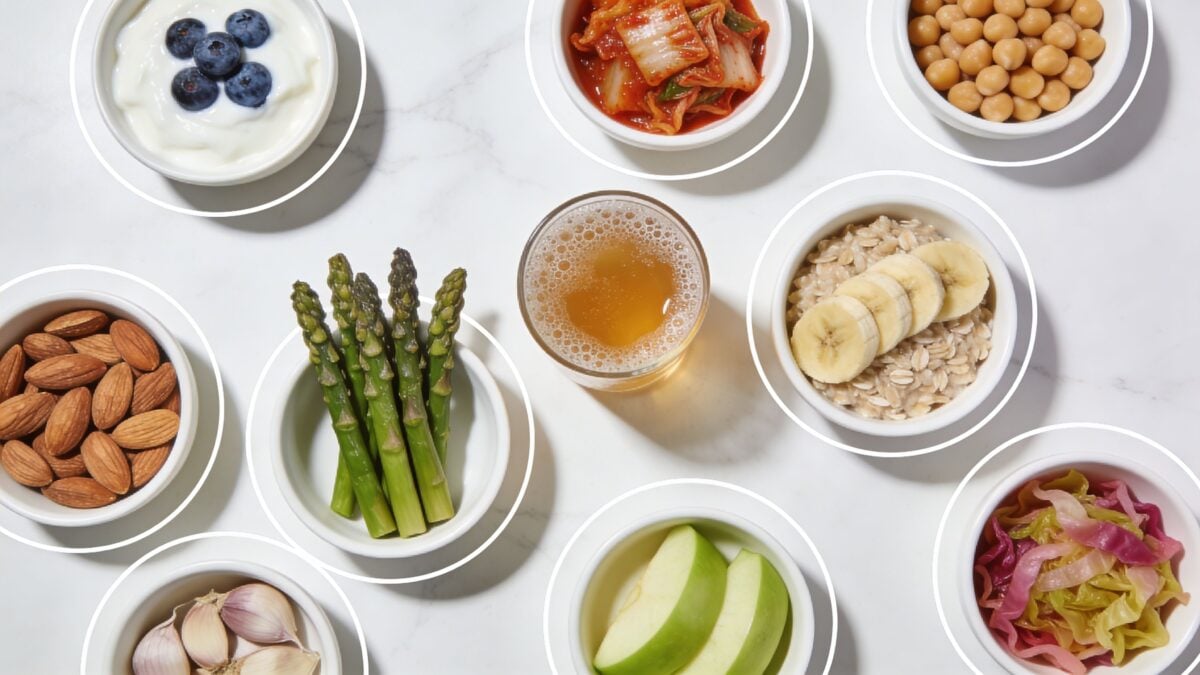

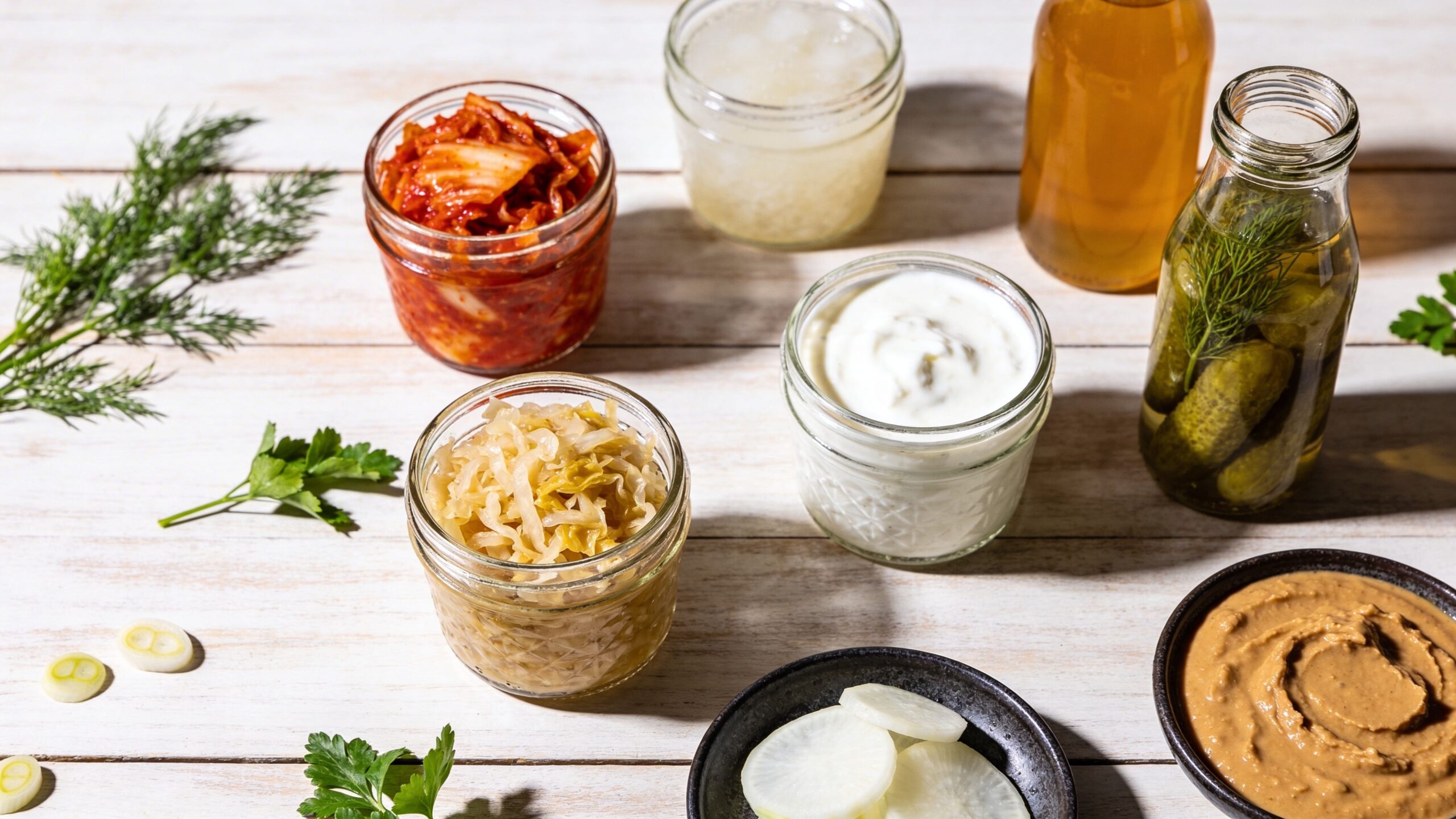
Research has shown measurable gut microbiome changes within 10 weeks of higher fermented food intake. That is a strong starting point, but it is not enough to decide what belongs in your fridge.
A good fermented foods list for gut health should rank foods by what matters in practice. Live culture diversity matters. So does whether a food is easy to buy, easy to tolerate, and realistic to eat often enough to make a difference. A spoonful of miso used daily can beat an ambitious jar of kimchi that gets opened once and forgotten.
This guide compares seven fermented foods head to head, not as food trends but as tools. Some offer broader probiotic variety. Some are easier for beginners. Some fit better for people dealing with reflux, histamine sensitivity, sodium limits, or pregnancy-related nausea. Those trade-offs shape results in real life.
I’m approaching this as a practitioner’s buying guide. You’ll see where each food is strong, where it falls short, and which option earns the best overall spot for gut health based on evidence, accessibility, and day-to-day use. If you want the broader gut health food evidence overview, that background helps, but this article is built to help you choose between the seven fermented foods people commonly buy.
1. Kefir The Probiotic Powerhouse
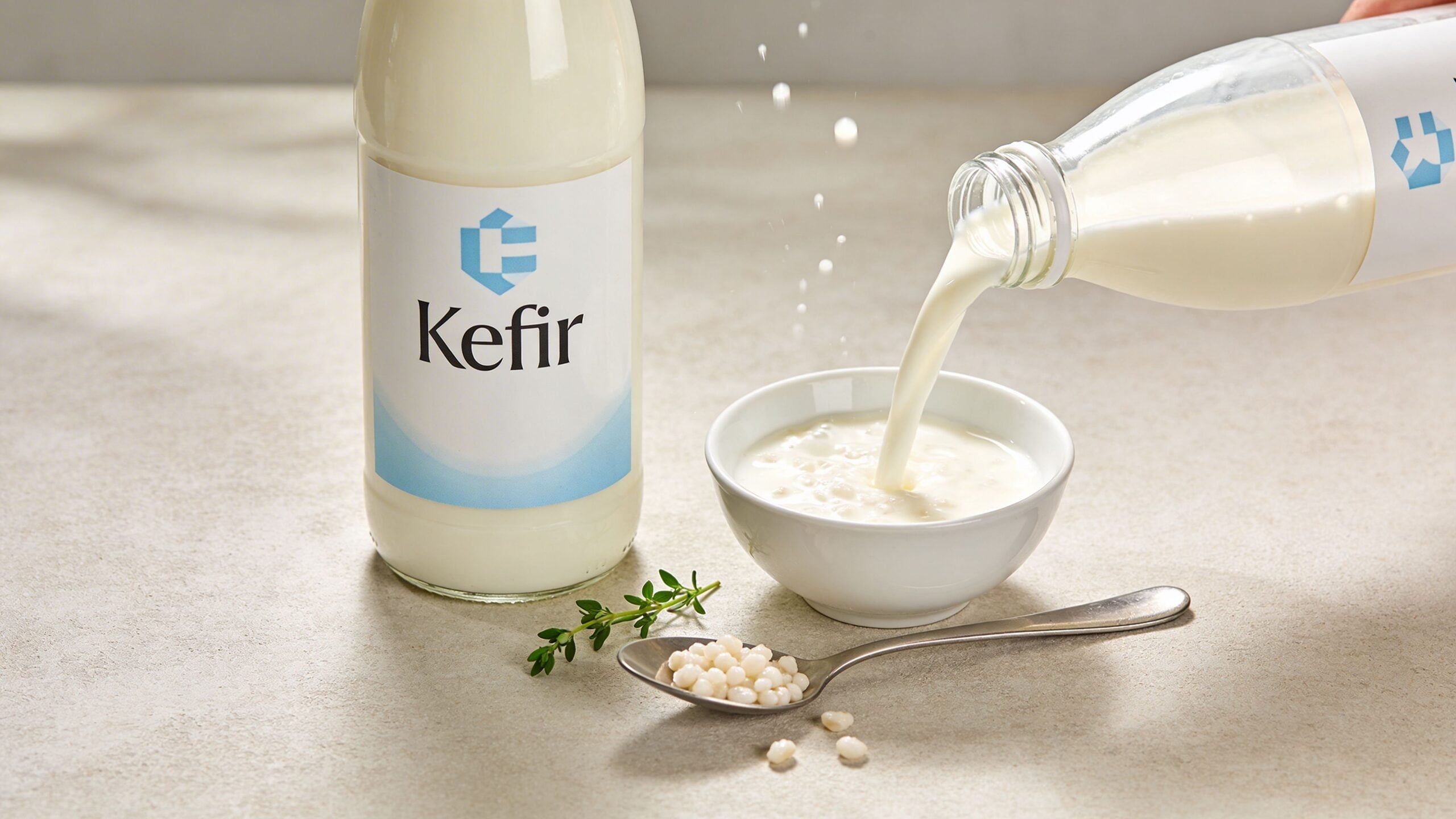
If I had to pick one fermented food for many individuals to start with, it would be kefir. It’s drinkable, easy to portion, and usually simpler to use every day than cabbage ferments or miso paste.
On Amazon, that often means looking for plain kefir from grocery delivery listings or shelf-stable starter cultures for home batches. For many households, a plain unsweetened kefir is the most practical buy because you can drink it straight, blend it into smoothies, or pour a small amount over oats.
Why kefir stands out
The strongest case for kefir is that it performed well within the broader fermented food pattern studied in the Stanford-led trial described earlier. The verified evidence also notes that kefir drove increases in Lactobacillus and Bifidobacterium populations by up to 40%, alongside reductions in pro-inflammatory Proteobacteria by 25% in that broader fermented-food context (Cell trial summary).
That matters in real life because kefir is one of the easiest ways to get live cultures into a rushed morning routine. A person who won’t consistently eat kimchi with lunch may still drink kefir with breakfast.
Practical rule: Buy plain first. Flavored kefir often turns into a sugar delivery system with a probiotic label attached.
There’s also a useful clinical angle here. Supporting randomized trials on individual foods showed kefir improving Helicobacter pylori eradication rates in lactose-intolerant patients and reducing symptoms in many cases, according to the verified data tied to the Cell summary. That makes kefir one of the few fermented foods on this list with both broad microbiome relevance and condition-specific digestive usefulness.
Pros and cons
- Best strength: Easy daily compliance. Drinking a small serving is easier than rebuilding your whole lunch around fermented vegetables.
- Big advantage: Often better tolerated than milk for people who struggle with lactose.
- Main downside: Some brands are sweetened, and sweetened kefir can work against the goal.
- Another drawback: Dairy-based kefir won’t suit everyone, though non-dairy versions exist.
A practical Amazon-style pick is plain kefir or kefir starter grains for people who want control over ingredients.
Best for: People who want the strongest overall combination of evidence, convenience, and probiotic breadth.
Not ideal for: Anyone who dislikes tangy dairy drinks or reacts poorly to histamine-rich foods.
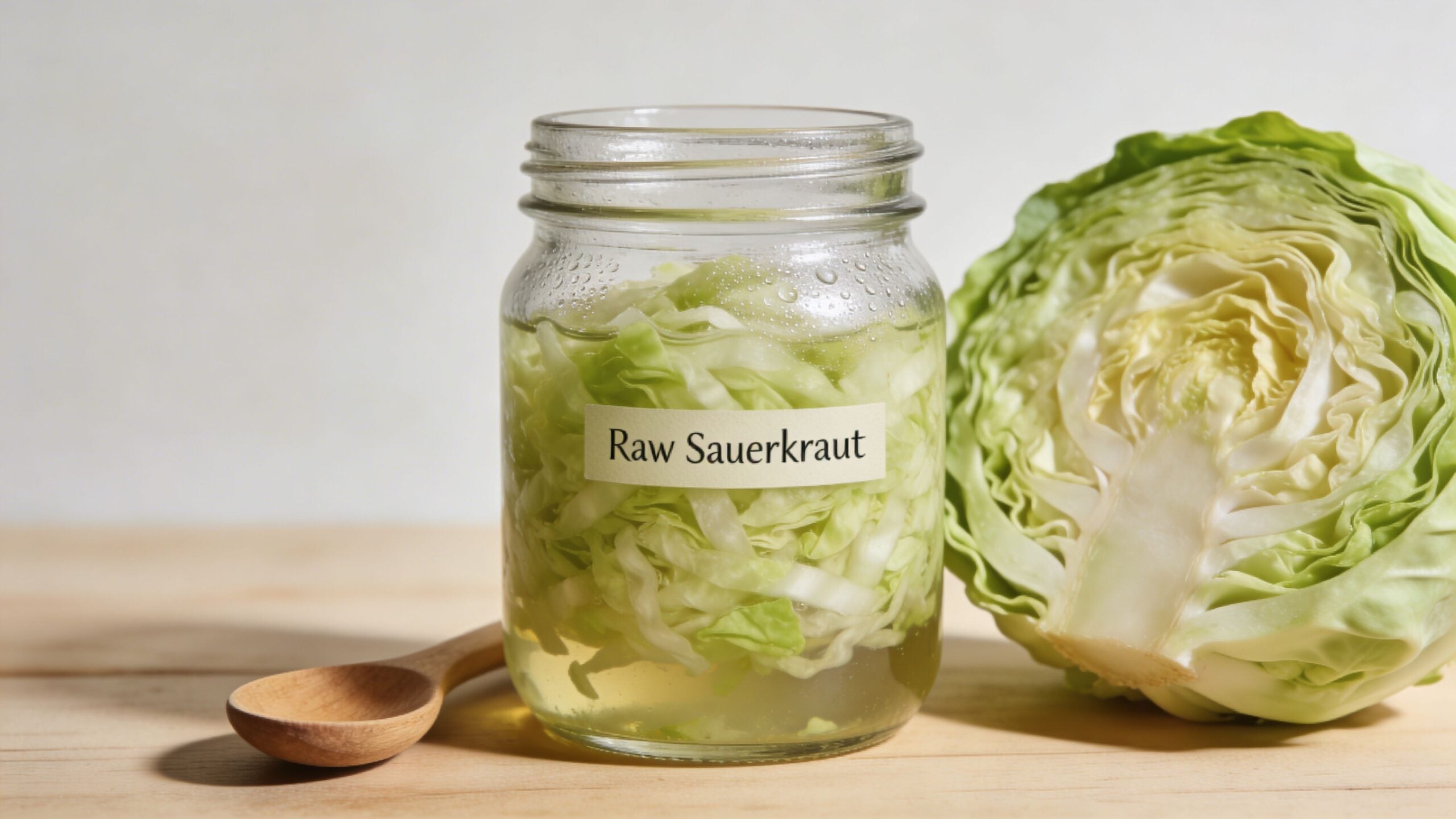
2. Sauerkraut The Classic Gut Healer
Sauerkraut is one of the cheapest, simplest fermented foods to use well. It’s also one of the easiest to buy badly.
A good Amazon option is refrigerated, unpasteurized sauerkraut from a real fermented-food brand. A bad option is shelf-stable vinegar-heavy “kraut” that behaves more like a condiment than a living food. If the product is canned, heat-processed, or loaded with preservatives, don’t expect much probiotic activity.
What works with sauerkraut
Sauerkraut shines because it’s low-effort. You don’t need a recipe. A forkful goes onto eggs, grain bowls, sausages, avocado toast, or a turkey sandwich. That’s what makes it sustainable.
The best use case is someone who wants to improve digestion without adding another drink or dairy product. A spoonful with meals is enough to make it part of a routine.
Add sauerkraut after cooking, not during it, if your goal is keeping the live cultures intact.
That’s also where many people get it wrong. They cook it into a hot skillet for ten minutes, then assume they ate a probiotic food. Flavor remains. Live microbes may not.
Pros and cons
- Best strength: Dead simple to use in savory meals.
- Good fit: Often works for dairy-free eaters who still want a fermented staple.
- Main downside: The taste is sharp. Some people love that. Some never adapt.
- Another drawback: Unpasteurized versions need refrigeration and can spoil if neglected.
There’s a pregnancy-specific caution worth stating plainly. The verified brief highlights safety gaps in mainstream content, including listeria concerns around unpasteurized ferments such as sauerkraut or kimchi, especially if handling and storage are poor. For pregnant readers, this is the kind of food that deserves extra label scrutiny and a clinician conversation, not automatic “health food” status.
A realistic buying approach is to choose plain sauerkraut with cabbage, salt, and traditional fermentation. Short ingredient lists usually signal a more straightforward product.
Best for: People who want a savory, dairy-free fermented food they can add to meals in seconds.
Not ideal for: Anyone who hates sour flavors or needs the gentlest possible option during nausea-prone periods.
3. Kimchi The Spicy Probiotic Kick
Kimchi earns its place because it does more than deliver a fermented hit. It brings flavor strong enough to change a meal, which is why people often eat it more consistently than milder ferments.
On Amazon, the better options are refrigerated kimchi from Korean or fermentation-focused brands, not shelf-stable novelty jars. Vegan versions are also widely available if you want to avoid fish sauce.
Where kimchi has an edge
Kimchi works best for people who get bored with “healthy foods.” It has heat, acid, garlic, ginger, and crunch. That means it can replace heavier sauces and still make food satisfying.
The verified data gives kimchi a meaningful scientific foothold. In obese patients over 8 weeks, kimchi increased Actinobacteria, which was negatively correlated with body fat reduction of 5 to 8%, and it shifted Bacteroides/Prevotella ratios in a favorable direction, according to the verified evidence set tied to the Cell summary. That doesn’t make kimchi a weight-loss hack. It does make it one of the more biologically interesting ferments on this list.
The trade-offs people ignore
Kimchi is not for everyone. Spice can trigger reflux. Garlic can be rough during IBS flares. Histamine-sensitive people sometimes feel worse, not better.
That doesn’t make kimchi bad. It means the right fermented foods list for gut health has to include tolerability, not just theory.
- Best strength: Strong flavor makes it easier to eat regularly.
- Good fit: Excellent for rice bowls, eggs, stir-fries, and grain bowls.
- Main downside: Spice and acidity can aggravate GERD or sensitive stomachs.
- Another drawback: Some brands include added sugar or unnecessary fillers.
A common real-world win is replacing part of a heavy dinner side with kimchi. People often find that easier than forcing down a glass of kefir they don't enjoy.
If reflux is active, test kimchi in very small amounts with lunch, not at night.
For buyers comparing products, refrigerated jars with recognizable ingredients usually make the most sense. If you need a milder path, start with white kimchi or a less spicy brand before jumping into the hottest version available.
Best for: People who want a high-impact, high-flavor fermented food they’ll crave.
Not ideal for: Anyone with active reflux, histamine sensitivity, or pregnancy-related aversion to spicy foods.
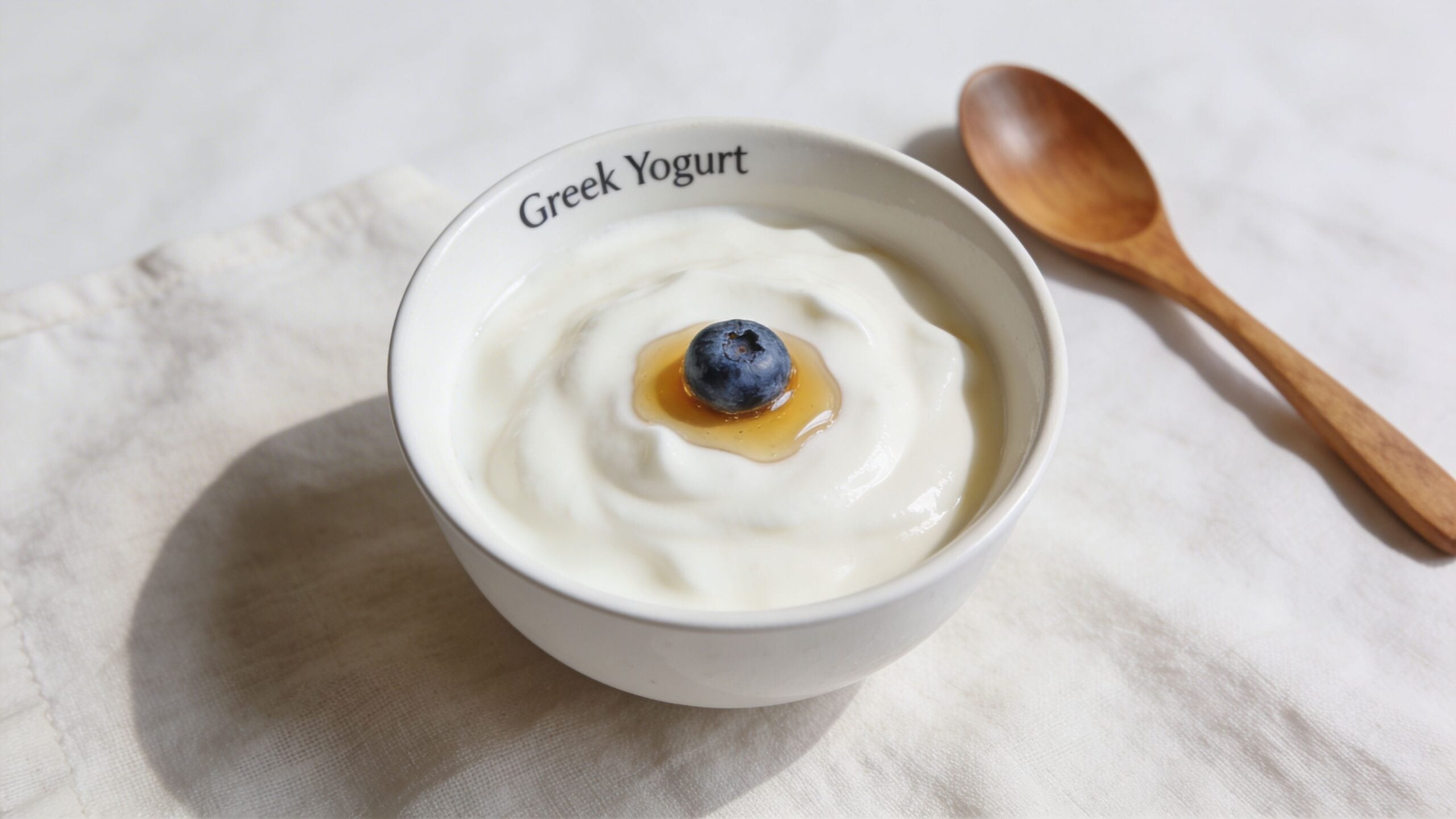
4. Greek Yogurt The Accessible Protein-Probiotic Combo
Greek yogurt earns its place in this head-to-head list for one reason. People consistently eat it.
That matters. A fermented food with a slightly weaker culture profile can outperform a theoretically better option if it becomes part of breakfast five days a week instead of sitting unopened in the fridge. Greek yogurt rarely wins on probiotic diversity, so it is unlikely to take the best overall title in this article. It does compete extremely well on accessibility, protein, and consistency.
A practical buy is plain Greek yogurt with live and active cultures, minimal ingredients, and no added sugar. Full-fat and low-fat versions can both work. The better choice depends on appetite, calorie needs, and how satisfying the food feels in a real routine.
Why Greek yogurt stays near the top
Greek yogurt is one of the easiest fermented foods to use daily without changing how you eat. It works at breakfast, as a snack, or as a base for sauces and dips. That flexibility gives it an edge over ferments that only fit one kind of meal.
It also solves a common nutrition problem. Many fermented foods deliver small amounts of protein or are used as condiments. Greek yogurt gives you a meaningful protein serving plus live cultures in the same bowl, which makes it more useful for satiety and meal planning than sauerkraut, kimchi, or miso.
For readers trying to match food and supplement timing, this guide on best time to take a probiotic can help you decide whether yogurt fits better with breakfast or another meal.
Where it loses points in this comparison
Greek yogurt is strong. It is not the strongest ferment on this list for gut health.
In practice, it usually offers a narrower range of microbes than kefir. That is the main reason kefir remains ahead in the race for best overall. Greek yogurt also varies a lot by brand. Some products are strained and cultured well. Others are loaded with sugar, thickeners, or flavorings that make them closer to dessert than a gut-supportive staple.
Dairy tolerance is the other real trade-off. Some people do well with cultured dairy and find yogurt easier to digest than milk. Others still get bloating, congestion, or stomach discomfort, especially with larger servings.
- Best strength: Easy to use consistently, which matters more than hype.
- Good fit: High-protein breakfasts, simple snacks, dips, and savory sauces.
- Main downside: Many flavored cups add enough sugar to cancel the “healthy” halo.
- Another drawback: It still does not work for everyone with lactose issues or dairy sensitivity.
For families, Greek yogurt is often the simplest entry on the list. One tub can cover breakfast bowls, a quick after-school snack, and a marinade or dip at dinner. That kind of repeat use is why it ranks well in accessibility, even if it does not beat kefir on microbial range.
Best for: Beginners, busy families, and anyone who wants a fermented food that fits normal meals without much effort.
Not ideal for: People avoiding dairy or those who want the broadest probiotic diversity from a single food.
5. Tempeh The Plant-Based Probiotic Protein
Tempeh solves a problem many plant-based eaters run into. They can find fiber easily, but fermented, savory, protein-rich foods are harder to make routine.
On Amazon, tempeh often appears through grocery delivery, refrigerated brands, or pantry-friendly starter kits for home fermentation. A plain organic soy tempeh is usually the best starting point because flavored versions can be heavily salted or overly sweet.
Why tempeh deserves more respect
Tempeh is one of the smartest buys on this list for vegans and for people who want a substantial meal component, not just a side spoonful of fermented vegetables.
The verified brief also highlights an underserved angle that matters in practice. It argues that over-relying on dairy ferments ignores vegan tempeh’s prebiotic and probiotic combination, and that tempeh may be a safer option for histamine-sensitive pregnancies than some other fermented choices. That’s not a reason to self-prescribe during pregnancy, but it is a useful reminder that “best” depends on the person in front of you.
Pros and cons
- Best strength: Delivers protein and fermentation in one whole-food package.
- Good fit: Easy to cube, pan-sear, bake, or crumble into bowls and tacos.
- Main downside: It requires cooking skill. Badly prepared tempeh tastes bitter and dry.
- Another drawback: Soy isn’t a fit for everyone.
For parents or families exploring food-based gut support instead of jumping straight to pills, this broader resource on best probiotic for kids can help frame where fermented foods fit and where they don’t.
A common success pattern with tempeh is marinating it after a quick steam, then crisping it in a pan. That softens the earthy edge many first-time buyers dislike.
Tempeh works when you treat it like a dinner protein, not like a health-food side project.
Best for: Vegans, vegetarians, and anyone who wants a filling fermented food with real meal value.
Not ideal for: People who want grab-and-go convenience or who don’t tolerate soy.
6. Miso The Umami-Rich Digestive Aid
Miso is the quiet workhorse of this list. It doesn’t get the hype of kombucha or kimchi, but it’s one of the easiest fermented ingredients to use repeatedly if you cook at home.
The best Amazon buys are unpasteurized miso pastes from Japanese brands or natural-food brands that keep ingredients simple. White miso is milder. Red miso is stronger and saltier.
Best use case for miso
Miso is for people who don’t want another snack food or beverage. A spoonful can turn broth, dressing, glaze, or marinade into something deeper and more satisfying.
It also works well for people easing into fermented flavors. A lot of readers who reject sauerkraut will happily eat a miso-ginger soup or miso-tahini dressing.
The main limitation is heat. If you boil miso aggressively, you still get flavor, but you may lose some of the “living food” appeal that draws people to fermented products in the first place. Stirring it into warm, not raging-hot, liquid is the better move when that’s your goal.
Pros and cons
- Best strength: Very versatile in savory cooking.
- Good fit: Great for dressings, broths, glazes, and noodle bowls.
- Main downside: Easy to overdo sodium if the rest of your diet is already salt-heavy.
- Another drawback: It’s an ingredient, not a ready-to-eat meal, so it demands some kitchen use.
Miso is also a good example of what doesn’t work in gut-health shopping. Buying a fermented food and never using it because you don't know what to do with it is worse than buying a simpler food you’ll use twice a week.
A practical dinner example is stirring miso into warm broth, then adding tofu, scallions, and cooked rice. Minimal effort. Good compliance. Better odds that the habit lasts.
Best for: Home cooks who want a fermented ingredient they can use in several ways.
Not ideal for: People who want a grab-and-eat probiotic food with no prep.
7. Kombucha The Fizzy Fermented Tea
Kombucha earns its place on this list for one reason. It solves a problem the other six foods usually do not. It gives adults a fermented option that can realistically replace soda, energy drinks, or sweet afternoon pick-me-ups.
That matters in a head-to-head comparison like this one. A fermented food is only useful if someone will consistently buy and drink it. Kombucha scores well on convenience and habit fit. It scores less well on strength of evidence and symptom tolerance, which is why it will not beat kefir or sauerkraut for best overall gut-health value.
What kombucha does well
Its biggest advantage is adherence. Someone who will never eat kimchi at lunch and has no interest in making miso broth may still drink a chilled, lightly tart kombucha a few times a week. In practice, that can make it more useful than a technically stronger option that sits untouched in the fridge.
It also works for people avoiding dairy. If yogurt and kefir are off the table, kombucha gives you a fermented beverage option that feels familiar and easy to use.
The trade-off is variability. Sugar content, acidity, flavorings, and live culture content differ a lot by brand. Lower-sugar, refrigerated products are the smarter place to start, and plain flavors usually tell you more about tolerance than fruit-punch versions with a long ingredient list.
Where kombucha falls behind
Kombucha has more hype than proof. As noted earlier, the evidence base is thinner than it is for kefir, yogurt, or traditional fermented vegetables. That does not make kombucha useless. It means expectations should stay realistic.
I also see more tolerance problems with kombucha than with several foods higher on this list. Carbonation can aggravate bloating. Acidity can flare reflux. Some people feel fine with a small serving and lousy with a full bottle.
Pregnancy is a clear caution point. Trace alcohol and inconsistent handling in some products make kombucha a poor choice there. It is also not my first pick for people with active nausea, histamine sensitivity, or a very reactive gut.
- Best strength: A practical fermented drink for adults trying to replace soda.
- Good fit: Useful for dairy-free shoppers who want a ready-to-drink option.
- Main downside: More likely to trigger bloating, reflux, or stomach irritation than several other foods on this list.
- Another drawback: The scientific support is weaker than for the top-ranked options.
Start small. A few ounces with food is a better test than chugging a whole bottle on an empty stomach.
Best for: Adults who want a fizzy fermented drink and tolerate acidity and carbonation well.
Not ideal for: Pregnancy, active reflux, frequent bloating, or anyone looking for the strongest evidence-backed probiotic food.
7 Fermented Foods for Gut Health Comparison
| Item | Complexity 🔄 | Resources & Availability ⚡ | Expected Outcomes 📊 | Ideal Use Cases 💡 | Key Advantages ⭐ |
|---|---|---|---|---|---|
| Kefir: The Probiotic Powerhouse | Moderate, requires kefir grains and 24–48h fermentation | Milk or water + reusable grains; refrigeration; widely available commercial options | ⭐⭐⭐⭐⭐ Very high probiotic diversity (30+ strains); supports digestion & immunity | Daily probiotic boost, smoothies, dressings, home fermentation | Highest strain diversity; nutrient-dense; often tolerated by mild lactose-intolerant |
| Sauerkraut: The Classic Gut Healer | Low, simple salt fermentation, few days | Cabbage + salt; very affordable; raw refrigerated versions common | ⭐⭐⭐⭐ Lactobacillus-rich; high fiber and vitamin C/K2; aids digestion | Condiment/side dish; gradual gut introduction; weight-management support | Cheap and easy to make; long refrigerated shelf life; high fiber |
| Kimchi: The Spicy Probiotic Kick | Moderate, multi-ingredient prep and fermentation | Napa cabbage/radish + spices; refrigerated authentic brands available | ⭐⭐⭐⭐ Ample lactic bacteria; vitamins and anti-inflammatory compounds; metabolic benefits | Flavorful side, rice bowls, stir-fries (added late); metabolic health support | Complex, dynamic flavor; versatile culinary uses; phytonutrient-rich (garlic, chili) |
| Greek Yogurt: The Accessible Protein-Probiotic Combo | Low, widely available commercially; home-making requires straining | Milk + starter cultures; many mainstream brands | ⭐⭐⭐⭐ High protein and calcium; moderate probiotic support (lower strain diversity) | Breakfast/snack, smoothies, substitute for sour cream; protein boost | High protein and familiar taste; widely accessible and affordable |
| Tempeh: The Plant-Based Probiotic Protein | Moderate, requires inoculation and controlled fermentation | Soybeans + starter; refrigerated; common in vegan aisles | ⭐⭐⭐ Plant-based complete protein; prebiotics and improved mineral bioavailability | Meat substitute in tacos, stir-fries, grilling for vegans/vegetarians | Complete protein and fiber; more digestible than many soy products |
| Miso: The Umami-Rich Digestive Aid | Low to High, store-bought easy; traditional production is long-term | Unpasteurized refrigerated miso for probiotics; shelf-stable pasteurized options exist | ⭐⭐⭐ Concentrated digestive enzymes and probiotics if unpasteurized; strong umami | Small daily servings (miso soup, dressings, glazes); flavor enhancer | Potent umami flavor; concentrated enzymes; long refrigerated shelf life |
| Kombucha: The Fizzy Fermented Tea | Moderate, requires SCOBY, fermentation hygiene and 7–14 day brew | Tea, sugar, SCOBY; many commercial refrigerated brands with varied sugar levels | ⭐⭐⭐ Variable probiotic content; provides organic acids, antioxidants and carbonation | Soda alternative, refreshing afternoon drink; taste variety | Fizzy, flavorful options; can replace sugary beverages; many flavor choices |
The Verdict The Best Fermented Food for Gut Health
Seven foods made the list. One stands above the rest if the goal is broad gut-health benefit with the fewest real-world barriers.
Kefir is the best overall fermented food for gut health.
That conclusion comes from a practical comparison, not hype. Across probiotic diversity, ease of use, availability, and the quality of the human evidence discussed earlier, kefir gives the strongest total package. It is one of the few options that works for busy mornings, low-effort routines, and people who want a fermented food they will use more than once.
Greek yogurt is still the easiest starting point for many shoppers. Sauerkraut is reliable and simple to add to meals. Kimchi brings more flavor and often a wider mix of fermentation compounds, but the heat and intensity can limit tolerance. Tempeh is the best pick for plant-based eaters who want meaningful protein. Miso earns its place as the most useful cooking ingredient. Kombucha can be a helpful swap for soda, but its probiotic content is less predictable.
Kefir wins because it performs well in every category that matters. It is easy to drink, easy to pair with breakfast, and easy to keep in regular rotation. That consistency matters. A fermented food only helps if it becomes part of the week instead of sitting in the fridge until it expires.
The evidence base also favors fermented foods as a category, as noted earlier, and kefir fits that pattern especially well because it is both biologically active and practical to consume regularly. In clinic-style nutrition work, that combination usually matters more than picking the most exotic product on the shelf.
Kefir does have limits. It is not the right choice for everyone with dairy intolerance, even though some people tolerate fermented dairy better than milk. Sweetened versions can add more sugar than expected. Taste matters too. Plain kefir has a tang that some people enjoy immediately and others need time to adjust to.
The Winner: Kefir
If someone asks me for one fermented food to start with, kefir is usually the answer. It covers the most ground with the least friction. Drink it plain, blend it into a smoothie, or use it with fruit, oats, or chia. No cooking required.
Honorable mentions
Best for vegans: Tempeh. It offers fermentation plus complete protein, which makes it more useful as a true staple food.
Best for flavor: Kimchi. People who love kimchi tend to keep eating it, and regular intake beats an ambitious plan that never becomes routine.
Best for beginners: Greek yogurt. It is familiar, widely available, and usually easier to accept than sour, fizzy, or spicy ferments.
One caution matters more than the ranking itself. The best fermented food is the one your body tolerates and your routine supports. Someone who drinks kefir four mornings a week will usually get more from that habit than someone who buys the best-rated kimchi and eats it once a month.
For many readers, the smartest approach is not choosing one food forever. It is building a short rotation. Kefir for breakfast. Sauerkraut or kimchi with lunch. Miso in soup or dressing. That gives you variety without making gut health feel like a full-time project.
Pregnancy, breastfeeding, IBS, GERD, histamine sensitivity, and post-infection gut issues can all change the best choice. In those cases, gentler and better tolerated options often beat the most aggressive fermented food on paper.
Start with a small serving. Choose products with live cultures and reasonable sugar levels. Then stay consistent.
Healthy Gut Review helps readers cut through gut-health hype with practical, evidence-based guides on fermented foods, probiotics, bloating, reflux, and family digestive wellness. If you want clearer product comparisons, better supplement guidance, and realistic advice you can use, visit Healthy Gut Review.