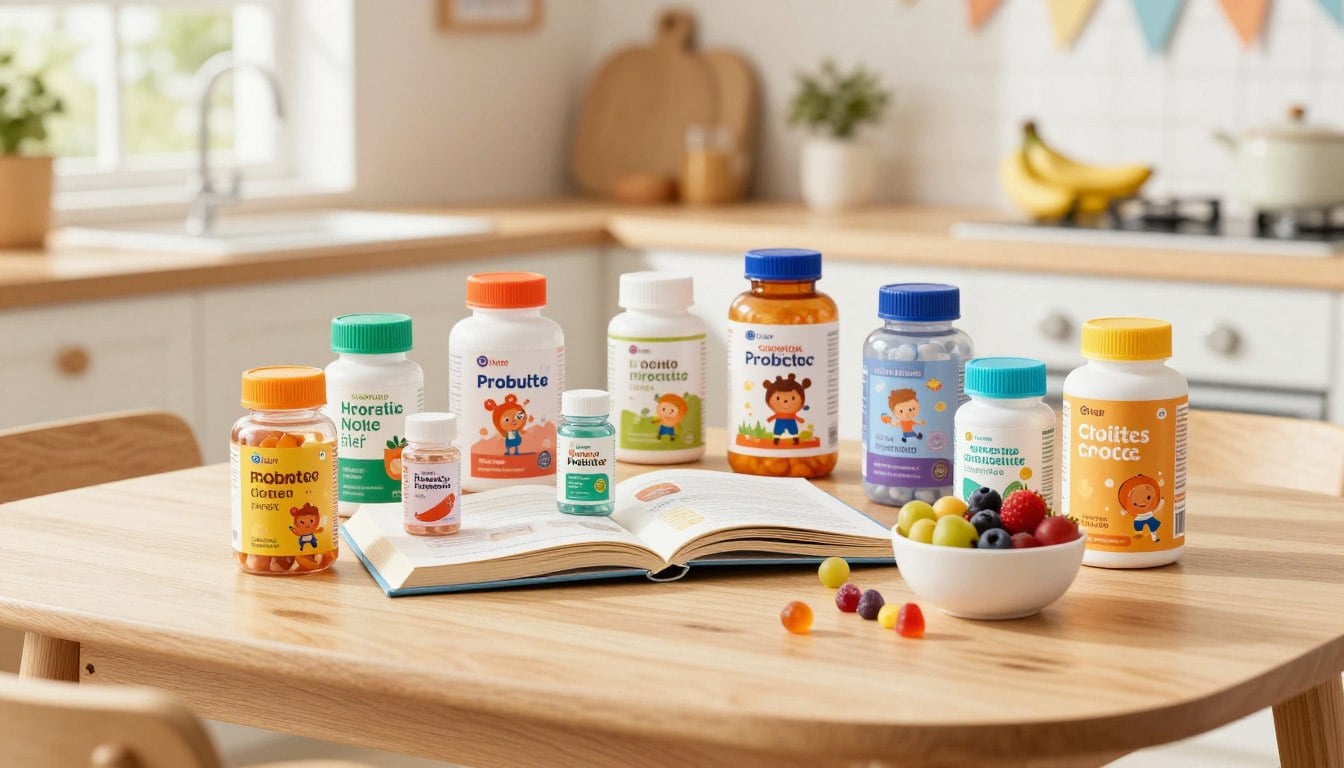


You’re in the supplement aisle, your toddler is squirming in the cart, and every bright bottle seems to promise the same thing: better digestion, fewer tummy troubles, stronger immunity, happier days. One says “kids probiotic.” Another says “daily gut support.” A gummy feels easier than a powder. It also feels safer, somehow, because toddlers like gummies.
That’s where many parents get stuck.
The hard part isn’t wanting to help your child. The hard part is figuring out whether probiotic gummies for toddlers are useful, which products are age-appropriate, and what to do if your child is only one or two years old and almost everything on the shelf says ages 3+.
Probiotics are live microorganisms, often called “good bacteria,” that can support the gut when the right strain is used for the right reason. But “probiotic” is a broad word. It’s a little like saying “dog” when you really need to know whether you’re dealing with a Chihuahua or a Labrador. Different strains do different jobs. Some have decent evidence for diarrhea during antibiotic use. Some have evidence for colic in specific situations. Many blends sold in gummies haven’t been tested in toddlers the way parents assume.
If you’re trying to sort hope from marketing, this guide will help. I’m going to walk through what probiotics do, how to read a gummy label, where the evidence is strongest, and why children under three deserve extra caution.
The Aisle of Anxiety A Parent's Introduction to Probiotics
A parent usually doesn’t start looking for probiotics out of curiosity. It’s usually because something feels off.
Maybe your toddler just finished antibiotics and now has loose stools. Maybe daycare germs seem endless. Maybe constipation has turned every diaper or potty attempt into a struggle. Or maybe you’ve heard another parent say probiotics “changed everything,” and you’re wondering if you’re missing something simple.
That’s the emotional pull of these products. They offer a small, manageable action at a time when parenting can feel full of guesswork.
At the simplest level, probiotics are helpful microbes that may support the balance of organisms living in the gut. They aren’t magic. They don’t replace food, sleep, hydration, or medical care. But in some situations, they can be useful tools.
What confuses parents is that the word “probiotic” gets used as if all products work the same way. They don’t. One gummy may contain a strain with evidence for diarrhea prevention during antibiotics. Another may contain a blend that sounds impressive on the front label but tells you very little about whether it has been studied in young children.
What matters most: the child’s age, the specific strain, the dose, and the reason you’re using it.
That’s especially important for toddlers. A four-year-old who can safely chew and follow directions is different from a one-year-old who still puts everything in their mouth and may not have good chewing skills. Yet the packaging can make those differences easy to overlook.
Parents don’t need more hype. They need a calm way to answer three questions:
- What is this supposed to help with
- Is this age group included
- Is gummy form the right choice for my child
Those questions are the backbone of a smart decision.
Your Toddler's Tummy A Thriving Garden Within
A toddler’s gut is easiest to understand if you think of it as a young garden.
Not a finished garden with mature trees and stable soil. More like a patch of earth that’s still being planted, fed, watered, and changed by the seasons. In the first years of life, the gut microbiome is still developing. Different microbes move in, some stay, some leave, and the overall balance shifts with diet, illness, medications, and growth.

What lives in the garden
Inside that garden are bacteria and other microbes that help with everyday jobs. They help break down parts of food, support the gut lining, and interact with the immune system. When parents hear that “gut health” affects more than poop, that’s what people mean. The gut is involved in digestion, immune function, and signals that influence comfort and behavior.
A healthy garden doesn’t mean every plant is identical. It means there’s enough balance for the whole system to work well.
That’s why antibiotics, stomach bugs, sudden diet changes, and low-fiber eating can throw things off. It’s like trampling a flower bed. The garden can recover, but it may need support.
Probiotics are the seeds and prebiotics are the fertilizer
In this analogy, probiotics are helpful seeds. They add selected microbes that may support the existing system.
Prebiotics are different. They’re more like fertilizer. They feed the helpful microbes already in the gut. Ingredients such as inulin or other fermentable fibers often play that role in supplements and foods.
Parents often mix these up, which is understandable. A probiotic adds microbes. A prebiotic feeds microbes. Some products contain both.
Here’s the practical version:
- Probiotic: adds a specific organism or strain
- Prebiotic: feeds beneficial gut organisms
- Synbiotic: combines both in one product
A gummy that contains a probiotic plus a prebiotic may sound stronger, but it still comes back to the same question: is that exact ingredient combination appropriate for your child’s age and reason for use?
Why the toddler years matter
The toddler years are a period of fast change. Diet expands. Exposure to other kids increases. Illnesses become common. Many children receive antibiotics at least once. All of that affects the gut environment.
A 2022 systematic review of 79 trials on probiotics and child growth found that in low- and middle-income countries, probiotics given to children under five led to a measurable increase in weight and height gain, while the effect was not observed in high-income countries. That doesn’t mean every toddler in every setting needs a probiotic. It does show that the gut microbiome can play a foundational role in growth and development, especially where nutritional gaps exist.
A toddler’s microbiome is still being built. That’s one reason the right support can matter, and also one reason parents should be careful with products that haven’t been well studied in very young children.
What helps the garden most
Parents sometimes assume supplements are the main event. Usually, they’re not. The daily basics do more of the heavy lifting.
- Varied foods: fruits, vegetables, beans, oats, and other fiber-rich foods help feed beneficial gut microbes.
- Routine eating: toddlers often do better when meals and snacks are predictable.
- Hydration: fluid helps the whole digestive system work more comfortably.
- Thoughtful antibiotic use: antibiotics are sometimes necessary, but they can also disrupt the gut microbiome.
A probiotic can be a tool. The garden still needs sunlight, water, and healthy soil.
Decoding Probiotic Gummies Strains CFUs and Other Ingredients
A probiotic gummy label often gives parents the feeling that they should be able to decode it in seconds. Then they turn the bottle over and see Latin names, giant numbers, and a long list of extras. For children under three, that confusion matters more, because many products were not designed with this age group in mind, and the research behind gummy formulas is thinner than many labels suggest.
Three label details deserve the closest look: the exact strain, the CFU dose, and the non-probiotic ingredients.
Strain is the first thing to check
The strain is the probiotic’s full identity. “Lactobacillus” or “Bifidobacterium” tells you the family. The strain tells you which member of that family was studied.
That matters because probiotics work more like named seeds in a garden than like one general “good bacteria” category. If a study found benefit from one seed, you cannot assume every seed in the packet will grow the same plant.
A good example is Lactobacillus rhamnosus GG, often called LGG. In a review of five randomized trials involving 445 children, LGG reduced antibiotic-associated diarrhea from 23% to 9.6%, with RR 0.48; 95% CI 0.26-0.89, according to this pediatric probiotic review on PMC. If a parent is hoping for the benefit seen in that research, the label should name the specific strain, ideally LGG ATCC 53103, rather than stopping at “Lactobacillus.”
Another strain parents may see is Limosilactobacillus reuteri DSM 17938. This one has evidence in a narrow setting, mainly for colic support in breastfed infants. That is very different from saying any product with “reuteri” on the bottle will help any fussy toddler.
For children under three, this is one of the biggest label-reading mistakes I see. Parents assume “a probiotic is a probiotic.” Research does not support that shortcut.
A quick guide to common evidence-backed strains
| Probiotic Strain | Primary Evidence-Based Use | What It Does |
|---|---|---|
| Lactobacillus rhamnosus GG | Support during antibiotic use | May help lower the chance of antibiotic-associated diarrhea when the studied strain and dose are used |
| Limosilactobacillus reuteri DSM 17938 | Colic support in breastfed infants | May reduce crying in a specific infant group when the exact DSM 17938 strain is used |
| Saccharomyces boulardii | Diarrhea support | Has pediatric evidence, but product form and age guidance matter |
| Bacillus coagulans | Commonly used in commercial products | Often chosen for shelf stability, though child-specific evidence still needs careful review |
A label that gives only species names is giving partial information. A full strain name gives you something you can compare with published studies.
What CFUs actually mean
CFU stands for colony-forming units. It is a count of how many live microorganisms are expected in a serving.
Parents often read CFUs the way they read sunscreen SPF or a vitamin percentage. The instinct is simple. Higher number must mean stronger product. With probiotics, that shortcut can mislead you.
Dose only means something when it matches a specific strain and a specific use. In pediatric research on probiotics used with antibiotics, one review found that taking probiotics alongside antibiotics reduced antibiotic-associated diarrhea by over 50%, with 8% incidence versus 19% in controls, and the benefit was more pronounced at doses over 5 billion CFUs per day according to the same pediatric probiotic review on PMC. That does not mean every toddler needs a high-dose product. It means the number on the bottle should connect to a studied reason for using it.
This point becomes even more important for children under three. A gummy may advertise billions of CFUs, but if the product is aimed at older children, the number alone does not make it a good match for a one- or two-year-old.
A useful rule for parents: a clearly named strain at a researched dose is more meaningful than a giant CFU number with vague labeling.
The ingredients beyond the probiotic
The microbes are only part of the product. The gummy base matters too.
A gummy works like a supplement wrapped inside a candy-like food. That means you are also choosing sweeteners, flavoring agents, texture ingredients, and sometimes colors or added fibers. For toddlers, especially those under three who are still learning chewing skills and building food habits, those extras deserve real attention.
When you scan the “other ingredients” list, check for:
- Sugar content, especially if the gummy would be used daily
- Artificial colors or flavors, if your family prefers to avoid them
- Allergens, such as gelatin or dairy-derived ingredients
- Prebiotics, which are fibers that help feed beneficial gut microbes already living in the gut
Prebiotics can be helpful, but they can also cause extra gas or bloating in some children. Parents are often surprised by that.
Why viability matters
A probiotic only helps if enough of it is still alive and active by the time your child takes it. Heat, moisture, time on the shelf, and packaging quality can all affect that.
This is one reason probiotic gummies can be tricky to judge. They are convenient and appealing, but convenience does not guarantee potency. A product should give clear storage instructions and, ideally, some sign of quality testing or manufacturing transparency.
If you are standing in the store wondering where to start, use this order:
- Check the age recommendation first
- Look for the exact strain name
- Match the CFU dose to a studied use
- Read the inactive ingredients carefully
- Look for quality control details
For parents of children under three, that first step matters most. An impressive label is not the same thing as evidence that a gummy was made or studied for your child’s age group.
Are Probiotic Gummies Truly Safe for Your Toddler
Safety is where parents deserve the most honesty.
For many healthy children, probiotics have a reassuring safety profile in studies. In the 2022 review of child probiotic trials cited earlier, researchers found no increased risk of adverse events across studies in the populations examined. That’s helpful background. But it does not answer the more specific question most parents of young toddlers are asking, which is whether probiotic gummies are a good choice for a child under three.

The under-three gap is real
This is the issue I wish more articles said clearly: most major probiotic gummy brands don’t target children under three.
A brand page for Align kids probiotic gummies reflects a broader pattern seen across major gummy products, where recommendations commonly start at ages 3 and up. That leaves parents of one- and two-year-olds with a real evidence gap. The problem isn’t that probiotics are automatically unsafe. The problem is that gummy formulas specifically for toddlers under three haven’t been studied enough for parents to assume they’re appropriate.
There are a few reasons for that caution.
- Chewing safety: gummies can pose a choking concern for younger toddlers, especially if they gulp foods or haven’t mastered thorough chewing.
- Dosing uncertainty: a gummy serving size may be designed for older kids, not a younger toddler’s needs.
- Formulation questions: what works well in a gummy matrix for an older child may not be ideal for a younger one.
If a label says 3+, take that seriously. It’s not just legal fine print. It often reflects the age group the company is willing to stand behind.
Common side effects and when to pause
Even in healthy kids, probiotics can sometimes cause mild short-term digestive changes. Parents may notice gas, bloating, or changes in stool pattern when starting a product. That doesn’t always mean the product is harmful. It may mean the gut is adjusting, or it may mean the product doesn’t agree with that child.
Stop and reassess if symptoms clearly worsen after starting a gummy.
Here are situations where I’d want a parent to check with a pediatrician before using probiotics, especially in gummy form:
- Immune compromise: children with weakened immune systems need individualized advice.
- Serious underlying medical conditions: especially GI disease, central lines, or major chronic illness.
- Swallowing or chewing concerns: if your toddler tends to stuff food, choke, or rush chewing.
- Persistent symptoms: ongoing diarrhea, blood in stool, weight concerns, recurrent vomiting, or severe constipation need medical evaluation first.
Safer doesn’t always mean gummy
Parents often pick gummies because toddlers like them. That makes sense. But “easier to give” isn’t the same as “best choice.”
For a child under three, many pediatricians may prefer other formats if a probiotic is appropriate, such as powders or drops, because those forms can be easier to dose and may avoid chewing concerns. The exact recommendation depends on the child, the goal, and the product.
That doesn’t mean gummies are bad. It means age matters more than marketing.
How to Choose and Use Probiotic Gummies Wisely
You are standing in the supplement aisle with a toddler in the cart, a box of antibiotics in your bag, and ten different probiotic gummies promising “digestive support.” The hard part is not finding a product. The hard part is knowing which details matter for a child under three, because that age group is often left out of product labeling and research.
If your child is old enough for a gummy and your pediatrician agrees it makes sense, use the label like a map, not an advertisement.

A parent’s buying checklist
Start with the question, “What problem am I trying to solve?” A probiotic used during antibiotics is different from a product marketed for everyday “immune” or “gut” support. Gut bacteria work more like specific seeds in a garden than a generic vitamin. The strain matters, the dose matters, and the child’s age matters.
Use this checklist as you compare products:
- Match the product to the goal: choose a product with evidence for the situation you are dealing with, not a broad promise on the front of the bottle.
- Check the age range first: for toddlers under three, this step matters more than flavor, price, or branding. If the label starts at age 3 or 4, do not guess.
- Look for a named strain: a full name such as Lactobacillus rhamnosus GG or Lactobacillus reuteri DSM 17938 tells you more than a vague blend.
- Review the CFU amount: more is not always better, but the label should tell you how much is in each serving.
- Read the inactive ingredients: added sugars, sugar alcohols, dyes, and sticky textures can matter in toddlers.
- Check storage instructions: some probiotics tolerate room temperature, while others lose potency if stored incorrectly.
- Look for manufacturing transparency: third-party testing, lot numbers, and clear contact information are reassuring signs.
If it helps to compare packaging and labels visually, this kid probiotic product image guide can make those differences easier to spot.
Timing matters more than many parents realize
One of the clearest situations where probiotics may help children is during a course of antibiotics. As noted earlier in the article, research has found that using probiotics alongside antibiotics can lower the chance of antibiotic-associated diarrhea, with stronger effects seen at higher daily doses.
That does not mean every toddler on antibiotics needs a gummy. It means timing should be deliberate. If your clinician recommends a probiotic, starting during the antibiotic course usually makes more sense than waiting until diarrhea begins.
A simple routine helps:
- Follow the product instructions and your pediatrician’s advice.
- Give it consistently for the period your clinician recommends.
- Ask how to separate it from the antibiotic dose. Spacing can vary by product and by clinician preference.
For toddlers under three, this is another place where gummies may fall short. A powder or liquid can be easier to dose precisely, especially if the gummy serving size assumes an older child can chew and swallow safely.
Watch your child’s response
A label can tell you what is in the bottle. It cannot tell you how your child will respond.
During the first few days, pay attention to what changes and what does not. Some parents notice stool changes. Others notice more gas, a new refusal because of texture, or a toddler who treats the gummy like candy and asks for more.
Here is what to monitor:
- Stool pattern: looser, firmer, more frequent, or easier to pass
- Comfort: new bloating, fussiness around meals, or signs of tummy discomfort
- Practical fit: whether your child can chew it well and take it safely
- Behavior: whether the taste turns it into a “treat” that creates battles or sneaking
Store probiotic gummies out of reach, just as you would any supplement or medication.
Know when to skip the gummy
Sometimes the best choice is no gummy at all.
Pass on products that hide the strain name, make sweeping promises, or blur the age guidance. Be especially cautious with products that seem designed for preschoolers and older kids but get discussed online for babies and younger toddlers anyway. For children under three, “marketed to kids” is not the same as “studied for this age.”
Trust specificity. A better label is usually a quieter one.
Beyond the Gummy Food-Based Probiotics and Natural Alternatives
A supplement can help in the right situation. It shouldn’t be the whole strategy.
For many toddlers, the better long-term question is not “Which gummy should I buy?” but “How do I support a healthy gut every day?” Food does much of that work.
Food first still matters
Some foods naturally contain live cultures. Depending on your child’s age, tolerance, and preferences, options may include plain yogurt, kefir, and some cultured dairy foods. These aren’t identical to a supplement with a studied strain, but they can still be part of a gut-friendly pattern.
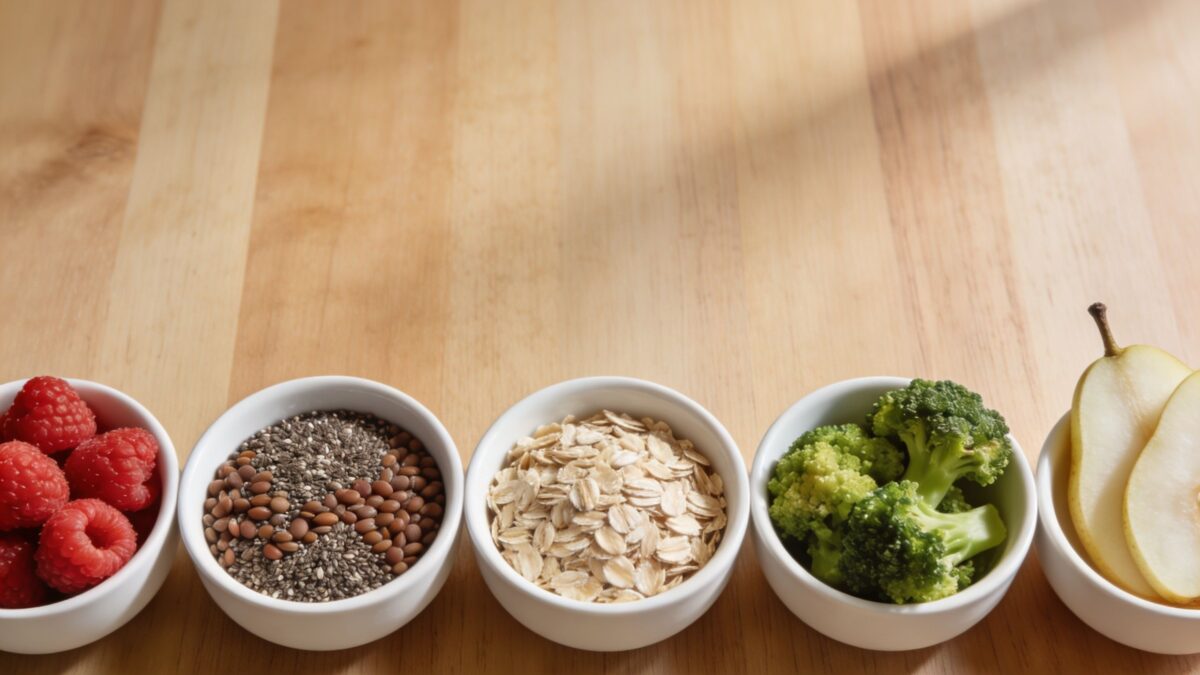
The bigger win often comes from feeding the microbes already in the gut. That means prebiotic-rich foods, which act like fertilizer in the garden analogy. Think bananas, oats, beans, and many fruits and vegetables. Parents who want practical ideas can browse a visual list of fiber-rich foods that support comfortable digestion.
Easy ways to use food with toddlers
Toddlers rarely sit down and say, “I’d love some fermented food now.” You usually have to make it ordinary.
Try simple pairings like:
- Plain yogurt with fruit
- Oatmeal topped with banana
- Smoothies with kefir if your child tolerates dairy
- Beans mixed into soups, rice, or mashed dishes
The goal isn’t perfection. It’s repetition. A toddler who rejects yogurt today may accept it next month in a different form.
A gummy can be a tool for a short-term need. A food pattern is what supports the gut over time.
When alternatives make more sense
This matters most for children under three. If you and your pediatrician decide a probiotic could help, a non-gummy form may be easier to dose and safer to give. Powders and drops also let you mix the product into food or a spoonful of puree, which can be less of a battle than asking a younger toddler to chew thoroughly.
That’s not exciting marketing. It is, however, often the more sensible path.
Parents sometimes feel disappointed when the answer isn’t a simple gummy. I’d rather they feel informed than misled.
Frequently Asked Questions About Toddler Probiotics
How long does it take to notice a benefit
It depends on why you’re using the probiotic.
If the goal is support during antibiotics, the effect is tied to that treatment window. If the goal is general digestive support, some parents notice changes within days, while others see no clear difference. That doesn’t mean you should keep going forever just in case. If you don’t see a meaningful benefit after a reasonable trial discussed with your pediatrician, it may not be the right product or the right situation.
Can my toddler take probiotics every day
Some children do use probiotics daily for a period of time, but daily use shouldn’t be automatic. The better question is why the probiotic is being used.
A clear reason is better than a vague routine. If your toddler is healthy, growing well, and has no specific digestive issue, food-based support may be enough. For longer use, ask your pediatrician whether the product, strain, and dose still make sense.
What if my toddler gets gas or bloating after starting one
Pause and look at the pattern.
Mild gas or bloating can happen when starting a probiotic, but if your child seems more uncomfortable, stops eating well, develops worsening diarrhea, or just seems “off,” stop the supplement and check in with your pediatrician. Parents know their child’s baseline better than any label does.
Are drops or powder better for toddlers under three
Often, yes. They can be.
For younger toddlers, especially one- and two-year-olds, non-gummy forms may be easier to give safely and more appropriate from a dosing standpoint. Gummies are often designed for older children. If you want a simple comparison point for timing and routine questions, this visual on when to take a probiotic can help frame the discussion with your pediatrician.
Should I use a probiotic for colic or fussiness
Only with care and only when the situation fits the evidence. Some strains have support for colic in specific groups, especially breastfed infants, but “fussiness” is not the same thing as true colic. If your child is crying excessively, refusing feeds, arching, vomiting often, or not gaining well, get medical guidance instead of trying to solve it with a supplement first.
Do probiotics replace treatment for constipation or diarrhea
No.
Constipation can involve diet, stool withholding, hydration, routine, and sometimes a medical plan. Diarrhea can result from infection, antibiotics, food intolerance, or other causes. A probiotic may be one part of care, but it doesn’t replace evaluation when symptoms are persistent, severe, or unusual.
What’s the single most important thing to remember
Match the product to the child.
That means the right age, the right strain, the right reason, and the right form. For children under three, parents should be especially careful because the biggest information gap in the market is exactly where many families need help most.
Healthy Gut Review helps parents sort through that confusion with clear, evidence-based guides on probiotics, digestive health, and kid-friendly gut support. If you want practical product comparisons and plain-English education before you buy anything, visit Healthy Gut Review.