
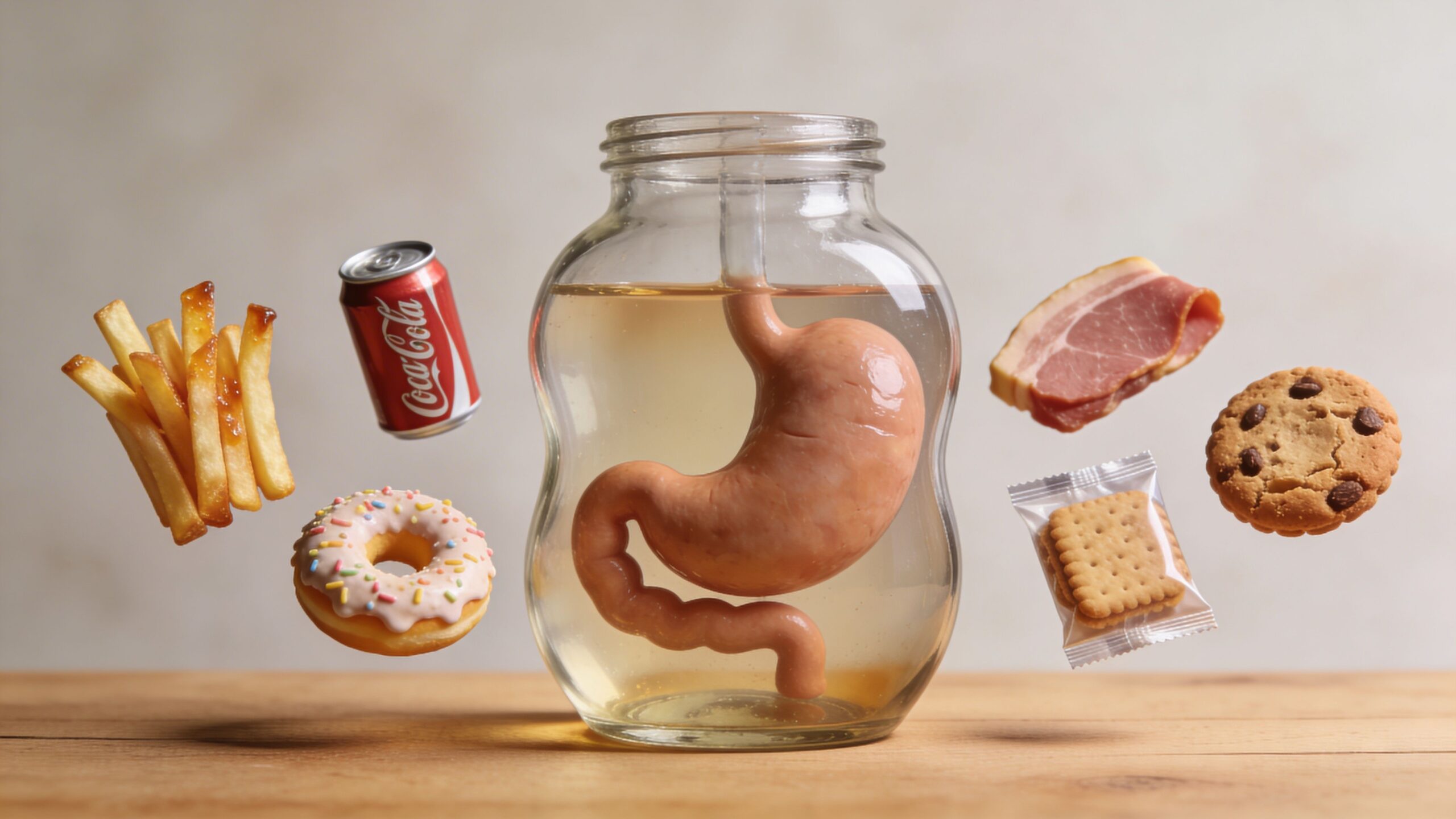
More than 3 million U.S. adults have inflammatory bowel disease, according to the CDC. Many more deal with day-to-day symptoms such as bloating, reflux, constipation, diarrhea, or urgency without a formal diagnosis. In practice, the foods that aggravate these problems are usually ordinary ones: packaged snacks, sugary drinks, fast food, alcohol, and heavily processed convenience meals.
Diet does not explain every gut problem, but it does shape the environment your gut has to work in. A 2023 review of 11 studies found a higher risk of inflammatory bowel disease with greater meat intake, including a 38% increase in risk for each additional 100 grams per day. That does not mean one meal causes disease. It means repeated exposure to certain foods can shift the microbiome, irritate the gut lining, and keep inflammation switched on in susceptible people.
I use a harm-reduction approach with patients because strict food rules often fail in real life. The better strategy is to identify the foods that do the most damage, understand how they cause trouble, replace them with options that are easier on the gut, and give the digestive tract enough time to settle. Some people notice less bloating within days. Changes in stool pattern, urgency, or post-meal discomfort often take longer and depend on what is driving the problem.
That is the framework for this guide. Each food category includes three things: the likely mechanism, realistic swaps, and the recovery pattern people commonly notice after cutting it back or removing it. Some items are broadly disruptive. Others mainly cause problems in sensitive people, at higher doses, or when they are prepared poorly.
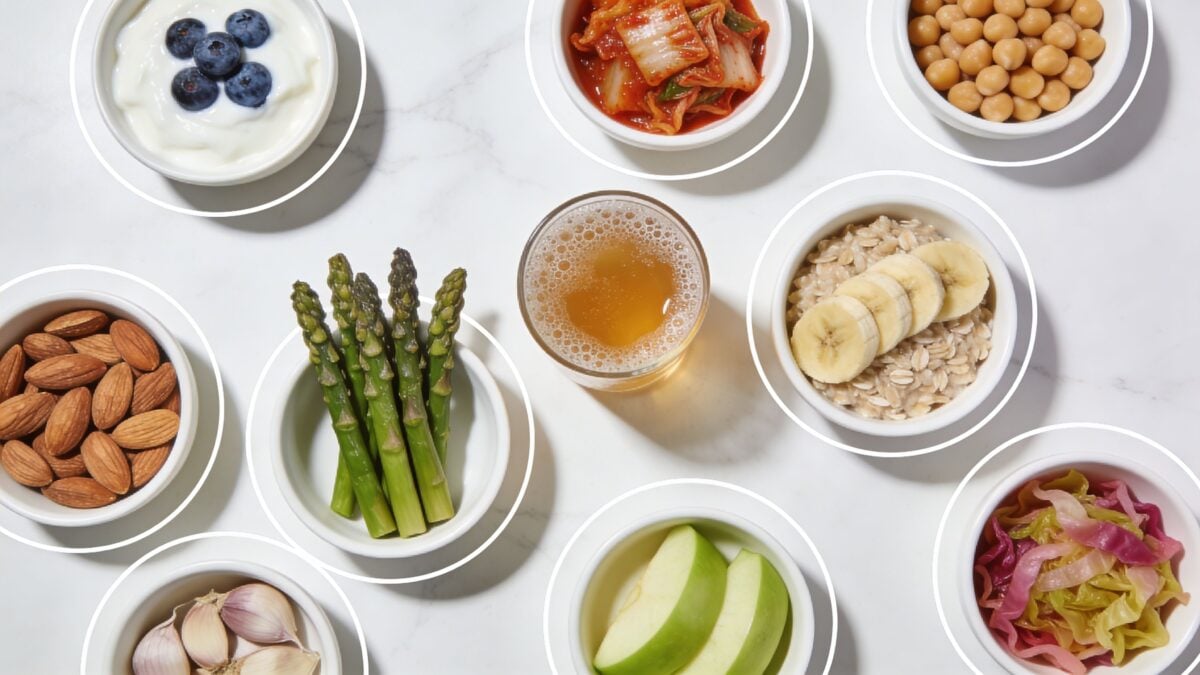
If you need a practical target, this whole-food plate example for gut-friendly meals shows the general direction. Start with the biggest offenders first. A few well-chosen changes usually help the gut more than an ambitious plan that falls apart by Friday.
1. Ultra-Processed Foods with Artificial Additives
Ultra-processed foods earn the top spot because they disrupt gut health on several fronts at once. They replace fiber-rich whole foods, concentrate additives that may irritate the gut in susceptible people, and make overeating easy because they are engineered to be hyper-palatable.
In the United States, ultra-processed foods account for a large share of daily calories. A National Institutes of Health report on ultra-processed foods and health helps explain why that matters. These products are convenient, but convenience has a trade-off. Packaged pastries, instant noodles, flavored chips, many protein bars, and frozen meals often deliver starch, oils, flavorings, and additives with very little fermentable fiber for the microbiome.
Why they hit the gut hard
The problem is rarely one ingredient in isolation. It is the repeated exposure to a food pattern built around emulsifiers, preservatives, colorings, flavor enhancers, and refined starches. In both research and clinical practice, that pattern tends to correlate with more bloating, less predictable bowel habits, and lower intake of the plant fibers that support short-chain fatty acid production. Those short-chain fatty acids help nourish the cells lining the colon and support barrier function.
Some additives appear more problematic than others. Emulsifiers are a good example because they are designed to change texture and keep ingredients mixed. In the gut, compounds with those properties may also disturb the mucus layer or alter how bacteria interact with the intestinal lining. That does not mean every packaged food causes harm, and it does not mean a single meal ruins the microbiome. It means the dose and frequency matter.
A practical comparison makes this easier to apply. A packaged instant meal with a long ingredient list usually gives you more formulation than food. A simple bowl of rice, eggs, olive oil, and cooked vegetables still fits a busy schedule, but it gives the gut far less chemical clutter. If you want a clear visual target, this whole-food plate example for gut-friendly meals shows the direction.
Practical rule: If a packaged food is built from refined starches, industrial oils, and multiple additives, treat it as an occasional convenience food, not a default meal.
A harm-reduction approach works better than trying to purge your pantry overnight:
- Replace one repeat food first: Swap instant ramen for rice noodles, broth, shredded chicken, and spinach.
- Keep convenience, reduce additives: Choose microwavable potatoes, plain oatmeal cups, canned fish, or frozen vegetables instead of full prepared meals.
- Use a shorter ingredient list as your filter: Plain Greek yogurt, nuts, fruit, hummus, and boiled eggs usually beat commercial snack bars and flavored crackers.
- Aim for one real-food meal anchor each day: Even one consistent whole-food meal lowers total additive exposure.
Recovery tends to happen in phases. Some people notice less fullness, belching, or gas within several days when ultra-processed foods stop dominating the diet. Stool consistency and urgency often take 2 to 4 weeks to settle, especially if the replacement foods add back fiber gradually. If symptoms worsen when fiber increases, the issue may be broader than ultra-processed food alone, and that is worth assessing rather than forcing more roughage.
2. Refined Carbohydrates and Added Sugars
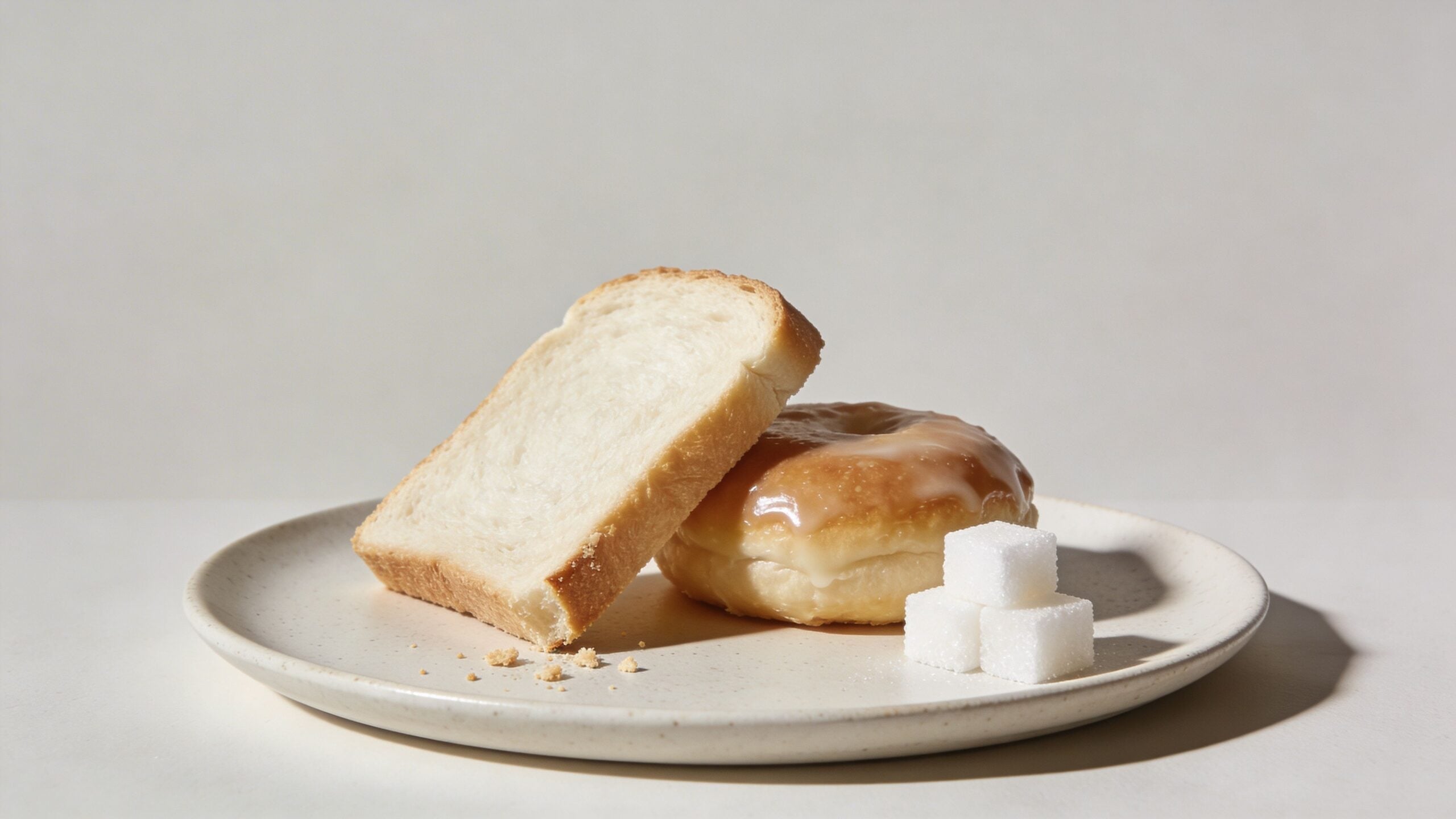
White bread, pastries, sweet cereals, candy, sweetened yogurt, and sugary drinks all create the same gut problem. They digest quickly, feed the wrong patterns of eating, and bring almost none of the fiber your beneficial bacteria need.
This is one of the most common reasons people say, "I eat enough, but I'm still not regular." They're eating plenty of food volume, but not enough substrate for a healthy microbiome.
What goes wrong
Refined carbs and added sugars are stripped-down fuel. They move fast. Fiber doesn't. That difference matters because gut bacteria thrive when they have fermentable fibers and plant compounds to work on. A breakfast of frosted cereal and sweetened coffee gives you quick energy, then often leaves you hungry again. A breakfast of oats, chia, berries, and eggs is slower, steadier, and generally easier on digestion.
Sugary foods also tend to cluster with other gut-disruptive habits. Think office pastries at breakfast, a sandwich on white bread at lunch, and dessert after dinner. One item might be manageable. A daily pattern isn't.
What tends to work better:
- Choose resistant starch when possible: Cooled rice or potatoes can be easier for some people than hot refined starch alone.
- Pair carbs with protein and fat: Toast alone digests differently than toast with eggs and avocado.
- Remove the obvious sugar first: Soda, juice with added sugar, candy, and dessert coffees give the fastest payoff.
Many individuals don't need to fear all carbs. They need to stop making refined carbs and added sugar the backbone of the day.
The swap doesn't have to be extreme. Move from white bread to a higher-fiber loaf. Replace dessert yogurt with plain yogurt plus fruit if dairy works for you. If you crave sweetness after meals, use smaller portions and anchor them to real food.
Recovery often starts with fewer afternoon crashes and less post-meal puffiness. If constipation or loose stools are tied to a low-fiber, high-sugar pattern, bowel habits improve only when better foods replace the old ones.
3. High-Temperature Cooked and Charred Meats
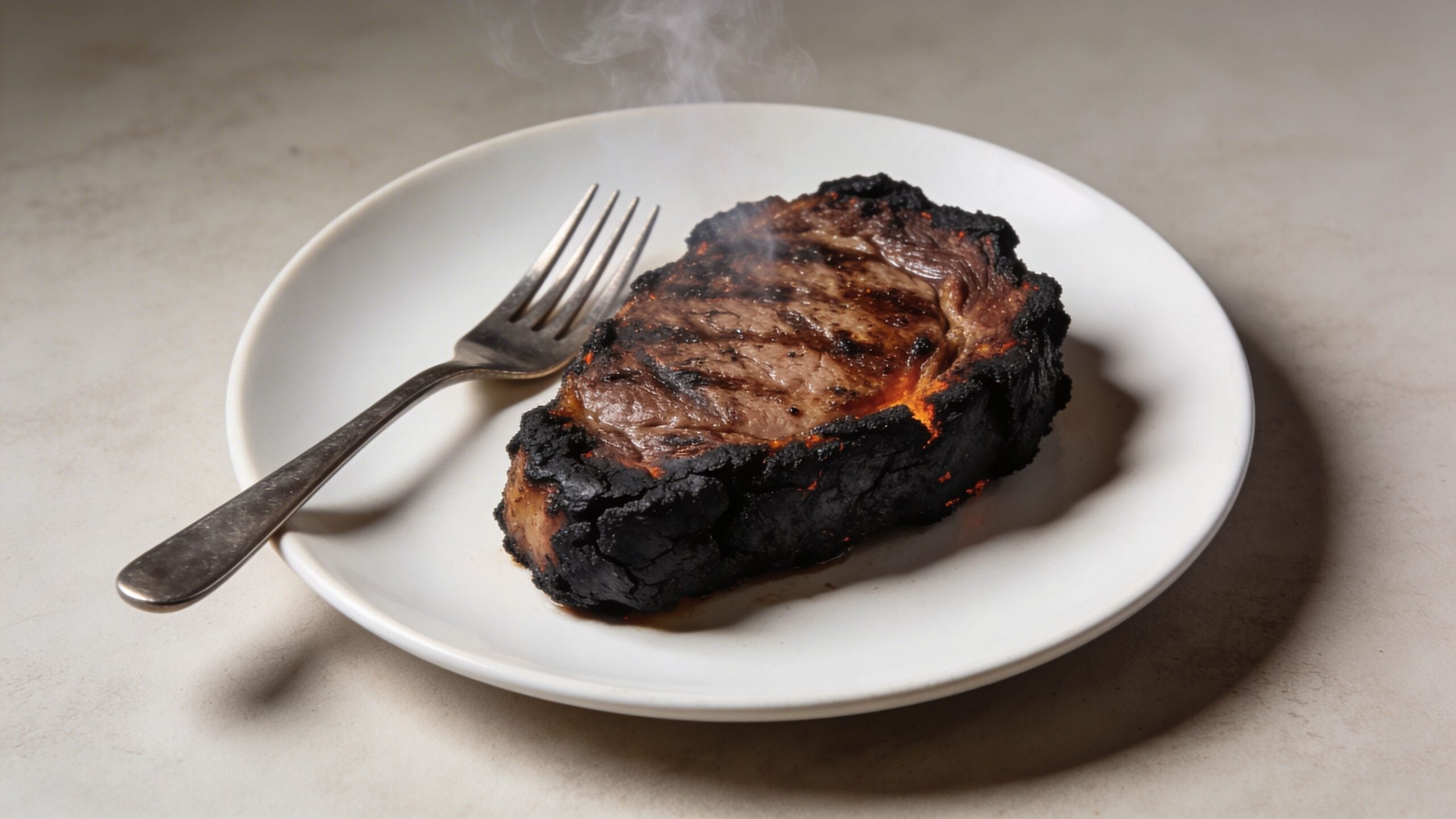
High-heat cooking changes meat in ways your gut does not always handle well. The biggest problem is not meat by itself. It is repeated exposure to blackened, heavily browned, dried-out meat cooked at very high temperatures.
Here is the mechanism. Charring and aggressive searing increase compounds such as heterocyclic amines and polycyclic aromatic hydrocarbons, which are linked to inflammation and oxidative stress. Heavily cooked meat is also physically tougher and often harder to break down, so people with reflux, IBS, slower digestion, or post-meal heaviness tend to notice symptoms sooner. On top of that, red meat intake can raise trimethylamine N-oxide, or TMAO, through interactions between gut microbes and nutrients in meat, as shown in a 2019 study published in the European Heart Journal.
In practice, I rarely tell someone to stop eating meat first. I tell them to change the cooking method first, because that is often where the fastest improvement comes from.
The harm-reduction approach
Use methods that keep the meat moist and limit burnt edges. Braising, stewing, baking, poaching, pressure-cooking, and gentle pan-cooking usually cause fewer problems than grilling until the outside turns black.
A few adjustments matter:
- Cook to done, not charred: Deep brown is different from burnt. Skip blackened crusts and crisped-to-death bacon.
- Marinate before cooking: Marinades with herbs, garlic, lemon, vinegar, or olive oil can reduce formation of harmful compounds while improving flavor.
- Flip more often and lower the flame: This helps limit surface burning.
- Cut off burnt portions: If part of the meat is black, remove it.
- Balance the plate: Meat lands better for many people when it comes with cooked vegetables, herbs, or a fiber-rich side instead of a low-fiber barbecue plate.
Weekend barbecue is a good example of the trade-off. One grilled meal is not the same as eating charred burgers, burnt sausage, and crispy bacon several times a week. Dose and pattern matter.
Better swaps that still feel like real food
Choose slow-cooked shredded beef instead of a hard-seared burger. Pick baked or poached salmon instead of blackened fish. Use turkey meatballs, braised chicken thighs, or a slow-cooker roast when you want protein that is easier on digestion.
If you love grilling, keep it. Just cook over lower heat, use a marinade, and pull the meat before it burns.
What recovery usually looks like
If charred meat has been a regular trigger, some people notice less reflux, less post-meal fullness, and less bloating within several days of switching cooking methods. Bowel changes can take longer, often one to three weeks, because the rest of the meal pattern still matters. If symptoms do not improve after removing the burnt, high-heat piece, the issue may be the total diet, portion size, alcohol, or an underlying digestive condition rather than meat alone.
4. Vegetable and Seed Oils High in Omega-6 Polyunsaturated Fats
This section gets oversimplified online, so it's worth being precise. The biggest gut issue isn't that every drop of seed oil is toxic. It's that many people get these oils constantly, usually in ultra-processed and fried foods, often after repeated heating.
That means soybean oil, corn oil, sunflower oil, safflower oil, and canola oil don't usually show up in isolation. They show up in restaurant fryers, packaged dressings, mayonnaise, crackers, frozen entrées, and fast food.
Where significant issues arise
These oils are easy to overconsume because they're embedded in convenience foods. When someone tells me they're "eating clean" but still bloated, I often find a steady stream of protein bars, bottled dressings, rotisserie side dishes, chips, and takeout in the background. Seed oils are rarely the whole story, but they often travel with the rest of the problem.
Seed's science-backed guide, as summarized by Medical News Today earlier in the article, notes that fried foods can lower microbial diversity and irritate the gut lining. That's why fried chicken, fries, onion rings, and crunchy snack foods hit some people so hard.
A gut-friendly fat strategy is less about perfection and more about reducing repeated exposure to fried and highly processed foods.
What to do instead
Use fats that make culinary sense:
- For salads and finishing: Extra-virgin olive oil.
- For moderate cooking: Olive oil or avocado oil.
- For higher-heat home cooking: Ghee or coconut oil if tolerated.
Also check labels on foods people assume are healthy. Store-bought hummus, "light" dressings, flavored tuna packs, and roasted nuts often contain added oils that turn a simple food into a more inflammatory one for sensitive guts.
Recovery is subtle. People often notice less post-meal heaviness and less upper-abdominal discomfort when fried foods come out and home-cooked meals go up.
5. Gluten in Sensitive Individuals
Gluten isn't one of the worst foods for gut health for every person. For someone with celiac disease, non-celiac gluten sensitivity, or a clear pattern of symptoms after wheat-based foods, it can be a major trigger. For someone else, gluten may not be the issue at all.
That distinction matters because unnecessary restriction can make eating harder than it needs to be.
Who should pay attention
If bread, pasta, crackers, beer, or baked goods repeatedly trigger bloating, fatigue, brain fog, abdominal pain, or irregular stools, gluten sensitivity is worth considering. But test before you self-diagnose if celiac disease is on the table. Once someone removes gluten, proper testing gets harder.
A useful real-world example is the person who says, "Pizza destroys me, but sourdough toast doesn't." That could be gluten, but it could also be portion size, fat load, onions, garlic, dairy, or the total meal. Don't assume. Track.
What works better than guessing
Use a structured elimination and reintroduction process. Keep the rest of your diet stable so you can learn something.
A practical approach:
- Get evaluated first if symptoms are significant: Especially if you suspect celiac disease.
- Use naturally gluten-free staples: Rice, quinoa, potatoes, buckwheat, millet.
- Avoid junk-food substitutions: Gluten-free cookies and crackers can still be ultra-processed.
If you're removing gluten, replace it with real food, not a different version of packaged starch.
Recovery varies. Some people notice less bloating quickly. Others need more time, especially if multiple triggers are involved. If nothing improves after a fair trial, gluten may not be the main problem.
6. Dairy Products from Conventional Milk
Dairy can be nutritious, convenient, and completely fine for one person while causing gas, urgency, congestion, reflux, or skin flares in another. The most common issue is lactose intolerance, but some people also react poorly to certain milk proteins or to the way dairy appears in processed foods.
Mass-market dairy products often create a double hit. They bring the dairy itself, then pile on sugar, gums, thickeners, or highly processed forms. Sweetened yogurt, processed cheese slices, ice cream, milk-based shakes, and cream sauces are common examples.
Why dairy is tricky in gut work
One person's probiotic-rich yogurt is another person's cramping and bloating. That's why blanket advice around dairy often fails. Tolerance depends on dose, form, and the state of the gut.
For many people, these patterns show up:
- Milk causes symptoms, but aged cheese doesn't.
- Ice cream causes problems, but plain kefir is better tolerated.
- Sweetened yogurt causes bloating, but unsweetened Greek yogurt is fine.
That difference matters because you don't have to treat all dairy the same.
Smarter dairy decisions
Try a clean elimination if symptoms point there, then test forms one by one.
Useful swaps include:
- Lactose-free milk for people who tolerate dairy protein but not lactose.
- Plain Greek yogurt or kefir instead of sugary yogurt, if tolerated.
- Coconut or almond milk when you need a full break from dairy.
- Aged cheeses in small portions rather than milk-heavy desserts.
If dairy leaves you puffy, gassy, or refluxy, it's often worth pausing it during a gut reset. Reintroduce carefully and watch for dose-dependent symptoms. That's more useful than declaring dairy universally bad.
7. Alcohol Especially in Excessive Amounts
Alcohol often gets treated like a side issue, but for many adults it's one of the fastest ways to aggravate the gut lining. It can worsen reflux, loosen stools, increase urgency, and make an already-irritated gut more reactive the next day.
Beer, wine, cocktails, spirits, and hard seltzers don't affect everyone the same way. The pattern that matters most is frequency and amount. A glass with dinner isn't the same as repeated weekend overdrinking, and neither is the same as using alcohol nightly to unwind.
What alcohol does in real life
The clearest pattern I see is cumulative irritation. Someone eats reasonably well during the week, then drinks heavily on Friday and Saturday and can't understand why Monday still feels off. Their meals may not be the whole problem.
Alcohol also lowers restraint around food. It often travels with late-night pizza, fried food, dessert, and poor sleep. The gut pays for the whole package.
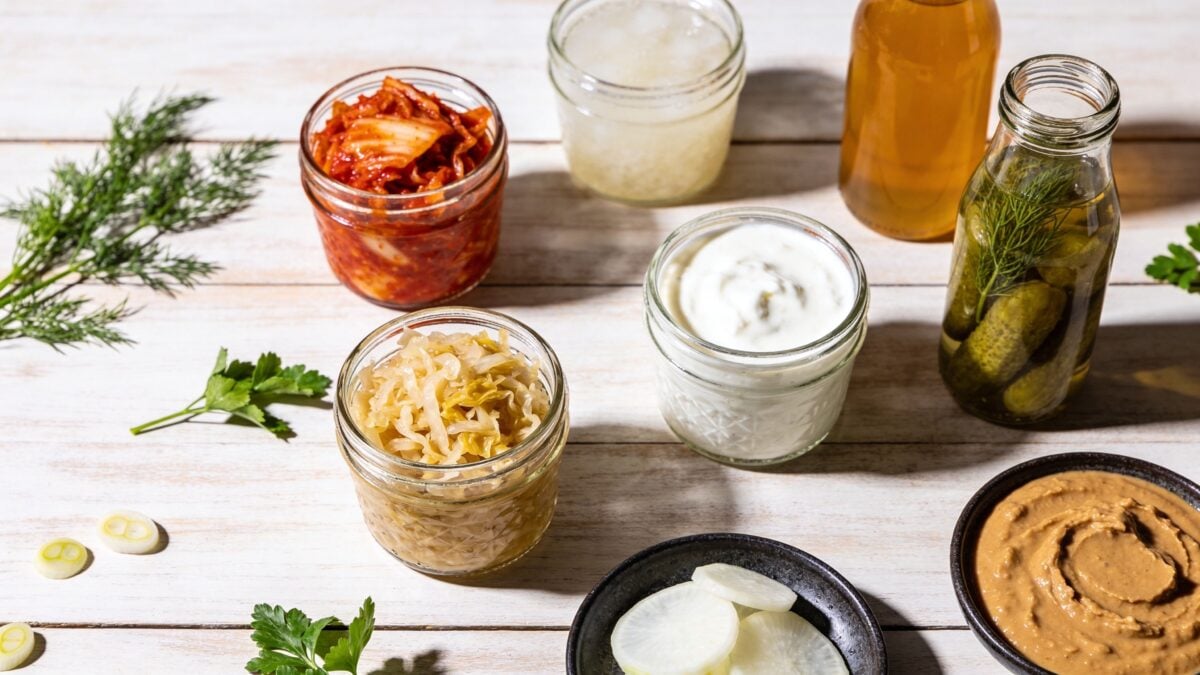
If you're actively trying to heal, support meals matter. This guide on fermented foods that can fit into a gut-supportive diet can help you rebuild around better choices, though fermented foods won't cancel out heavy drinking.
If IBS, reflux, or diarrhea is active, alcohol is often one of the first things worth removing completely for a trial period.
Better than "drink less"
Make the rule concrete:
- Don't drink on an empty stomach.
- Alternate with water.
- Skip alcohol during flares.
- Use alcohol-free periods to test whether it's a core trigger.
People often notice clearer signals within days when alcohol is removed. Less reflux at night, fewer urgent bowel movements, less nausea, and calmer mornings are common patterns.
8. Artificial Sweeteners and Sugar Alcohols
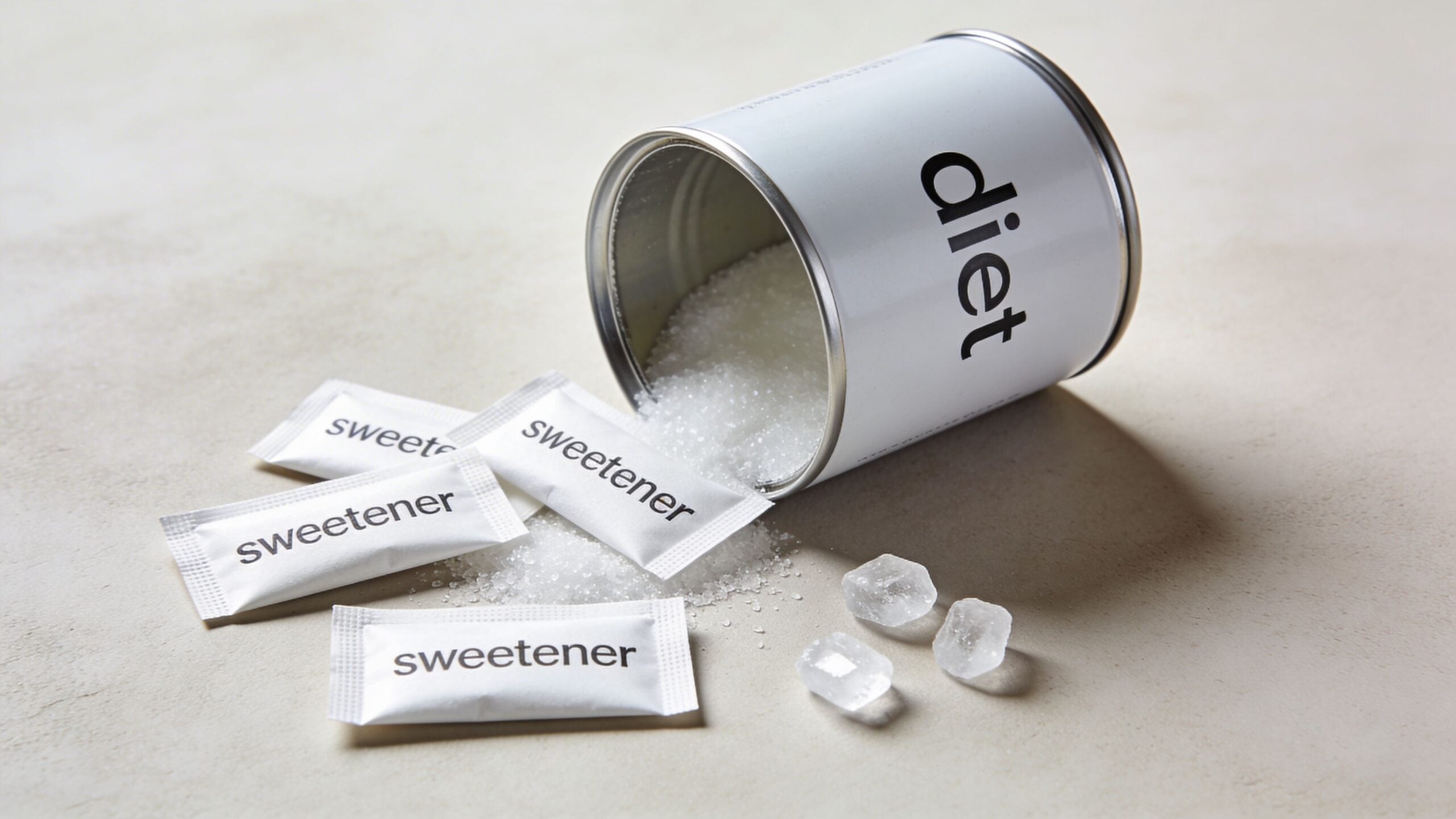
Many people switch to diet products to help their metabolism, then end up with more bloating, rumbling, or loose stools. That's especially common with sugar alcohols like sorbitol, xylitol, maltitol, and sometimes erythritol.
Artificial sweeteners also show up everywhere now. Diet soda, sugar-free gum, protein bars, "zero sugar" yogurt, flavored electrolyte packets, and keto desserts can create a constant low-level exposure that people miss.
Why these products backfire
Sugar alcohols are notorious for pulling water into the gut and fermenting lower down. That's why a few pieces of sugar-free gum can be enough to trigger symptoms in a sensitive person. The serving looks tiny. The digestive effect isn't.
Artificial sweeteners can also keep a strong preference for sweet taste alive, which makes it harder to shift toward simpler foods. That doesn't show up on a label, but it matters in practice.
A common example is the person who cuts sugar, then starts drinking multiple diet sodas a day and snacking on sugar-free candy. Their total sweetness exposure hasn't gone down. Their gut symptoms often haven't either.
What to use instead
Reduce sweetness overall before chasing the perfect substitute.
Helpful options:
- Fruit first: Berries, kiwi, citrus, or banana depending on tolerance.
- Small amounts of honey or maple syrup: Better used deliberately than hidden sweeteners all day.
- Stevia or monk fruit: These may work for some people, but don't force them if they upset your stomach.
The fastest test is simple. Remove diet drinks, sugar-free gum, and sugar alcohol-heavy products for a stretch and see what happens. For many people, gas and urgency calm down quickly when these products leave the routine.
9. Non-Steroidal Anti-Inflammatory Drugs When Used Chronically
This item isn't a food, but it belongs in a gut health article because many people with ongoing digestive problems are taking it regularly without realizing the trade-off. Ibuprofen, naproxen, and aspirin can be useful medicines. They're just not gut-neutral.
The problem is chronic or frequent use, especially when someone is taking them several days a week for headaches, training soreness, back pain, or joint pain.
Why NSAIDs can block gut healing
These medications can irritate the digestive tract directly. In practice, that often shows up as upper-abdominal discomfort, nausea, reflux, or worsening bowel symptoms in people who are already sensitive.
I see this most often in runners, manual laborers, and people with chronic pain who think of over-the-counter pain relief as harmless because it's common.
If you're trying to repair digestion, this is one of the first non-food exposures to review. Articles on when to take a probiotic for best digestive support can be useful alongside that review, but timing a probiotic won't fully offset ongoing gut irritation from chronic NSAID use.
Review your medication pattern with your clinician if your gut symptoms aren't improving despite dietary cleanup.
Practical trade-offs
Sometimes NSAIDs are necessary. The right move isn't to stop a prescribed medicine on your own. It's to talk through options.
That may include:
- Using them for the shortest necessary period
- Taking them with food if advised
- Exploring non-drug pain strategies
- Reassessing whether frequent use has become routine rather than essential
Recovery depends on the broader picture. But when NSAID use is part of the problem, gut symptoms often stay stuck until that exposure changes.
10. Legumes and Beans When Improperly Prepared
Legumes are the most misunderstood item on this list. They're not automatically among the worst foods for gut health. In many diets, they can support gut health well. But if they're undercooked, poorly prepared, eaten in portions your gut can't handle, or added too early during a healing phase, they can cause serious bloating and discomfort.
This matters even more for people with IBS. A HealthCentral article discussing foods that can worsen gut symptoms notes that high-FODMAP foods such as lactose, fructose, soybeans, cashews, and cabbage can trigger bloating and gas in sensitive individuals, while also emphasizing that not all high-FODMAP foods are universally problematic.
Why beans help some people and wreck others
Beans contain fermentable carbohydrates. That's part of why they can be useful, but it's also why they can overwhelm a sensitive gut. Preparation changes the outcome.
Canned beans tossed cold onto a salad are very different from dried beans that were soaked, cooked until fully soft, and reintroduced in a small portion. Texture matters. Portion matters. Timing matters.
That nuance is especially important because symptom relief with a phased low-FODMAP approach is common in IBS. The same HealthCentral piece notes Monash University's app data showing that 75% of IBS patients improve symptoms through phased elimination.
The right way to test them
Start smaller than you think you need.
A practical sequence:
- Soak dried beans before cooking when possible
- Cook until completely soft
- Begin with a small serving
- Don't combine them with several other triggers in the same meal
Later in the process, the same article notes a 2024 meta-analysis in Gastroenterology suggesting microbiome tolerance to high-FODMAP foods varies and that fiber benefits may outweigh risks after adaptation. That's why I don't tell every gut patient to avoid legumes forever. I tell them to earn them back carefully.
For some people, the recovery timeline is short. Remove problem legumes and bloating eases quickly. Rebuilding tolerance takes patience.
A simple preparation demo can help before you reintroduce them:
Comparison of 10 Worst Foods for Gut Health
| Item | 🔄 Implementation complexity | ⚡ Resource requirements | 📊 Expected gut impact & recovery | ⭐ Key advantages | 💡 Ideal use cases / brief tips |
|---|---|---|---|---|---|
| Ultra-Processed Foods with Artificial Additives | Moderate; requires label-reading and habit change | Moderate; some time to prepare whole foods, often low cost alternatives | High negative impact; dysbiosis within 2–4 weeks; recovery begins 2–3 weeks, significant by 8–12 weeks | Convenient, shelf-stable, affordable | Read ingredients; use NOVA; replace gradually over 2–3 weeks |
| Refined Carbohydrates and Added Sugars | Low–Moderate; dietary swaps are straightforward but habitual | Low; cheap staples, healthier swaps may cost more | Rapid negative shift in days; microbiota improves in 2–3 weeks after reduction | Inexpensive, convenient | Swap to whole grains/resistant starch, pair with protein/fat, limit added sugar |
| High-Temperature Cooked and Charred Meats | Moderate; change cooking technique and timing | Low–Moderate; minimal equipment change, use marinades | Moderate negative (HCAs/AGEs); rebalancing begins 1–2 weeks after elimination | High-quality protein and bioavailable nutrients when not charred | Cook lower-temp, marinate, remove charred portions, limit frequency |
| Vegetable & Seed Oils High in Omega-6 PUFA | Low; substitute oils in cooking and processed foods | Moderate; healthier oils (EVOO, ghee) can cost more | Significant pro-inflammatory effects; barrier begins healing 1–2 weeks; microbiota 4–8 weeks | High smoke point and low cost | Replace with EVOO/ghee/avocado oil; increase omega‑3 sources; avoid reheating PUFAs |
| Gluten (in Sensitive Individuals) | Variable; strict for celiac, moderate for non-celiac sensitivity | Moderate; GF alternatives may be costlier and require planning | Severe in celiac (mucosal injury); symptoms within hours–days; healing 2 weeks to 6–12 months | Whole-grain gluten provides fiber/nutrients if tolerated | Test for celiac before elimination; 4–6 week trial; avoid cross‑contamination |
| Dairy Products from Conventional Milk | Moderate; elimination or switch to alternatives/grass‑fed | Moderate; A2/grass‑fed and fermented options cost more | Negative in sensitive individuals; symptom reduction 1–2 weeks; microbiota recovery 4–6 weeks | Good calcium, vitamin D, protein when tolerated; fermented dairy can help | Try A2/grass‑fed or fermented dairy; trial elimination 4–6 weeks; use lactose‑free if needed |
| Alcohol (Especially in Excess) | Low–Moderate; behavioral change/social factors complicate abstention | Low; abstinence is low cost but may need support | Rapid epithelial damage; barrier improves 3–5 days after abstinence; microbiota 2–4 weeks | Some polyphenols in moderation (e.g., red wine) | Limit to guidelines, avoid bingeing; consider alcohol‑free period during gut healing |
| Artificial Sweeteners & Sugar Alcohols | Low; discontinue or replace with alternatives | Low; alternatives available (stevia/monk fruit) | Rapid dysbiotic effects within days; microbiota begins rebalancing 1–2 weeks; full recovery 4–8 weeks | Calorie‑free options for glycemic control | Eliminate during 4–6 week healing; prefer stevia/monk fruit; use erythritol cautiously |
| NSAIDs (Chronic Use) | High; requires medical oversight and alternative pain strategies | High; may need clinician involvement and alternative therapies | Severe negative impact within days; recovery starts 1–2 weeks after stopping; full restoration 6–8 weeks with support | Effective short‑term pain and fever relief | Avoid chronic use when possible; consult provider before stopping; support microbiota during/after use |
| Legumes & Beans (If Improperly Prepared) | Moderate; proper soaking/cooking required | Low; time and simple preparation, inexpensive ingredients | Variable: improperly prepared causes dysbiosis/bloating; properly prepared supports butyrate producers; symptom improvement 1–2 weeks | High fiber, resistant starch, plant‑protein and prebiotic potential | Soak 12–24h, boil adequately, cool to increase resistant starch; reintroduce gradually |
From Avoidance to Nourishment Your Next Steps
The biggest mistake people make after reading a list of the worst foods for gut health is turning it into an all-or-nothing purge. That usually lasts a week, creates stress around eating, and then collapses. A gut-repair plan works better when it's practical enough to repeat.
Start with the foods that combine the most damage with the highest frequency in your life. For many people, that's ultra-processed foods, added sugars, fried foods, alcohol, and diet products loaded with sweeteners. Those changes usually produce more noticeable relief than obsessing over niche ingredients.
Then look at your personal triggers. Gluten may matter, but only if you're sensitive. Dairy may matter, but only in certain forms. Beans may help later, but not during a flare. This is why gut work has to be both evidence-based and individualized.
The most useful frame is substitution, not deprivation. If you remove a packaged breakfast pastry, replace it with something that feeds you. If you stop relying on takeout fried food, make sure dinner is still easy enough to stick with. If you cut alcohol, don't leave your evening routine empty. Replace it with something you can enjoy consistently.
A good gut-recovery plate is simple. Choose a gentle protein, a tolerated starch, cooked vegetables, some healthy fat, and enough total food that you don't rebound into cravings later. Repetition is helpful at first. Variety can expand once symptoms settle.
What doesn't work well:
- Cutting out ten foods at once, then guessing which one mattered
- Replacing one processed product with another "health halo" version
- Forcing high-fiber foods too fast when the gut is actively irritated
- Assuming one healthy food helps everyone equally
- Ignoring non-food contributors such as stress, sleep, alcohol, and frequent NSAID use
What does work better:
- Removing the biggest irritants first
- Giving each change enough time to judge
- Tracking symptoms in plain language
- Reintroducing foods deliberately instead of emotionally
- Building meals from recognizable foods most of the time
If your symptoms are significant, persistent, or paired with weight loss, bleeding, severe pain, fever, or ongoing diarrhea, get medical evaluation. Food matters a lot, but it isn't the only reason guts go wrong.
The longer-term goal isn't just avoidance. It's resilience. A healthier gut comes from a pattern of minimally processed foods, enough fiber from tolerated sources, regular meals, and fewer exposures that keep the gut lining irritated. That means adding in as much as taking out.
If you're deciding where to start, begin with one week of reducing ultra-processed foods and sweetened products, then reassess. Next, address fried foods and alcohol. After that, test personalized triggers like dairy, gluten, or legumes in a structured way. That sequence is more manageable than trying to fix everything at once.
Your gut rarely needs perfection. It does need consistency.
Healthy Gut Review helps readers turn broad gut-health advice into practical next steps. If you want evidence-based guides on probiotics, fermented foods, digestive support, and smarter food swaps, explore Healthy Gut Review for clear, reader-first resources built for real life.