

That 2 PM energy crash isn't just a sign you need more coffee. It’s a direct message from your gut, and it’s telling you that your lunch choice was a mistake. The midday meal is a critical opportunity to either fuel your body and your microbiome or send them into a state of bloated, sluggish chaos.
At Healthy Gut Review, we know that a gut healthy lunch isn't about restriction or bland salads. It's about a strategic, delicious approach to eating that powers your afternoon, calms inflammation, and builds a resilient digestive system. Let's get into what that actually looks like in 2026.
The Pillars of a Gut-First Lunch
Before you even think about recipes, you need to understand the foundational components that make a meal gut-friendly. Forget calorie counting for a moment and focus on these four non-negotiables.
Fiber: The Microbiome's Favorite Food
Your gut bacteria need to eat, and their preferred meal is fiber—specifically, prebiotic fiber. These are non-digestible fibers that pass through to your colon, where your microbes ferment them, creating beneficial compounds like short-chain fatty acids (SCFAs).
Think of SCFAs like butyrate as a power-up for your colon cells, reducing inflammation and strengthening the gut barrier. A lunch devoid of fiber starves your beneficial bacteria, allowing less helpful ones to thrive.
- Soluble Fiber: Found in oats, beans, apples, and carrots. It forms a gel-like substance that slows digestion, helping you feel full.
- Insoluble Fiber: Found in nuts, whole grains, and vegetables like cauliflower. It adds bulk to stool, promoting regularity.
Probiotics: Reinforcing Your Gut's Army
Probiotics are the live beneficial bacteria themselves. While your gut has its own resident population, you can reinforce their numbers by consuming fermented foods. A lunch that includes a dose of these live cultures directly supports microbial diversity.
This isn't just about yogurt. The world of fermented foods is vast and adds incredible flavor and tang to any meal. We're talking about sauerkraut, kimchi, kefir, and miso—all packed with different strains of beneficial bacteria.
Polyphenols: The Antioxidant Powerhouses
Polyphenols are plant-based compounds that give fruits and vegetables their vibrant colors. They act as powerful antioxidants, but their gut-health benefits are even more direct.
Your gut microbes metabolize polyphenols, unlocking their anti-inflammatory properties and producing metabolites that benefit the entire body. A colorful plate isn't just for looks; it's a direct indicator of a polyphenol-rich, gut-loving meal. According to a 2022 review from the National Institutes of Health, the interaction between polyphenols and gut microbiota is a two-way street, with each benefiting the other.
Lean Protein and Healthy Fats
Protein is essential for repairing tissues, including your gut lining. Healthy fats, especially omega-3s, are crucial for taming inflammation. Together, they provide sustained energy and satiety, preventing the blood sugar rollercoaster that leads to afternoon cravings for junk food.
Skipping protein and fat in favor of a carb-heavy lunch is a recipe for a 3 PM slump and a hungry, unhappy gut.
Build the Perfect Gut Healthy Lunch Bowl
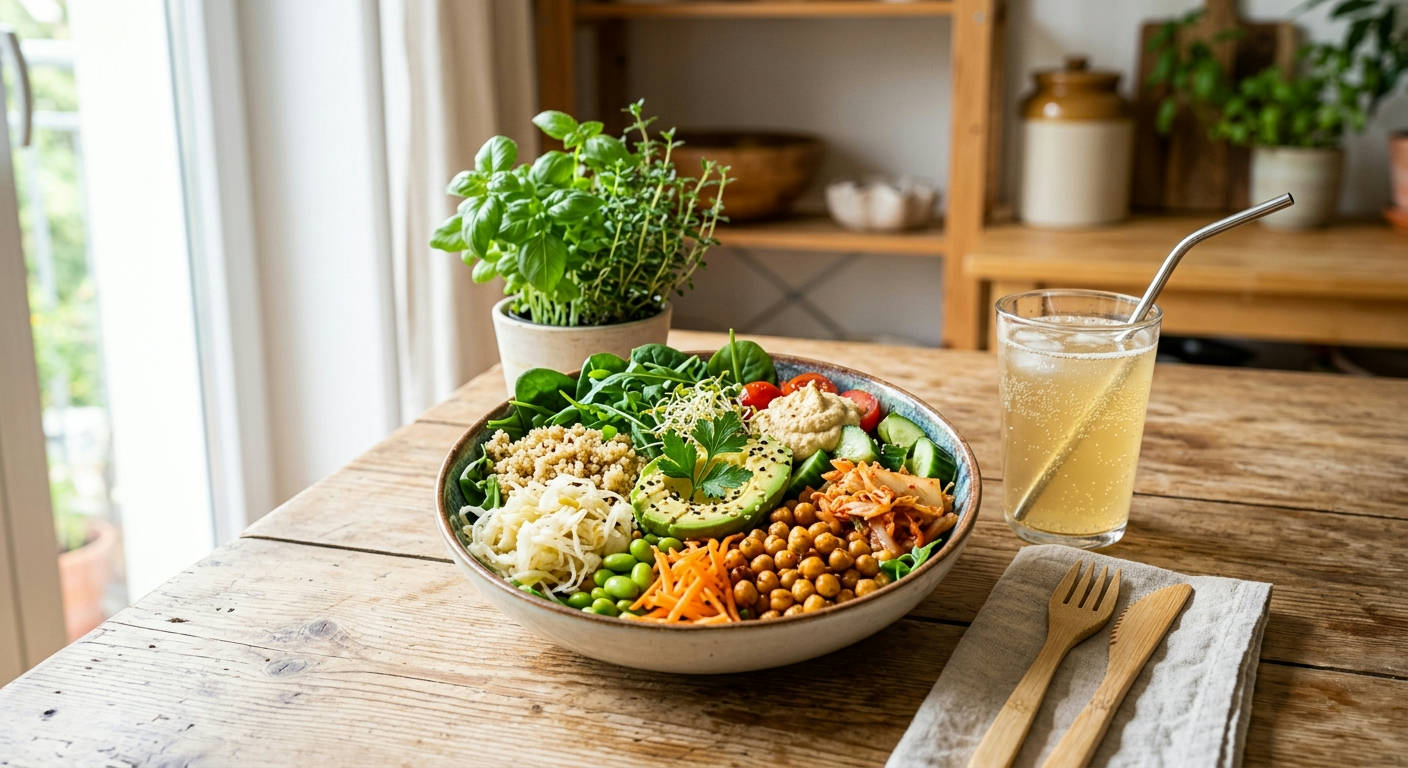
The "bowl" concept is the easiest way to guarantee you hit all the gut-friendly pillars. It’s a simple, customizable formula that works every time.
Step 1: The Foundation
Start with a base that provides complex carbohydrates and fiber. Ditch the plain white rice or nutrient-void iceberg lettuce.
- Options: Quinoa, brown rice, millet, a big bed of dark leafy greens (spinach, kale, arugula), or spiralized zucchini.
Step 2: The Protein Player
Choose a high-quality, lean protein source. This is the centerpiece that will keep you full and satisfied.
- Options: Grilled chicken breast, baked salmon (for a dose of omega-3s), chickpeas, black beans, lentils, or firm tofu/tempeh.
Step 3: The Color and Fiber Punch
Load up on a variety of roasted or steamed vegetables. Aim for at least three different colors to maximize your polyphenol intake.
- Options: Roasted broccoli, bell peppers, sweet potatoes, Brussels sprouts, asparagus, and red onion. Don't be shy with the quantity here.
Step 4: The Fermented Finisher
This is the secret weapon. A spoonful or two of a fermented food introduces probiotics and a zesty flavor that brightens the whole meal.
- Options: A scoop of kimchi or sauerkraut on the side, a drizzle of a kefir-based dressing, or some crumbled tempeh. If you're new to probiotics, you might consider how targeted supplements can also help, a topic we explore in our guide to the best probiotics for women.
Step 5: The Healthy Fat and Crunch
Finish with a source of healthy fat for brain function and nutrient absorption, plus a little texture.
- Options: A quarter of an avocado, a sprinkle of pumpkin or sunflower seeds, a handful of walnuts, or a tahini-lemon dressing.
Beyond the Bowl: Lunches for the Salad-Averse
Not everyone wants a bowl or a salad every day. The principles of a gut healthy lunch can be applied to virtually any meal format.
Hearty Soups and Stews
Soups are a fantastic vehicle for gut-friendly ingredients. They are easy to digest and incredibly hydrating.
- Lentil and Vegetable Soup: Packed with fiber from lentils and veggies. Use bone broth as a base for extra gut-healing collagen and amino acids.
- Miso Soup with Tofu and Seaweed: Miso is a fermented soybean paste, making it a great source of probiotics. Seaweed adds unique minerals and prebiotic fibers.
The Upgraded Sandwich or Wrap

The standard deli meat on white bread is a gut disaster. But you can build a better one.
- The Bread Matters: Choose a true sourdough bread. The fermentation process breaks down some of the gluten and anti-nutrients, making it easier to digest. Whole-grain or seed-based wraps are also great choices.
- The Fillings: Skip the processed meats. Opt for hummus, mashed avocado, leftover grilled chicken, or mashed chickpeas with herbs. Load it up with sprouts, spinach, and sliced cucumber for extra crunch and fiber.
"Your midday meal is the biggest lever you can pull to change the course of your day. Treat it like a strategic refueling, not a rushed pit stop, and your gut will thank you with sustained energy and comfort."
What to Aggressively Avoid at Lunchtime
Just as important as what you add is what you remove. Certain foods are guaranteed to cause digestive distress and inflammation.
Ultra-Processed Garbage
This is a non-negotiable. Anything from a crinkly package with a long list of ingredients you can't pronounce is out. This includes chips, packaged cookies, "diet" frozen meals, and most granola bars. These foods are filled with emulsifiers, artificial sweeteners, and refined oils that actively harm your gut microbiome. Consistent consumption of these items can contribute to increased intestinal permeability. If you're concerned about gut barrier function, understanding what helps and what hurts is key—a topic we cover in our article on the best supplements for leaky gut.
The Hidden Sugar Bombs
Sugar feeds the wrong kind of gut bacteria, leading to dysbiosis and inflammation. It's not just in soda and candy. Be a detective and read labels.
- Beware of: Bottled salad dressings (many are pure sugar and seed oil), flavored yogurts, iced teas, and "healthy" sauces like teriyaki or BBQ, which often have more sugar than dessert.
Heavy, Fried Foods
Deep-fried foods are difficult to digest, sit in your stomach like a rock, and can trigger heartburn and bloating. They offer zero nutritional value for your gut microbes and will torpedo your afternoon productivity.
Meal Prep: Your Secret Weapon for Consistency
The single biggest reason people fail at eating a gut healthy lunch is a lack of preparation. When you're hungry and have nothing ready, you'll grab the fastest, most convenient (and usually worst) option. A Sunday meal prep session is the answer.
Batch Cook the Basics
You don't need to prep five completely different meals. Just cook the components.
- Grains: Cook a large batch of quinoa or brown rice.
- Proteins: Grill a pack of chicken breasts or bake a few salmon fillets.
- Veggies: Roast a huge sheet pan of your favorite vegetables like broccoli, cauliflower, and sweet potatoes.
Store everything in separate containers in the fridge. Each morning, you can simply assemble your bowl in under two minutes.
Master the Mason Jar Salad
This is the key to a non-soggy, pre-made salad. The trick is in the layering.
- Bottom Layer: Dressing.
- Second Layer: Hard vegetables (carrots, cucumbers, bell peppers).
- Third Layer: Grains and proteins (quinoa, chicken, chickpeas).
- Fourth Layer: Softer ingredients (avocado, cheese).
- Top Layer: Leafy greens.
When you're ready to eat, just shake it up. The greens stay perfectly crisp.
It's Not Just What You Eat, But How
You can have the most perfect gut healthy lunch in the world, but if you inhale it in three minutes while scrolling on your phone, you're missing a huge piece of the puzzle.
Slow Down and Chew Your Food
Digestion begins in the mouth. Chewing your food thoroughly breaks it down mechanically and mixes it with saliva, which contains enzymes that start carbohydrate digestion. When you swallow huge, unchewed bites, you put an immense strain on your stomach and the rest of your digestive tract.
Hydrate Intelligently
Drink water between meals, not a huge glass with your meal. Chugging a lot of liquid while you eat can dilute your stomach acid, making it less effective at breaking down proteins. Sip if you need to, but focus on hydrating throughout the rest of the day.
Consider Digestive Support
For some people, even with a perfect diet, bloating and discomfort can persist. This can be a sign that your body isn't producing enough of its own digestive enzymes to break down fats, proteins, and carbs efficiently. This is where targeted support can be a game-changer. For a deeper dive, check out our breakdown of the best digestive enzyme supplements on the market in 2026.
Troubleshooting Post-Lunch Problems
If you're still experiencing issues after revamping your lunch, it's time to play detective.
Bloating, Gas, and Discomfort
If you've added a lot of fiber and fermented foods quickly, some initial gas can be normal as your microbiome adjusts. But if persistent, painful bloating is an issue, you may want to investigate FODMAPs.
FODMAPs are specific types of carbohydrates that can be poorly absorbed in the small intestine for some individuals. A temporary low-FODMAP diet, often guided by a professional, can help identify trigger foods. Monash University is the leading research institution on this diet and provides excellent resources.
The Afternoon Energy Slump
Still feeling tired after lunch? Check your macros. This crash is often caused by a meal too high in refined carbohydrates and too low in protein and fat. Ensure your lunch has a solid protein source and a healthy fat to stabilize your blood sugar for hours of steady energy.
"Listen to your body's feedback. Bloating isn't normal. Fatigue isn't a requirement. These are signals. Your lunch is the perfect time to start sending different, better signals back to your gut."
Your Lunch is a Daily Gut Health Opportunity
Forget thinking of lunch as an inconvenient necessity. It is one of the most powerful and consistent tools you have to improve your digestive health, boost your energy, and support your microbiome every single day.
Building a gut healthy lunch isn't about following a rigid diet. It's about understanding the core principles—fiber, probiotics, polyphenols, and protein—and applying them in a way that you actually enjoy. Start with one meal, one bowl, or one upgraded sandwich at a time. The consistency is what builds a truly resilient and happy gut.
