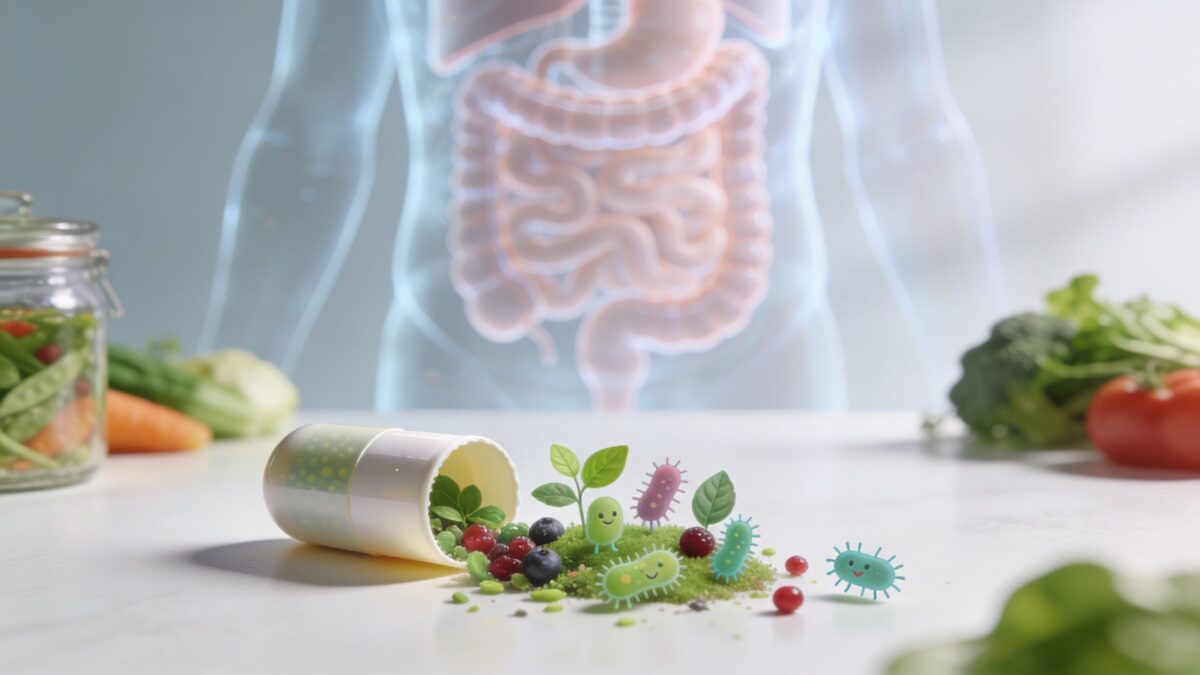


Bloating after meals. A stomach that feels puffy by afternoon. Foods you used to tolerate now seem to trigger gas, cramps, or brain fog. Many people land here after trying the obvious fixes first: eating “cleaner,” cutting random foods, maybe buying a probiotic that looked promising on the label. Then nothing changes, or the improvement is small and inconsistent.
That’s usually when the question shifts from “What’s wrong with my digestion?” to “What actually helps repair the gut lining?”
Leaky gut is often used loosely online, but the underlying issue is real: increased intestinal permeability. Your intestinal lining is supposed to act like a selective barrier. It lets nutrients pass through while keeping larger, unwanted compounds where they belong. When that barrier becomes less selective, symptoms can show up far beyond simple indigestion.
The problem is that the supplement market makes this sound easier than it is. Many formulas bundle a little bit of everything, use ingredients with weak human evidence, or borrow clinical language that their product doesn’t really earn. If you’re trying to sort out the best supplements for leaky gut, you need a practical filter: what has solid support, what’s promising, and what needs more caution, especially if you’re pregnant, breastfeeding, or choosing something for a child.
Your Guide to Healing Leaky Gut with Supplements
A good leaky gut protocol starts with one simple rule: support the barrier first, then layer in tools that make sense for your symptoms. If your gut lining is irritated, throwing ten supplements at it rarely works better than using a small number well.
Think of your intestinal lining like the grout between bathroom tiles. If the grout is intact, water stays where it should. If it cracks, moisture slips through places it shouldn’t. In the gut, that “grout” is made up of structures that hold intestinal cells tightly together. When those structures are stressed, the barrier gets more permeable.
That’s why the best supplements for leaky gut aren’t always the flashiest ones. The useful questions are more practical:
- Barrier support: Does the supplement help the intestinal lining itself?
- Symptom fit: Is your main issue bloating, IBS-type discomfort, food reactivity, or post-infection irritation?
- Tolerance: Can you take it without more gas, nausea, or loose stools?
- Safety: Does it make sense for your stage of life and your medications?
You’ll also see a lot of overlap between “gut healing” supplements and microbiome supplements. They aren’t identical. Some products aim to strengthen the lining. Others mainly shift the bacterial environment. Some do both, but often less powerfully than the label suggests. That’s part of the reason so many readers compare powders, probiotics, and blends before deciding, often after looking at visual product examples like this probiotic supplement image reference.
Practical rule: If a formula contains many ingredients but tiny amounts of each, it often sounds more advanced than it performs.
Understanding Leaky Gut Syndrome
A healthy gut barrier works like a fine-mesh screen. It allows broken-down nutrients and fluids through, while keeping larger particles, microbes, and irritants from crossing into places they shouldn’t. When that mesh gets damaged, the openings become less controlled. That’s the core idea behind leaky gut.

What the gut barrier actually does
Your small intestine has a lining made of tightly packed cells. Between those cells sit tight junctions, which act like gatekeepers. They don’t just seal everything shut. They regulate what gets through and when.
When people talk about “holes in the gut,” that’s an oversimplification. The actual issue is usually that these junctions become poorly regulated. Instead of a selective filter, the barrier becomes sloppy. Nutrients still pass, but so can compounds that irritate the immune system or add to inflammation.
One protein often discussed in this conversation is zonulin, which helps regulate how open or closed those junctions are. You don’t need to memorize the term. The useful takeaway is that permeability isn’t random. The gut barrier is dynamic, and it responds to stress, inflammation, infections, and diet.
Why symptoms can feel so broad
Leaky gut rarely shows up as one neat symptom. Some people mainly notice digestive complaints, such as bloating, cramping, irregular stools, or food sensitivity. Others feel tired, inflamed, or foggy after meals.
That symptom spread is part of why people get confused. They may think they need an enzyme, an antacid, or a detox supplement, when the deeper issue is a stressed barrier plus an irritated microbiome.
A few common patterns I watch for in practice are:
- Post-meal bloating: Often points to a mix of fermentation issues and mucosal irritation.
- Food reactivity: Not always a true allergy. Sometimes it reflects a more reactive gut lining.
- Stress-linked flare-ups: The gut barrier is sensitive to nervous system load.
- IBS-type symptoms: Leaky gut often overlaps with IBS rather than appearing in isolation.
A damaged barrier doesn’t always produce dramatic symptoms. Sometimes it shows up as a long string of “small” digestive complaints that never fully resolve.
Common triggers that keep the barrier irritated
It's uncommon for increased intestinal permeability to develop from a single event. It’s more often a pileup of pressureors: a highly processed diet, alcohol excess, poor sleep, chronic stress, frequent NSAID use, repeated infections, or an inflammatory bowel pattern that never fully settled down.
That’s why supplement strategy matters. If the gut barrier is acting like a torn screen, you need to know whether a product is helping patch the screen, feeding the cells that maintain it, or masking symptoms for a few hours.
The Top Supplement Categories for Gut Repair
Not all gut supplements do the same job. Some support the cells lining the intestine. Some reshape the microbial environment. Others are mostly symptom tools. If you’re trying to identify the best supplements for leaky gut, it helps to sort them by mechanism and by how strong the evidence really is.
Evidence summary at a glance
| Supplement Category | Primary Mechanism | Strength of Evidence | Typical Starting Dose |
|---|---|---|---|
| L-glutamine | Fuels enterocytes and supports tight junction regulation | Robust | Follow product guidance and clinician advice |
| Probiotics | Supports microbiome balance and may help barrier function | Promising but strain-specific | Start low and increase as tolerated |
| Zinc | May support barrier integrity and tissue repair | Promising | Use label guidance and avoid guessing high doses |
| Collagen | Provides amino acids that may support gut tissue | Emerging | Use label guidance |
| Digestive enzymes | Helps break down food and may reduce meal-related symptoms | Symptom support, not direct repair | With meals when appropriate |
| Prebiotics | Feeds beneficial microbes and may help the gut environment | Promising but tolerance-dependent | Start very low |
| Botanicals | Soothing or protective effects for irritated mucosa | Traditional use plus emerging support | Product-specific |
L-glutamine gets first priority
If I had to choose one supplement category with the clearest case for gut barrier support, it would be L-glutamine.
L-glutamine is the primary fuel source for enterocytes, the cells lining the small intestine. That matters because repairing a barrier requires feeding the cells that maintain it. It also helps regulate tight junction proteins such as ZO-1 and occludin, which is exactly where permeability becomes a problem. A 2019 randomized controlled trial summarized here found that 15 g/day of glutamine over several weeks reduced leaky gut markers and improved IBS symptoms by 80%, compared with 6% in the placebo group.
That’s a very different level of support from the usual “may help” language used in supplement marketing.
In practical use, glutamine tends to make the most sense for people with:
- IBS symptoms plus suspected barrier dysfunction
- Stress-related gut flare-ups
- Gut irritation after illness or intense training
- Multi-ingredient formulas that haven’t done much, especially if those formulas underdose glutamine
There’s a trade-off here. Glutamine powders are less convenient than capsules, and some people don’t love the taste. But a plain single-ingredient powder often makes more clinical sense than a flashy gut blend with a sprinkle of glutamine and several trendy add-ons.
A common mistake is assuming every “gut repair” product contains enough glutamine to matter. Many don’t. That’s why I prefer readers to compare labels carefully, especially when looking at visual examples of digestive enzyme supplement products and other combo formulas that may sound complete but prioritize breadth over effective dosing.
Probiotics can help, but they’re not interchangeable
Probiotics sit in a different category. They don’t directly replace what glutamine does. Instead, they may support the gut environment, influence inflammation, and help the barrier indirectly.
The problem is that “probiotic” is too broad to be useful on its own. One strain or blend can behave very differently from another. That’s why some people swear by probiotics while others feel more bloated after starting them.
Here’s how I frame them clinically:
- If bloating is severe, start cautiously.
- If symptoms began after antibiotics or a stomach bug, probiotics may deserve a higher place on the list.
- If your current probiotic causes more distention, that doesn’t prove probiotics are bad. It may mean the strain, dose, or timing is wrong.
For leaky gut, probiotics are promising, but the evidence base isn’t equivalent to glutamine’s targeted support for barrier integrity.
Zinc is useful, but more isn’t better
Zinc often appears in gut formulas because it plays a role in tissue repair and barrier function. That makes theoretical and practical sense. The caution is that people often treat zinc like a harmless extra, then stack it across multiple products.
That’s not wise. High-dose mineral supplementation can create its own problems, and zinc is one of the ingredients I don’t like people “eyeballing.” It belongs in the category of potentially helpful, but use with purpose.
If you already eat poorly, have signs of low nutrient status, or have inflammatory digestive issues, zinc may be worth discussing with a clinician. If you’re already taking a multivitamin, an immune product, and a gut powder, check the labels before adding more.
Collagen is popular for a reason, but evidence is still emerging
Collagen peptides get recommended constantly for leaky gut. Part of that is sensible. Collagen supplies amino acids involved in connective tissue support, and many people tolerate it well.
What collagen doesn’t have is the same level of direct human evidence for gut permeability that glutamine has. I think of it as a supportive add-on, not the anchor of a protocol. It may be a reasonable choice for someone who also wants help with satiety, skin, nails, or joint comfort, but it shouldn’t replace a stronger first-line option when gut barrier repair is the main goal.
Digestive enzymes reduce friction, not permeability
Digestive enzymes can be helpful if meals leave you heavy, gassy, or uncomfortable. They may improve food breakdown and reduce the amount of partially digested material that sits in the gut and ferments.
But enzymes are often oversold as gut-healing products. They are better described as meal support. They can lower symptom burden, and that can be valuable. Still, they do not directly “seal the gut” in the way many labels imply.
This distinction matters. If a person feels better on enzymes, great. But if the barrier is the underlying issue, symptom relief alone may not be enough.
Choose enzymes when food feels hard to digest. Choose barrier support when the lining itself seems irritated. Some people need both, but they’re not the same tool.
Prebiotics and botanicals need a tolerance-first approach
Prebiotics can be excellent for the right person because they feed beneficial gut microbes. They can also be a disaster if you’re already bloated, constipated, or highly reactive. Starting low matters.
Botanicals such as slippery elm or marshmallow root are different again. They’re often used for their soothing effect on irritated mucosal surfaces. I see them as comfort tools with potential supportive value, especially when someone has a “raw,” inflamed feeling in the gut. They can be helpful, but they sit in the emerging and individualized category, not the strongest evidence tier.
Safe Supplement Use for Different Audiences
Most articles on leaky gut supplements speak to a generic healthy adult. Real life isn’t that simple. The right plan for a nonpregnant adult isn’t automatically the right plan for someone who is pregnant, breastfeeding, immunocompromised, or choosing for a child.
Existing content often misses this. A Healthline overview on leaky gut supplements notes that common recommendations such as probiotics, L-glutamine, and zinc are widely discussed, but specific safety data and dosing for pregnancy are often missing, and general obstetric guidance is cautious about unproven supplements. That caution is appropriate.

For most nonpregnant adults
A straightforward adult plan is usually the safest starting point:
- Use fewer products first: One barrier-support supplement plus one symptom-targeted tool is often enough to learn what’s helping.
- Start with the lowest practical intensity: Especially with probiotics and prebiotics.
- Watch the response, not the marketing: Less bloating, steadier stools, and improved food tolerance matter more than a dramatic label claim.
Adults also need to think about medication overlap. If you take immune-suppressing medications, have active inflammatory bowel disease, or have had major GI surgery, don’t self-prescribe a complex stack.
Pregnancy and breastfeeding need a higher bar for caution
Most online lists often become too casual. During pregnancy and breastfeeding, the key question isn’t only “Could this help?” It’s also “Do we have enough safety clarity to justify it?”
In that setting, I use a more conservative filter:
- Favor food and lifestyle first: Regular meals, adequate protein, enough fluids, and identifying obvious trigger foods.
- Be selective with probiotics: Some clinicians consider targeted probiotic use reasonable, but this should be strain-specific and clinician-guided.
- Treat glutamine and zinc with more caution: They are commonly discussed, but pregnancy-specific guidance is not well established in the leaky gut context.
- Avoid high-dose experimentation: Pregnancy is not the time for aggressive self-testing with multi-supplement protocols.
For readers comparing pregnancy-specific gut support options, this pregnancy probiotic image resource reflects the kind of product category many women end up exploring. The important point is that “pregnancy-safe” should come from clinician review, not from wellness branding.
If you’re pregnant or breastfeeding, the safest supplement is often the one you can justify clearly, tolerate well, and review with your prenatal clinician.
What about children
Children with bloating, abdominal pain, constipation, or food sensitivity need a proper workup before they need a supplement stack. In kids, digestive symptoms can reflect constipation patterns, food intolerance, infection history, anxiety, or other pediatric GI issues.
General principles matter more than product trends:
- Don’t assume an adult gut powder scales down neatly for a child.
- Use pediatric guidance for probiotics, not adult “gut repair” marketing.
- Avoid giving multiple new supplements at once.
- Get medical guidance sooner if a child has poor growth, recurrent vomiting, blood in the stool, or persistent pain.
For children, simpler is safer. A pediatrician or pediatric GI clinician should guide anything beyond basic, well-tolerated support.
How to Choose and Use Your Supplements Wisely
A good supplement protocol can fail for boring reasons. The dose is too low. The product blends too many ingredients. The timing is wrong. Or the person chooses five products at once and has no idea which one caused the bloating.

Read the front less and the label more
The front of the bottle is advertising. The supplement facts panel is where the useful information lives.
When you compare the best supplements for leaky gut, check these points first:
- Single ingredient or blend: Single-ingredient products make it easier to test tolerance and effectiveness.
- Transparent amounts: If a label hides key ingredients inside a “proprietary blend,” move on.
- Form matters: Powders are often more practical for ingredients like glutamine. Capsules may work better for travel or taste-sensitive users.
- Extra ingredients: Artificial sweeteners, sugar alcohols, gums, and herbal stimulants can confuse the picture in sensitive guts.
I also tell patients to ask a simple question: does this formula look designed for your gut, or designed for online marketing? Bright claims about “total gut reset” usually deserve skepticism.
Match timing to the supplement
Timing doesn’t fix a bad product, but it can improve tolerance.
A practical framework:
- L-glutamine: Often easiest when taken away from large meals, depending on product instructions and tolerance.
- Digestive enzymes: Best used with meals, not randomly between them.
- Probiotics: Some people do better with food. Others tolerate them better at a different time of day. The best answer is often the one your gut confirms.
- Prebiotics: Start on a day when you’re home and can monitor bloating or bowel changes.
If you’re the kind of person who likes a visual explainer before buying, this short video does a good job of grounding the basics:
Build a stack in the right order
A lot of supplement frustration comes from poor sequencing. The cleaner approach is:
- Choose your anchor. For many people, that’s glutamine or a carefully chosen probiotic.
- Wait and observe. Give your gut time to show you the response.
- Add one symptom tool if needed. Enzymes for heavy meals, a soothing botanical for irritation, or a low-dose prebiotic if constipation and tolerance allow.
- Reassess after a fair trial. If nothing changes, don’t keep adding products forever.
More supplements don’t automatically create a better protocol. They often create more variables.
Red flags that mean stop and reassess
Some reactions are adjustment effects. Others are signs the product isn’t right for you.
Stop and review the plan if you notice:
- Sharp increase in bloating or pain: Especially if it persists beyond the first few doses.
- New diarrhea or constipation: A clue that the formula or timing is off.
- Rash, wheezing, or swelling: Treat as a potential allergic reaction and seek care.
- A long list of supplements with no clear benefit: That’s not a healing plan. That’s drift.
Also pause if you’re taking blood thinners, immunosuppressants, prescription antimicrobials, or multiple mineral supplements. Those situations deserve clinician oversight.
When Supplements Are Not Enough
Supplements can help. They cannot outwork a daily pattern that keeps damaging the gut.
If you use the best supplements for leaky gut but continue eating foods that clearly trigger you, sleeping poorly, relying on alcohol to unwind, or running on constant stress, progress usually stalls. The gut barrier responds to the whole environment, not just what comes in a capsule.
What matters outside the bottle
The basics carry more weight than many people want to hear:
- Food pattern: Remove obvious trigger foods, then rebuild meals around protein, tolerated fiber, and minimally processed foods.
- Meal rhythm: Irregular eating can keep digestion chaotic.
- Stress load: The gut and nervous system are closely linked. Many IBS-style flare-ups worsen when stress stays high.
- Sleep: Repair work is harder when sleep is shallow or fragmented.
This doesn’t mean you need a perfect routine. It means your supplement plan should sit on top of supportive habits, not try to replace them.
Symptoms that need medical attention
Some signs call for a doctor or gastroenterologist rather than another supplement purchase:
- Blood in the stool
- Unexplained weight loss
- Persistent vomiting
- Severe or worsening abdominal pain
- Difficulty swallowing
- Ongoing diarrhea that doesn’t settle
- Nighttime symptoms that repeatedly wake you
- Signs of dehydration or significant weakness
These aren’t “wait and see” issues.
If your symptoms are mild to moderate, supplements may be part of a smart plan. If your symptoms are escalating, recurring aggressively, or paired with red-flag signs, medical evaluation is not optional.
Frequently Asked Questions About Leaky Gut Supplements
How long do leaky gut supplements take to work
That depends on what you’re using and what’s driving the problem. Some people notice less bloating or improved meal tolerance fairly quickly. Barrier repair usually takes more patience. I’d judge progress by trends, not by one good day.
Look for steady signs such as fewer reactions to meals, less abdominal discomfort, more predictable stools, and better tolerance of foods that used to feel irritating.
Can I take multiple gut supplements at once
You can, but that doesn’t mean you should start that way. The cleaner strategy is to begin with one main supplement, then add another only if there’s a clear reason.
Starting everything at once creates confusion. If you feel worse, you won’t know what caused it. If you feel better, you still won’t know what’s working.
Is it possible to heal leaky gut with diet alone
For some people, yes. If the main drivers are food triggers, alcohol, poor meal quality, or post-infectious irritation that responds well to supportive eating, diet may do a lot of the heavy lifting.
Supplements are often best viewed as tools that make the process easier or more targeted. They aren’t mandatory for everyone, and they aren’t the whole answer for anyone.
What are signs that my gut may be improving
The most useful signs are practical:
- Less bloating after meals
- Better stool consistency
- Fewer urgent bathroom trips
- More stable tolerance to common foods
- Less “inflamed” or reactive digestion
Improvement usually looks boring before it looks dramatic. That’s normal.
What’s the single best supplement for leaky gut
If the goal is direct support for the intestinal barrier, L-glutamine has the strongest case among common options, based on the evidence discussed earlier. That doesn’t mean it’s right for every person, and it doesn’t make probiotics, zinc, or other tools irrelevant.
It means the answer should come from the problem you’re solving. If your main issue is barrier integrity, glutamine often rises to the top. If your main issue is meal-related heaviness, enzymes may give faster symptom relief. If your symptoms started after antibiotics, probiotics may deserve more attention.
Should pregnant or breastfeeding women use these supplements on their own
I wouldn’t advise self-prescribing a full gut-healing stack during pregnancy or breastfeeding. That’s the group most often overlooked in mainstream supplement roundups, and it’s exactly where caution matters most.
A targeted conversation with an OB, midwife, or clinician who knows your history is the safer route.
Healthy Gut Review publishes practical, evidence-based guidance for readers comparing probiotics, digestive support products, and gut-healing strategies. If you want side-by-side supplement reviews, pregnancy-specific probiotic guidance, and plain-English breakdowns of what’s worth buying, visit Healthy Gut Review.