

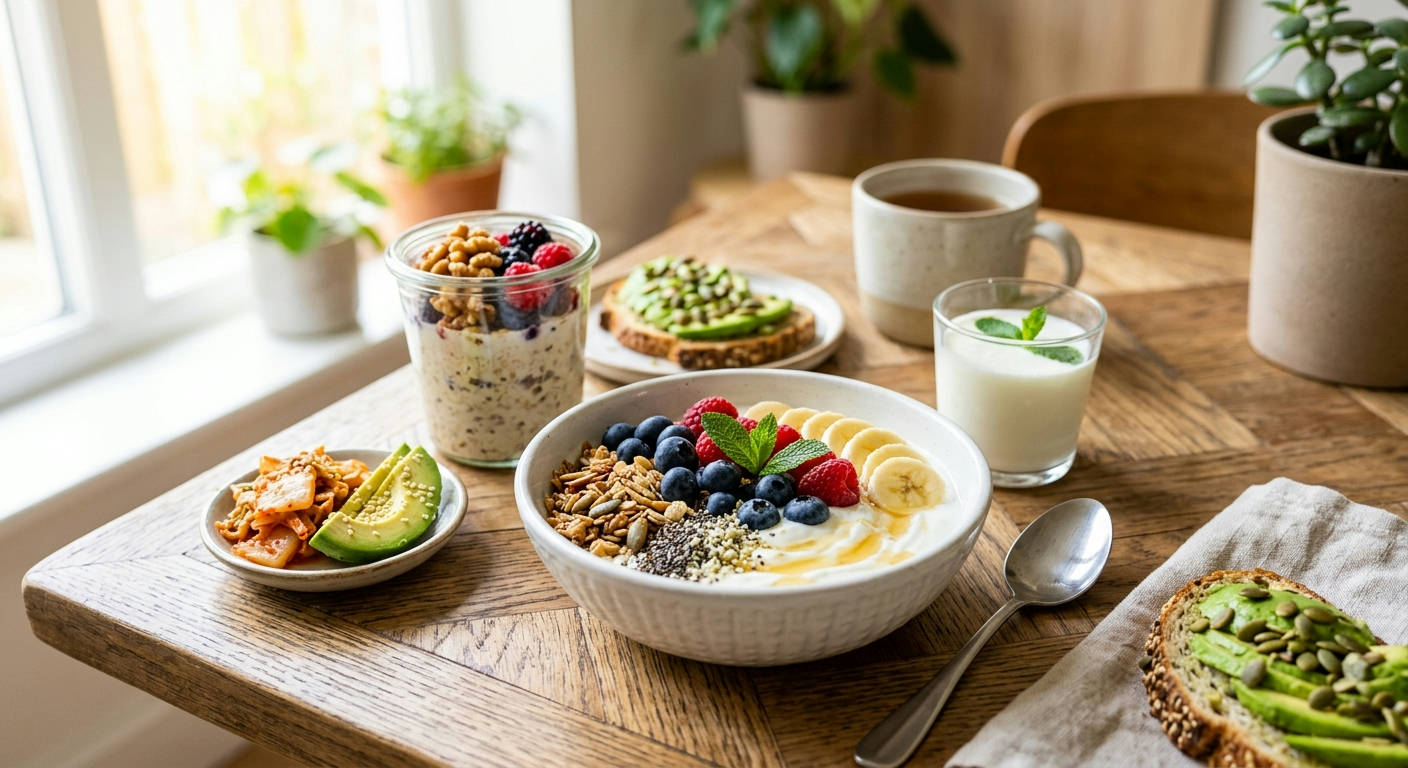
A gut healthy breakfast is the single most important decision you'll make for your digestive wellness all day. Forget the fleeting energy from a sugary pastry; we're talking about a strategic move that sets the tone for your microbiome, energy levels, and even your mood for the next 16 hours. What you choose to break your fast with either fuels your gut's beneficial bacteria or feeds the inflammatory microbes that cause bloating, brain fog, and cravings.
At Healthy Gut Review, we know that building a resilient gut starts the moment you wake up. This isn't about restrictive dieting; it's about making intelligent, powerful choices. Let's get straight to what works.
Why Your Gut Cares So Much About Breakfast
Your gut isn't just a passive tube. It's an active, intelligent system that has been in a state of rest and repair all night. Your first meal is a powerful signal that dictates its function for the entire day.
The Microbiome's Morning Routine
Overnight, your gut has been busy cleaning house, a process known as the migrating motor complex (MMC). This "housekeeping" wave sweeps residual food and bacteria through your system.
Your first meal halts this process and tells your trillions of gut microbes, "Time to wake up and work." The composition of that meal determines which bacteria get fed. A fiber-rich meal nourishes beneficial species, while a high-sugar meal can fuel the growth of less desirable ones like Candida.
Breaking the Fast: Impact on Blood Sugar and Gut Hormones
A proper gut healthy breakfast stabilizes your blood sugar from the get-go. A meal balanced with protein, healthy fats, and fiber prevents a dramatic glucose spike and the subsequent crash that leaves you reaching for more sugar by 10 AM.
This meal also triggers the release of crucial gut hormones like peptide YY (PYY) and glucagon-like peptide-1 (GLP-1). These hormones signal to your brain that you are full and satisfied, effectively shutting down hunger cues and preventing overeating later in the day.
How a Bad Breakfast Wrecks Your Day (and Your Gut)
Starting your day with a sugary cereal, a plain bagel, or a processed breakfast bar is like throwing gasoline on an inflammatory fire. These foods offer a quick burst of energy followed by a hard crash.
This metabolic rollercoaster stresses your system, can contribute to insulin resistance over time, and feeds the pathogenic bacteria that thrive on simple sugars. The result? Mid-morning bloating, frustrating brain fog, and an insatiable craving for more junk food.
The Core Components of a Gut-Friendly Morning Meal
Building a gut healthy breakfast is a formula, not a fluke. Focus on including these four key components to nourish your microbiome and keep you energized.
Fiber: The Unsung Hero (Prebiotics)
Prebiotic fiber is the food your good gut bacteria eat. It's non-digestible by you, but it's a gourmet meal for your microbes. When they ferment this fiber, they produce short-chain fatty acids (SCFAs) like butyrate, which is the primary fuel for the cells lining your colon and has powerful anti-inflammatory effects.
- Top Sources: Chia seeds, flax seeds, acacia fiber, green bananas, asparagus, and oats.
Fermented Foods: Your Probiotic Powerhouse
Probiotics are the beneficial live bacteria themselves. Introducing them through fermented foods helps to bolster the population and diversity of your gut ecosystem. A diverse microbiome is a resilient and healthy microbiome.
- Top Sources: Plain kefir, unsweetened Greek yogurt, kimchi, and sauerkraut.
Polyphenols: More Than Just Antioxidants
Polyphenols are powerful plant compounds that act as antioxidants, but their benefits for the gut are even more profound. Many polyphenols pass through the small intestine undigested and are metabolized by your gut bacteria, selectively promoting the growth of beneficial species like Akkermansia muciniphila.
- Top Sources: Berries (blueberries, raspberries), dark chocolate (85% cacao or higher), green tea, and flax seeds.
Healthy Fats and Quality Protein: The Satiety Duo
Protein and fat are essential for slowing down digestion. This gradual process prevents blood sugar spikes and keeps you feeling full and satisfied for hours. They are also critical for rebuilding tissues, including the gut lining itself.
- Top Sources: Avocado, nuts and seeds, eggs, and quality protein powders (if you're a smoothie person).
5 Gut Healthy Breakfast Ideas You Can Make This Week
Theory is great, but practical application is better. Here are five easy, delicious, and powerful breakfast recipes to get you started.
Recipe 1: The Ultimate Prebiotic Smoothie Bowl
This isn't your average sugar-bomb smoothie. This is a fiber-packed meal designed to feed your gut flora.
Blend one small green-tipped banana (a great source of resistant starch), a tablespoon of chia seeds, a tablespoon of ground flaxseed, a scoop of unsweetened protein powder, a handful of spinach, and unsweetened almond milk. Pour it into a bowl and top with fresh blueberries and a sprinkle of hemp hearts for extra protein and healthy fats.
Recipe 2: Savory Kimchi and Avocado Toast on Sourdough
Take your avocado toast to the next level. Use a slice of true, slow-fermented sourdough bread, which is easier to digest than standard bread.
Mash half an avocado onto the toast and top it with a generous spoonful of kimchi. Kimchi provides a powerful dose of probiotics. Finish with a sprinkle of red pepper flakes and a pasture-raised fried egg on top for high-quality protein.
"Think of your gut microbes as an army. The foods you eat for breakfast are their marching orders for the rest of the day."
Recipe 3: Chia Seed Pudding with Berries and Kefir
This is the perfect make-ahead option. The night before, combine three tablespoons of chia seeds with a half-cup of plain, full-fat kefir and a half-cup of unsweetened coconut milk. Let it sit in the fridge overnight.
In the morning, the chia seeds will have gelled into a thick pudding. Top it with a handful of mixed berries for a potent dose of polyphenols and a drizzle of almond butter for healthy fats.
Recipe 4: Overnight Oats with a Probiotic Twist
Oats are a fantastic source of a specific prebiotic fiber called beta-glucan. To make them even better for your gut, prepare them cold.
Combine a half-cup of rolled oats with one cup of unsweetened almond milk or water in a jar. Add a tablespoon of ground flaxseed. In the morning, stir in a large scoop of unsweetened Greek yogurt or coconut yogurt for probiotics and top with walnuts for omega-3s.

Recipe 5: Scrambled Eggs with Turmeric and Sautéed Greens
This is a classic savory breakfast with a gut-supporting upgrade. Whisk two or three pasture-raised eggs with a pinch of black pepper and half a teaspoon of turmeric. The curcumin in turmeric is a potent anti-inflammatory compound, and black pepper enhances its absorption.
In a pan with a little avocado oil, sauté a large handful of spinach or kale until just wilted. Pour the eggs over the greens and scramble. This combination delivers protein, healthy fats, and micronutrients.
What to AVOID: The Breakfast Gut Busters
Knowing what not to eat is just as important as knowing what to eat. Many common breakfast foods are actively harming your gut health.
The Sugar Trap: Cereals, Pastries, and Sweetened Yogurts
That "healthy" granola or fruit-on-the-bottom yogurt is likely loaded with added sugar. Sugar is the preferred food for pathogenic bacteria and yeast, leading to dysbiosis—an imbalance of good to bad gut microbes. According to a 2026 report from the World Health Organization, excessive sugar intake remains a primary driver of chronic inflammation.
Always read labels. A "healthy" breakfast food should have less than 5 grams of sugar per serving.
Processed Meats: Nitrates and Inflammation
Breakfast sausages, bacon, and other processed meats often contain nitrates and other preservatives that can irritate the gut lining and have been linked to an increased risk of inflammatory conditions.
Opt for whole-food protein sources like eggs, smoked salmon, or even leftover chicken from the night before.
The Wrong Kind of Grains: Refined Flours and Gut Irritation
A plain white bagel, a croissant, or a stack of pancakes made from white flour provides a quick hit of carbohydrates with almost no fiber. This causes a rapid blood sugar spike and offers zero fuel for your beneficial gut bacteria.
For some individuals, the gluten in these refined products can also be a major source of gut irritation and inflammation. If you have a sensitive system, paying attention to how you feel after eating gluten is critical. Some people find that addressing intestinal permeability is a key step, which often involves targeted nutrients. If this sounds like you, exploring the best supplements for leaky gut could provide valuable insights.
Beyond Food: Habits to Supercharge Your Morning Gut Routine
Optimizing your morning goes beyond just the plate. These simple habits can dramatically improve how your body digests and utilizes your gut healthy breakfast.
Mindful Eating: Slow Down and Chew
Digestion begins in your brain and mouth, not your stomach. Taking the time to sit down, relax, and thoroughly chew your food signals to your body to start producing stomach acid and digestive enzymes.
When you eat in a stressed, rushed state, you're in "fight-or-flight" mode, which actively shuts down digestion. Chew each bite until it's nearly liquid. Your stomach will thank you.
Hydration First: The Power of Morning Water
Before you eat anything, drink a large glass of room-temperature water. You're naturally dehydrated after a night's sleep, and water is essential for producing stomach acid, moving fiber through your system, and maintaining a healthy mucosal lining in your gut.
Adding a squeeze of lemon can also provide a gentle nudge to your liver and gallbladder to get digestive juices flowing.
Timing Matters: When You Eat vs. What You Eat
Consider giving your digestive system a longer break overnight. An eating window of 8-10 hours, which means fasting for 14-16 hours, can do wonders for gut health. This extended rest period gives your gut's "housekeeping" crew (the MMC) more time to do its job.
This doesn't mean you need to skip breakfast, but perhaps you push it back to 9 or 10 AM instead of eating the moment you wake up.
Customizing Your Breakfast for Specific Needs
A gut healthy breakfast isn't one-size-fits-all. Your ideal morning meal might look different based on your unique biology and lifestyle.
For a Sensitive Gut (IBS, SIBO considerations)
If you struggle with bloating or discomfort, you might need to be more strategic. High-fiber foods can sometimes be problematic. You might do better with well-cooked, low-FODMAP options like a smoothie with a small amount of green banana, or scrambled eggs with sautéed spinach instead of raw greens.
For those with digestive insufficiency, sometimes the body needs extra help breaking down fats, proteins, and carbs. This is where targeted support can be a game-changer. Learning about the best digestive enzyme supplements can help you understand if this is a missing piece of your puzzle.
For Athletes: Fueling Performance and Recovery
Athletes need more calories and easily digestible carbohydrates to replenish glycogen stores. A great option is a large bowl of oatmeal with a scoop of protein powder, a tablespoon of almond butter, and a handful of berries. This provides a mix of complex carbs, protein, and antioxidants to support muscle repair and reduce inflammation.
For Busy Professionals: Quick and Portable Options
No time is no excuse. Prepare chia seed pudding or overnight oats in mason jars for a grab-and-go option. You can also pre-make egg muffins on Sunday to have a high-protein, low-carb breakfast ready all week. A high-quality smoothie can be made in under five minutes.
The Role of Supplements in a Gut-Focused Morning
While a food-first approach is always the foundation, certain supplements can provide targeted support for your gut health goals.
"Fiber isn't just about 'regularity.' It's the primary fuel source for the beneficial bacteria that regulate everything from your immune system to your mood."
Should You Add a Probiotic?
For some, especially after a course of antibiotics or during periods of high stress, a probiotic supplement can help re-establish a healthy microbial balance. The needs can vary significantly, especially by gender. Women, for instance, often have unique needs related to vaginal and gut flora, making a targeted approach beneficial. If you're considering this route, it's worth researching the best probiotics for women to find a strain-specific formula.
The Case for Digestive Enzymes
As we age or experience high levels of stress, our natural production of digestive enzymes can decline. This can lead to bloating, gas, and poor nutrient absorption. Taking a broad-spectrum digestive enzyme supplement with your breakfast can help your body break down the meal more efficiently.
L-Glutamine and Other Gut-Lining Support
L-Glutamine is an amino acid that serves as a primary fuel source for the cells of the intestinal lining. It's often used to help repair and maintain the integrity of the gut barrier. Other supportive nutrients include zinc, slippery elm, and marshmallow root. These are often found in combination formulas designed for gut repair.
Starting your day with a truly gut healthy breakfast is a powerful act of self-care. It's not about perfection; it's about intention. By focusing on fiber, fermented foods, healthy fats, and quality protein, you provide your body and your microbiome with the exact tools they need to thrive. Make this one change, and watch how it transforms your energy, your digestion, and your entire day.
