

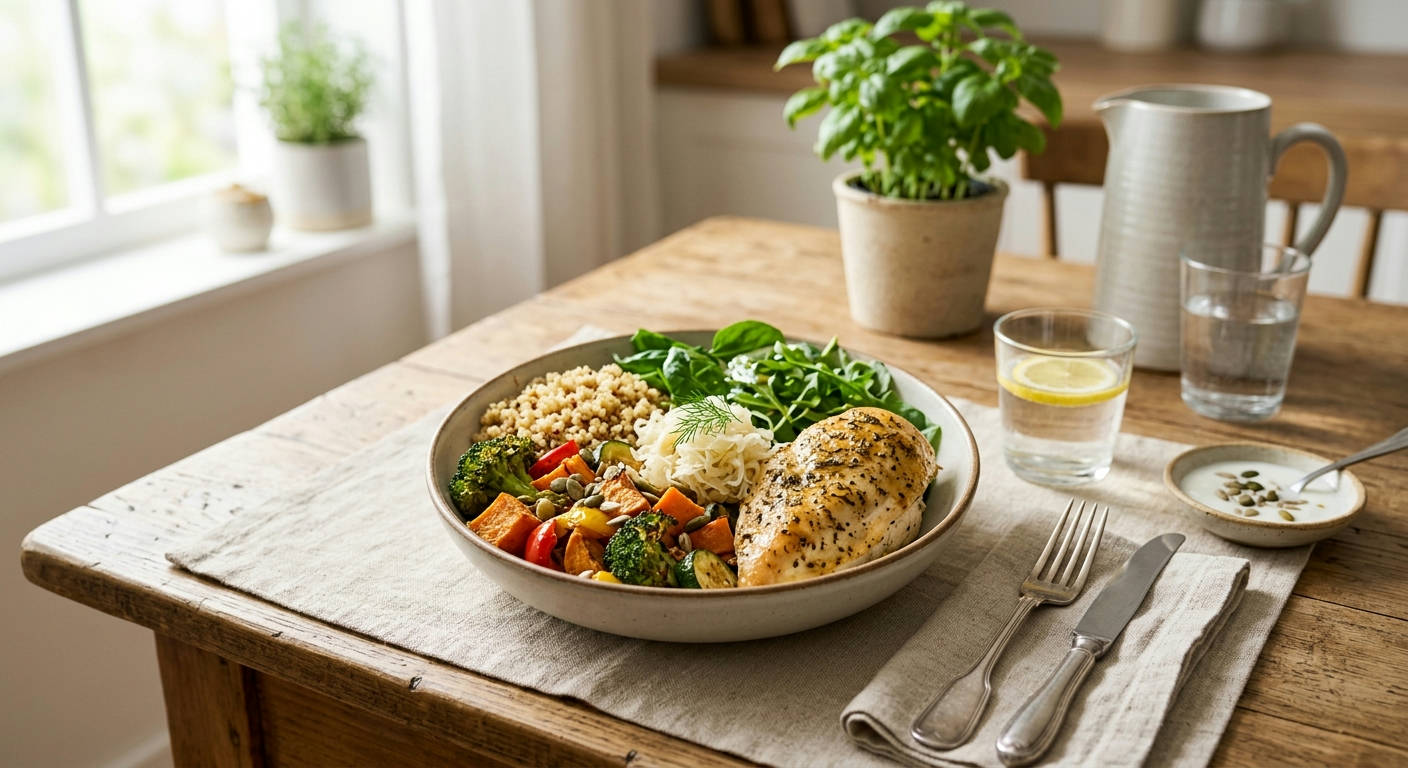
A truly gut healthy dinner isn't just about avoiding fried food or eating a sad, plain salad. It's an active strategy to nourish the trillions of microbes living in your digestive tract, the tiny allies that influence everything from your mood and immune system to your long-term health. Forget the bland, restrictive diets of the past. In 2026, building a meal that calms inflammation, boosts beneficial bacteria, and leaves you feeling fantastic is easier—and more delicious—than ever.
We're not here to give you a list of "good" and "bad" foods. We're here to give you a blueprint for dinner that works for your gut, not against it.
The Core Principles of a Gut-Friendly Evening Meal
Before you even think about specific recipes, you need to understand the 'why' behind the 'what'. These are the non-negotiable foundations for any dinner that aims to support your microbiome.
Fiber First: The Unsung Hero
Your gut bacteria don't eat steak or chicken; they eat fiber. Specifically, they thrive on prebiotic fiber—the indigestible plant fibers that reach your colon intact and become food for beneficial microbes like Bifidobacteria and Lactobacilli.
When you starve them of fiber, you're starving your best internal allies. A dinner low in diverse plant fibers is a missed opportunity to fuel the good guys.
Polyphenol Power: More Than Just Color
Polyphenols are the compounds that give fruits and vegetables their vibrant colors. But they do more than look pretty. These micronutrients act as powerful antioxidants and directly feed beneficial gut bacteria.
Think of them as a bonus for your microbiome. A colorful plate—rich with deep greens, purples, reds, and oranges—is a sign that you're delivering a feast of polyphenols. Research from institutions like Harvard T.H. Chan School of Public Health continues to underscore their importance for a resilient gut.
Fermented Foods: Your Microbiome's Reinforcements
Adding a serving of fermented food to your dinner is like sending in a special forces team for your gut. Foods like kimchi, sauerkraut, kefir, and miso are packed with live probiotic cultures.
These foods introduce new, beneficial bacteria to your system, helping to crowd out less desirable strains and improve the overall diversity of your gut ecosystem.
Timing is Everything
When you eat can be just as important as what you eat. Eating a large, heavy meal right before bed forces your digestive system to work overtime when it should be resting and repairing.
Finishing your dinner at least 2-3 hours before you lie down gives your body ample time to digest, reducing the risk of acid reflux, bloating, and poor sleep—all of which negatively impact gut health.
Building Your Plate: The Anatomy of a Perfect Dinner
Let's get practical. How do you translate these principles into an actual meal? Use the "Microbiome Plate" method as your guide. It's a simple visual that ensures you're hitting all the right notes.
The "Microbiome Plate" Method
Forget complex calorie counting. Visualize your plate and divide it like this:
- 50% Diverse Plants: This is the most important section. Fill half your plate with non-starchy vegetables. Think leafy greens, broccoli, bell peppers, asparagus, mushrooms, and cauliflower. Aim for at least 3-4 different kinds of vegetables to maximize fiber and polyphenol diversity.
- 25% Clean Protein: This portion is for high-quality protein that's easy to digest. Think baked salmon, grilled chicken breast, lentils, chickpeas, or organic tofu.
- 25% Smart Carbs & Healthy Fats: This section is for slow-release energy and anti-inflammatory fats. This could be a scoop of quinoa, a small sweet potato, a few slices of avocado, or a drizzle of extra virgin olive oil.
"Your gut microbes are like a personal army. The food you eat at dinner is the training, equipment, and morale you provide them for the night's battle. Don't send them in unprepared."
This method ensures you get the fiber, nutrients, and energy you need without overwhelming your digestive system before bed.
Protein That Doesn't Wreak Havoc
Protein is essential, but some sources are kinder to your gut than others. Heavily processed meats and large portions of red meat can promote the growth of less-favorable bacteria.
Focus on lean proteins like fish (especially fatty fish like salmon for its omega-3s), poultry, and plant-based powerhouses like lentils, beans, and tempeh. These provide the building blocks your body needs without the inflammatory baggage.
Smart Carbs for a Happy Gut
Refined carbohydrates like white pasta, white bread, and sugary sauces are gut wreckers. They offer little fiber and can feed the pro-inflammatory bacteria you want to keep in check.
Swap them for complex, fiber-rich carbohydrates. Quinoa is a complete protein, sweet potatoes are packed with vitamins, and brown rice provides sustained energy. These fuel you and your microbes.
Common Dinner Mistakes That Sabotage Your Gut
You might be eating "healthy" foods but still experiencing bloating, gas, or discomfort. Often, it's not the food itself but how it's prepared or what it's paired with. Watch out for these common gut health traps.
The Ultra-Processed Food Trap
This is the biggest offender. Frozen pizzas, packaged meals, and instant noodles are engineered to be hyper-palatable but are nutritional deserts for your microbiome.
They are typically loaded with emulsifiers, artificial sweeteners, and preservatives that can disrupt the gut lining and harm beneficial bacteria. The convenience is never worth the long-term cost to your health.
Overloading on Red Meat and Saturated Fats
A massive steak dinner might feel satisfying, but it can be tough on your gut. High intake of red meat, especially processed versions like sausage and bacon, has been linked to the production of TMAO (trimethylamine N-oxide), a compound associated with inflammation.

Moderation is key. Treat red meat as a weekly indulgence, not a nightly staple.
The Hidden Sugars in Sauces and Dressings
You made a beautiful salad, but then you drowned it in a store-bought creamy dressing. You just dosed your meal with high-fructose corn syrup, vegetable oils, and a list of chemicals.
The same goes for jarred pasta sauces, teriyaki glaze, and BBQ sauce. These are often sugar bombs in disguise. Opt for simple dressings made with olive oil and vinegar, or make your own sauces where you control the ingredients.
Actionable Gut Healthy Dinner Recipes (2026 Edition)
Enough theory. Here are four simple, delicious, and powerful dinner ideas you can make this week.
Quick Weeknight Wonder: Salmon with Roasted Asparagus and Quinoa
This is the quintessential gut-healthy meal. The salmon provides anti-inflammatory omega-3s. The asparagus is a fantastic source of prebiotic fiber. The quinoa offers complete protein and complex carbs. Season with lemon, dill, and garlic for extra flavor and polyphenol benefits.
Plant-Powered Perfection: Lentil and Sweet Potato Stew
A hearty, warming stew that's incredibly easy to make. Lentils are a fiber powerhouse, while sweet potatoes provide beta-carotene and slow-release energy. Sauté onions, garlic, and carrots first to build a prebiotic base, then add vegetable broth, lentils, cubed sweet potato, and spices like turmeric and cumin.
The Fermented Feast: Kimchi Fried Rice with Tofu
Don't let the "fried" fool you. This is a quick stir-fry using leftover brown rice. Sauté cubed tofu or edamame, then add the rice, a generous portion of chopped kimchi (a probiotic all-star), and a dash of tamari. The heat will kill some probiotics, but you still get the flavor and fiber. For a full probiotic punch, add an extra scoop of fresh kimchi on top before serving.
Comfort Food, Gut-Approved: Turkey Meatballs with Zucchini Noodles
Craving pasta? This swap satisfies the craving without the refined carbs. Make meatballs with lean ground turkey, almond flour (instead of breadcrumbs), and herbs. Simmer them in a simple, no-sugar-added tomato sauce. Serve over spiralized zucchini "noodles" for a dose of vegetables and hydration.
Beyond the Plate: Dinner Rituals to Enhance Digestion
What you do around your meal is just as crucial as the food itself. A stressed, rushed dinner will never be a gut-healthy dinner, no matter what's on the plate.
The Power of Mindful Eating
Stop eating in front of the TV or while scrolling on your phone. When you're distracted, you activate your body's "fight-or-flight" response, which shuts down optimal digestion.
Sit at a table. Look at your food. Smell it. Focus on the flavors and textures. This simple act of mindfulness switches you into "rest-and-digest" mode, priming your body to properly break down and absorb nutrients.
Chew Your Food Properly
Digestion begins in the mouth, not the stomach. Your saliva contains enzymes that start breaking down carbohydrates. If you inhale your food in three bites, you're forcing your stomach and intestines to do extra work they weren't designed for.
According to a 2026 digestive health report, incomplete chewing is one of the leading contributors to bloating and indigestion in adults. Aim for 20-30 chews per bite.
The Post-Dinner Walk
Resist the urge to collapse on the couch immediately after eating. A gentle 10-15 minute walk is one of the best things you can do for digestion.
This light activity helps stabilize blood sugar levels after a meal and can stimulate peristalsis—the muscular contractions that move food through your digestive tract. A study in the International Journal of Sport Nutrition and Exercise Metabolism highlights how even short, low-intensity walks after eating can have significant metabolic benefits.
What About Supplements? Pairing Diet with Smart Support
While food should always be your foundation, targeted supplements can play a valuable role, especially if you're dealing with specific digestive complaints.
When Digestive Enzymes Can Help
If you often feel heavy, bloated, or overly full after a normal-sized meal, your body might not be producing enough of its own digestive enzymes. This can happen due to age, stress, or certain health conditions. Taking a high-quality supplement can help break down fats, proteins, and carbs more efficiently, easing the burden on your gut. Our team at Healthy Gut Review has tested dozens, and you can see our breakdown of the best digestive enzyme supplements currently on the market.
Can Probiotics Make a Difference?
While fermented foods are great, a targeted probiotic supplement can deliver a much higher and more specific dose of beneficial bacteria. This can be particularly helpful after a course of antibiotics or for managing specific conditions. For women, certain strains can also support vaginal and urinary tract health. We have an in-depth guide to the best probiotics for women that covers the latest 2026 research on strain-specific benefits.
Addressing Deeper Issues
Sometimes, digestive distress is a sign of an underlying issue like increased intestinal permeability, often called "leaky gut." If you suspect a deeper problem, it's crucial to work with a practitioner, but diet and specific nutrients can help support the integrity of the gut lining. We've compiled a list of the best supplements for leaky gut based on clinical evidence.
Your Gut Health Journey Starts Tonight
Transforming your gut health doesn't require a radical, overnight overhaul. It starts with one meal. It starts with your next dinner.
Focus on adding more, not just taking away. Add more color, more fiber, and more plant diversity to your plate. Pay attention to how you eat, not just what you eat. Be consistent. One gut-friendly dinner can make you feel better tomorrow. A month of them can change your health trajectory. Your gut is waiting.
