

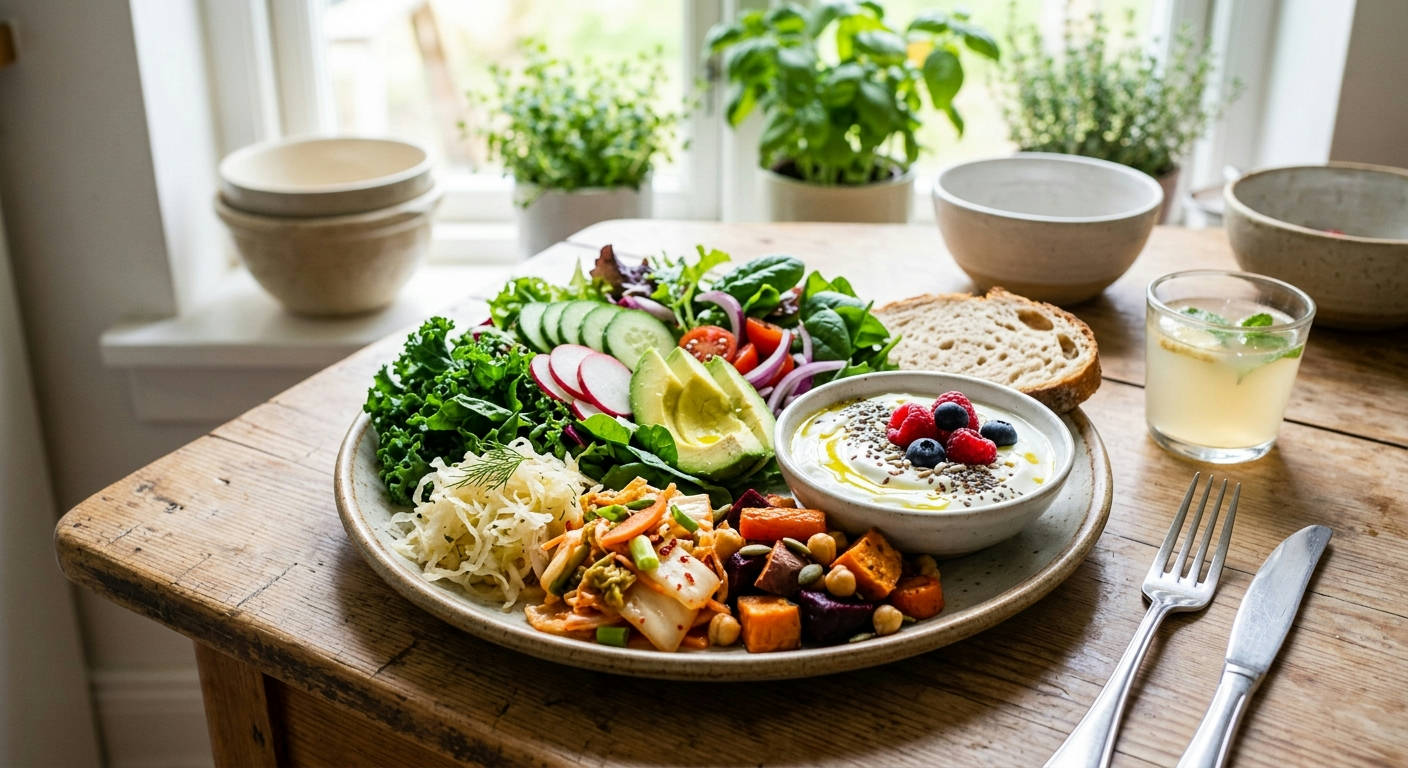
Finding the right healthy food for gut health isn't about chasing the latest fad diet; it's about fundamentally understanding what the trillions of microbes living in your digestive system actually need to thrive. Forget complicated rules and restrictive eating. Your gut wants real, whole foods that feed the good bacteria, repair your intestinal lining, and keep everything running smoothly. This is your no-nonsense guide to making that happen, starting with your next meal.
At Healthy Gut Review, we cut through the noise. We're here to give you the straight facts on how to build a resilient gut microbiome that works for you, not against you.
The Microbiome 101: Why Your Gut Is Your Second Brain
You've heard the term "gut health," but what does it actually mean? It all comes down to the microbiome, a complex community of trillions of bacteria, viruses, and fungi living in your intestines. Think of it as an internal rainforest, where diversity is key to a healthy system.
What are Gut Bacteria, Anyway?
These microorganisms aren't invaders; they're essential partners. They help you digest food, synthesize crucial vitamins like B12 and K, regulate your immune system, and even protect you from harmful pathogens. You have both "good" and "bad" bacteria, and the goal is to maintain a healthy balance, with the beneficial microbes firmly in charge.
An imbalanced gut, a state known as dysbiosis, is linked to a shocking number of modern health issues, from digestive distress and autoimmune conditions to mental health challenges. This isn't a fringe concept; it's a cornerstone of health in 2026.
The Gut-Brain Axis Connection
The link between your gut and your brain is a two-way street called the gut-brain axis. Your gut is lined with more than 100 million nerve cells, creating a direct communication line to your brain. This is why you feel "butterflies" when you're nervous or a "gut-wrenching" feeling during stress.
This connection is profound. A significant portion of your body's serotonin, a key neurotransmitter for mood regulation, is produced in the gut. An unhealthy gut can directly impact your mental clarity, mood, and stress response. Feeding your gut is literally feeding your brain.
The Pillars of a Gut-Healthy Diet: Fiber and Fermentation
If you want to build a better gut, you need to focus on two core principles: feeding the good guys and introducing new allies. This is where prebiotics and probiotics come in.
The Power of Prebiotics: Feeding Your Good Bugs
Prebiotics are a type of dietary fiber that your body can't digest. Instead, they travel to your lower digestive tract, where they become food for the beneficial bacteria living there. Think of prebiotics as fertilizer for your internal garden.
When your gut bacteria ferment these fibers, they produce short-chain fatty acids (SCFAs) like butyrate. Butyrate is the primary energy source for the cells lining your colon and plays a massive role in reducing inflammation and maintaining a strong gut barrier.
Foods rich in prebiotic fiber include:
- Onions and garlic
- Leeks
- Asparagus
- Bananas (especially slightly green ones)
- Oats
- Jerusalem artichokes
- Chicory root
Probiotics in Action: Introducing Beneficial Bacteria
Probiotics are the live beneficial bacteria themselves. You can find them in fermented foods, where microbes have been used to transform the food's original state. Eating these foods directly seeds your gut with helpful new residents.
These aren't just any bacteria. Strains like Lactobacillus and Bifidobacterium have been studied extensively for their ability to improve digestion, boost immunity, and even produce beneficial compounds. Consuming a variety of fermented foods introduces a diverse team of helpers to your system.
Your Ultimate Shopping List: Top Healthy Food for Gut Health
Ready to hit the grocery store? Skip the "gut-friendly" packaged junk and head straight for the real stuff. Building a robust gut is about consistent choices, not a one-time cleanse.
Fermented Superstars
These foods are teeming with live, beneficial probiotic cultures. Aim to incorporate at least one into your daily routine.
- Yogurt and Kefir: Look for "live and active cultures" on the label and choose plain, unsweetened varieties. Kefir is often even more potent than yogurt, containing a wider range of bacteria and yeasts.
- Sauerkraut and Kimchi: These fermented cabbage dishes are probiotic powerhouses. Be sure to buy the refrigerated kind, as shelf-stable versions are pasteurized, killing the beneficial microbes.
- Miso and Tempeh: Fermented soy products common in Asian cuisine, they offer a savory, umami-rich source of probiotics. Miso is great for soups and marinades, while tempeh is a fantastic meat substitute.
- Kombucha: A fermented tea drink. Be mindful of the sugar content, as some commercial brands can be loaded with it. Look for options with 5 grams of sugar or less per serving.
High-Fiber Heroes
These prebiotic-rich foods are the fuel your good bacteria crave. Diversity is the most important factor here.
- Legumes: Lentils, chickpeas, black beans, and kidney beans are all packed with fiber.
- Whole Grains: Oats, barley, quinoa, and brown rice provide sustained energy and plenty of prebiotic fiber.
- Root Vegetables: Sweet potatoes, carrots, and beets are excellent fiber sources. Leaving the skin on provides even more benefit.
- Alliums: Garlic, onions, and leeks are particularly rich in the types of prebiotics that feed beneficial Bifidobacteria.
"The single greatest predictor of a healthy gut microbiome is the diversity of plants in one's diet. Aim for 30+ different plant species per week." – Dr. Tim Spector, Professor of Genetic Epidemiology
Polyphenol-Packed Powerhouses
Polyphenols are antioxidant compounds found in plants. They act as prebiotics and have anti-inflammatory effects in the gut.
- Berries: Blueberries, raspberries, and strawberries are loaded with them.
- Dark Chocolate: Choose 70% cacao or higher for the maximum benefit and minimal sugar.
- Green Tea: Contains a specific type of polyphenol called a catechin, which promotes the growth of beneficial bacteria.
- Olive Oil: Extra virgin olive oil is rich in anti-inflammatory polyphenols.
Beyond the Basics: Foods That Soothe and Repair

Some foods go beyond just feeding bacteria; they actively help calm inflammation and strengthen the gut's physical structure.
The Role of Collagen and Bone Broth
The lining of your intestines is only one cell thick. It's a delicate barrier that can become compromised, a condition often referred to as "leaky gut." The amino acids found in collagen, like glycine and proline, are the building blocks needed to repair and maintain this crucial barrier.
Slow-simmered bone broth is a fantastic whole-food source of easily absorbable collagen. It's a traditional food that modern science is finally catching up to. If you suspect your gut lining needs support, understanding the connection between diet and intestinal permeability is critical. For a deeper dive, our guide on the best supplements for leaky gut can provide additional targeted strategies.
Soothing with Ginger and Peppermint
Ginger is a well-known carminative, meaning it helps relax the digestive tract and can relieve symptoms like bloating, gas, and nausea. Peppermint works in a similar way, specifically helping to relax the muscles of the colon. A cup of ginger or peppermint tea can be a simple, effective tool for digestive comfort.
Omega-3 Fatty Acids for Inflammation
Chronic inflammation is at the root of many gut problems. Omega-3 fatty acids, found in fatty fish like salmon, sardines, and mackerel, are potent anti-inflammatory agents. Plant-based sources include chia seeds, flaxseeds, and walnuts.
What to Kick to the Curb: Foods That Wreck Your Gut
Just as important as what you add to your diet is what you remove. Certain foods can actively harm your gut microbiome and undermine your progress.
The Sugar Trap: How It Fuels Bad Bacteria
Refined sugar is like rocket fuel for undesirable bacteria and yeasts, such as Candida. When these microbes overgrow, they can crowd out the beneficial ones, leading to dysbiosis, inflammation, and cravings for more sugar. It's a vicious cycle.
The Problem with Processed Foods and Artificial Sweeteners
Ultra-processed foods are often loaded with emulsifiers, thickeners, and other additives that can disrupt the protective mucus layer of the gut and negatively alter the microbiome.
Even "diet" foods can be a problem. Studies from as recently as 2025 have continued to show that artificial sweeteners like aspartame, sucralose, and saccharin can alter gut bacteria composition for the worse, even potentially leading to glucose intolerance—the very thing people use them to avoid. The Weizmann Institute of Science has published compelling research on this topic.
Why Healthy Fats Are In, but Trans Fats Are Out
Healthy fats from avocados, olive oil, nuts, and seeds are anti-inflammatory and great for your gut. Man-made trans fats, often found in fried foods, baked goods, and margarine, are highly inflammatory and have a detrimental effect on your microbial balance.
Putting It All Together: Practical Gut-Friendly Meal Ideas
Knowing what to eat is one thing; making it happen is another. Let's make this practical.
A Sample Gut-Healthy Day
- Breakfast: A bowl of oatmeal (prebiotic) topped with blueberries (polyphenols), chia seeds (omega-3s & fiber), and a dollop of plain Greek yogurt (probiotic).
- Lunch: A large salad with mixed greens, chickpeas (fiber), bell peppers, cucumber, and a vinaigrette made with extra virgin olive oil. Add some grilled salmon for protein and omega-3s.
- Dinner: A lentil and vegetable soup seasoned with garlic and onions (prebiotics). Serve with a side of kimchi (probiotic).
Simple Swaps for a Healthier Gut
You don't have to overhaul your entire life overnight. Start with small, consistent changes.
- Swap white bread for 100% whole grain or traditional sourdough bread.
- Swap sugary soda for sparkling water with a squeeze of lemon or a low-sugar kombucha.
- Swap a candy bar for a piece of dark chocolate and a handful of almonds.
- Swap vegetable oil for extra virgin olive oil or avocado oil.
"Your gut is not Las Vegas. What happens in the gut doesn't stay in the gut. It affects your entire body, from your brain to your skin to your joints." – Dr. Robynne Chutkan, Gastroenterologist
When Food Isn't Enough: Navigating Supplements
A food-first approach is always best. However, in some cases, targeted supplements can provide a much-needed boost.
The Scoop on Probiotic Supplements
While fermented foods are fantastic, sometimes a specific strain or a higher dose is needed to address a particular issue. This is especially true after a course of antibiotics, which can wipe out good bacteria along with the bad. For specific needs, such as those unique to female biology, exploring targeted options like the best probiotics for women can be a strategic move.
Do You Need Digestive Enzymes?
As we age, or due to certain health conditions, our body's natural production of digestive enzymes can decline. This can lead to bloating, gas, and indigestion because food isn't being broken down properly. Supplemental enzymes can help bridge that gap, ensuring you get the most nutrients out of the healthy food you're eating. If you consistently feel bloated after meals, it might be worth investigating the role of these crucial proteins in our guide to the best digestive enzyme supplements.
Your Gut Health Journey Starts Now
Transforming your gut health is a marathon, not a sprint. It's about building sustainable habits, not seeking a quick fix. By focusing on a diverse diet rich in fiber, fermented foods, and polyphenols, you provide your microbiome with the tools it needs to keep you healthy, focused, and energized.
Start small. Pick one new food to try this week. Make one simple swap. Your gut will thank you for it, and the positive effects will ripple through your entire system. The power to build a healthier you is, quite literally, in your gut.
