


Chronic constipation is common enough that broad advice like “eat more fiber” often gets repeated without much useful detail. For many people, that advice falls short because the primary concern is not just how much fiber they eat, but which type, how fast they increase it, and whether their gut has enough fluid to move that fiber through.
A meta-analysis in the World Journal of Gastroenterology found that fiber has a significant statistical advantage over placebo for improving stool frequency, while showing clear limits for broader symptom relief in some groups in this published review of dietary fiber and constipation. That matches what I see in practice. Fiber can improve regularity, but it can also backfire if the form is wrong for your gut or if you add too much too quickly.
The type of fiber matters. Soluble fiber absorbs water and forms a softer gel, which can help if stools are dry or hard to pass. Insoluble fiber adds bulk and can help some people move stool more efficiently, but it may worsen bloating or abdominal pressure in people with a sensitive or sluggish gut. Preparation matters too. Soft-cooked lentils, oats, or sweet potatoes are often easier to tolerate than a large bowl of raw salad or a dense bran cereal when constipation already comes with gas and fullness.
That is why this guide goes beyond a simple food list. Each section covers what kind of fiber a food provides, how to prepare it to reduce side effects, and how to pair it with fluids, probiotic foods, and daily habits that support motility. A breakfast of cooked oats with fruit and yogurt works differently from dry cereal alone. If you are also sorting through probiotic support options for children, the same principle applies. Strain selection, dose, and tolerance all matter.
Relief often starts with ordinary foods used in a smarter way. Pears with the skin on. Lentils cooked until soft. Kiwi, prunes, oats, chia, psyllium, and fermented foods that support the microbiome while your bowel habits improve.
The goal is straightforward. Build stools that are softer, bulkier, and easier to pass without making yourself more bloated, gassy, or uncomfortable.
1. Whole Grains
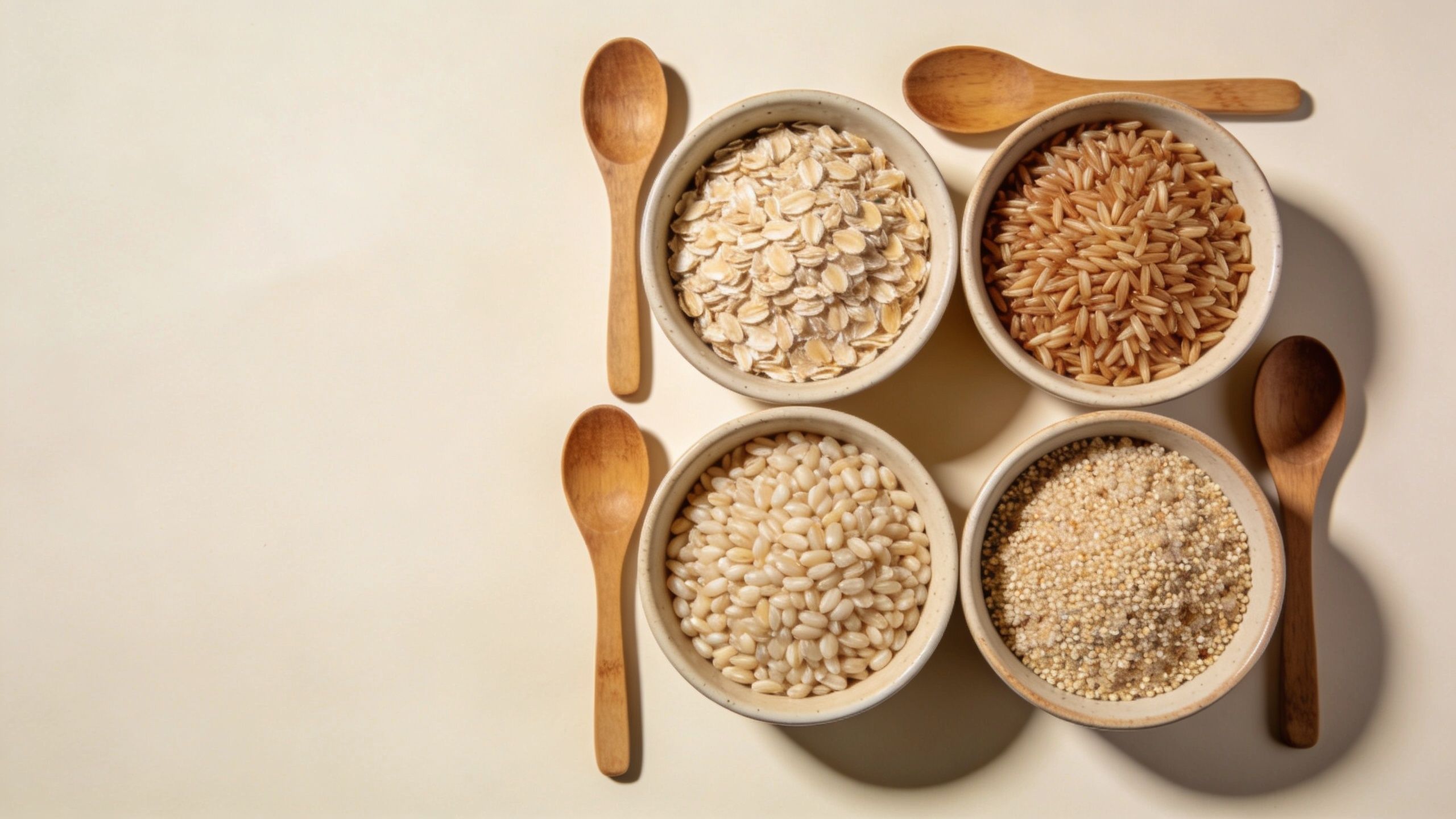
Whole grains are one of the steadier ways to build bowel regularity because they give you fiber in a form generally suitable for daily use. Oats and barley tend to be gentler. Brown rice and quinoa are often easier for people who don’t do well with wheat-heavy meals. The point isn’t to eat huge bowls of grain. It’s to create predictable stool bulk without irritating your gut.
For constipation, I usually prefer cooked, soft whole grains over dry, abrasive cereal. Warm oatmeal, barley soup, or a quinoa bowl lands very differently than a giant serving of bran flakes when you’re already bloated.
How to use them without getting puffy
Start small. A half bowl of cooked oats or a modest serving of quinoa is a better first move than replacing every carb in your day with whole grains at once. If your gut is sluggish, undercooked grains can sit heavily and make you feel worse.
A practical breakfast is steel-cut oats cooked until soft, then topped with fruit and a spoonful of yogurt or kefir. That combination gives you fiber, fluid, and a probiotic food in one meal. If you’re exploring family-friendly probiotic support too, Healthy Gut Review also covers probiotic options for kids.
Whole grains help most when they replace refined grains, not when they get piled on top of an already heavy, low-fluid diet.
Best choices and simple pairings
- Oats for a gentle start: Oatmeal is often the easiest grain to tolerate when stool is hard and difficult to pass.
- Barley for soups and stews: Barley works well when you want fiber in a softer, better-hydrated form.
- Brown rice as a transition food: If you’ve been eating mostly white rice, brown rice can be a gradual step up.
- Quinoa for lighter meals: Quinoa fits well in lunch bowls with cooked vegetables and olive oil when heavier grains feel too dense.
If whole grains make you feel distended, look at preparation before blaming the food itself. Soaking grains before cooking, cooking them until tender, and eating them with enough liquid matters. So does pace. Going from almost no fiber to “clean eating” overnight is one of the fastest ways to end up more constipated and more bloated.
2. Legumes
Beans, lentils, chickpeas, and peas can be excellent high fiber foods for constipation, but they’re also the category most likely to backfire when people rush. Legumes provide both stool-building fiber and fuel for beneficial gut bacteria. That’s useful. It’s also exactly why they can create gas if your gut isn’t ready.
Lentils are usually the easiest entry point. They cook faster than most dried beans and tend to feel less heavy. Split peas also work well in soft soups. Black beans and chickpeas are great foods, but they often need more careful portion control at first.
The right way to introduce them
If you’ve been avoiding fiber for a while, start with a small scoop, not a full burrito bowl. A little lentil soup with lunch is often better tolerated than a giant bean chili at dinner. The later and larger the serving, the more likely you are to feel pressure overnight.
Use technique to your advantage:
- Rinse canned legumes well: That can make them easier to tolerate.
- Soak dried beans before cooking: Then discard the soaking water and cook until very soft.
- Season with digestive herbs and spices: Ginger, cumin, and fennel are practical kitchen choices.
- Blend when needed: Hummus, dal, and pureed bean soups are often easier than whole intact beans.
When legumes help most
Legumes are especially useful when constipation comes with a pattern of low-fiber eating, skipped meals, or too many refined carbs. A simple lunch of lentil soup, cooked greens, and water often works better than trying to “fix” constipation with snack bars labeled high fiber.
I also like pairing legumes with fermented foods in small amounts. A spoon of sauerkraut alongside a bean bowl, or yogurt with a lentil-based meal, can fit into a broader gut-support plan. Not everyone tolerates that combination immediately, so build slowly.
Practical rule: If beans make you miserable, don’t quit forever. Reduce the dose, cook them softer, and try again in a smaller amount.
When legumes don’t work, the usual reasons are predictable: portions are too large, fluids are too low, or the gut is already reactive. In those cases, oats, chia, flax, or psyllium are often gentler starting points.
3. Vegetables
Vegetables often help constipation best when they are cooked, soft, and eaten consistently instead of piled into one oversized “healthy” meal. The goal is not just more fiber. The goal is the right texture, the right fiber type, and a portion your gut can handle.
This category gives you a mix of insoluble fiber, which adds bulk, and soluble fiber, which holds water and can make stool easier to pass. In practice, that matters. A roasted sweet potato or a bowl of tender zucchini usually lands very differently than a large raw kale salad in someone who already feels backed up and bloated.
The vegetables I use first
For a constipated, sensitive gut, I usually start with vegetables that soften well with cooking. Sweet potatoes, carrots, zucchini, spinach, peeled squash, and green beans are practical options because they provide fiber without as much chew or roughness. Artichokes can be useful too, but they are not always the best first step if gas is already a problem because they are higher in fermentable carbohydrates.
That trade-off matters. A food can be good for the microbiome and still be a poor choice on a day when your abdomen feels stretched and uncomfortable.
Cooked greens deserve a place here, especially spinach and chard. They shrink down, pair easily with meals, and are usually easier to tolerate than a large raw salad. If you want extra support around life stages when digestion can become more unpredictable, this guide to probiotics while pregnant may be useful.
How to prepare vegetables so they help, not backfire
Preparation changes tolerance more than people expect.
- Cook until soft: Steam, roast, braise, or simmer vegetables until tender if constipation comes with bloating or pressure.
- Start with peeled options if needed: Peeled carrots, squash, and sweet potatoes are often gentler than fibrous skins at the beginning.
- Use moderate portions: One cup of cooked vegetables at a meal is often better tolerated than a giant dinner salad.
- Add fluid with the meal: Fiber works better when there is enough water available to soften stool.
- Use fat thoughtfully: A little olive oil can improve satisfaction and help meals feel normal. Very heavy, greasy meals can slow digestion in some people.
Cruciferous vegetables need more strategy. Broccoli, cauliflower, and Brussels sprouts contain useful fiber, but they can increase gas if they are undercooked or served in large portions. Roast or steam them well, chew thoroughly, and start with a small serving. If symptoms flare, return to softer vegetables for a week before trying again.
Best ways to build them into a constipation plan
Vegetables work better as part of a system than as a standalone fix. Pair cooked vegetables with adequate fluids, regular meals, and a fiber source that matches your tolerance. For example, a lunch of baked sweet potato, scrambled eggs, and a glass of water is often easier on the gut than raw vegetables plus a protein bar eaten in a rush.
I also look at timing. Many people do better with cooked vegetables at lunch and dinner, not a large amount of roughage first thing in the morning. If stools are hard and dry, vegetables alone may not be enough. That is when hydration, chia, flax, psyllium, or probiotic foods can add the missing piece.
If your abdomen is distended, your appetite is low, and salads make you feel worse, do not force more raw produce. Softer cooked vegetables, more fluids, and smaller repeated servings usually work better.
4. Fruits
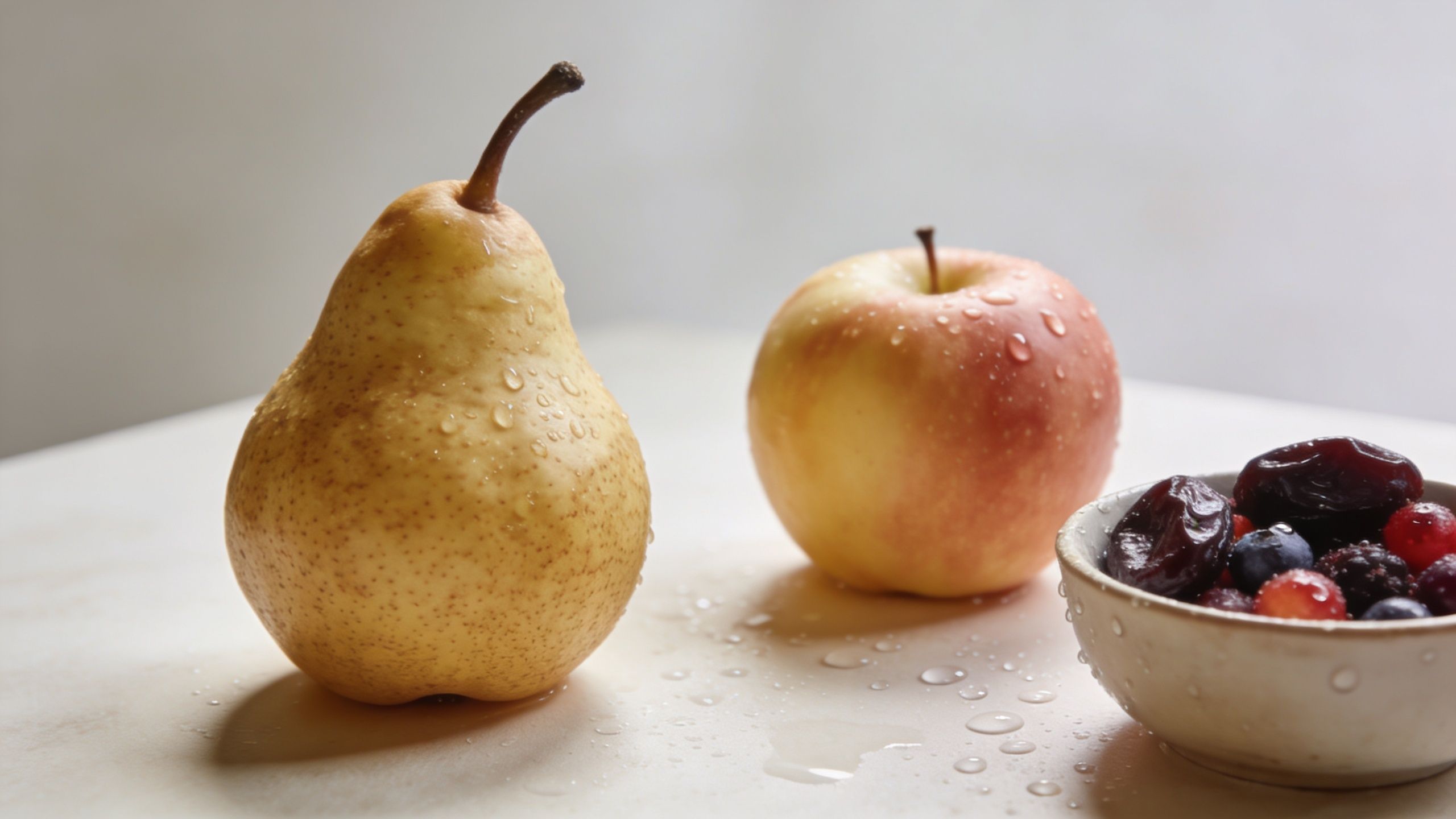
Fruit earns a regular place in constipation care because it brings two things at once: fiber and water. That combination often makes it easier to tolerate than drier fiber sources, especially for people who want a food-first option before using supplements.
The form matters. Whole fruit usually helps more than juice because the fiber structure stays intact. For apples and pears, the skin adds a meaningful share of the fiber, so peeling them often makes them less useful for stool bulk and softness.
Fruits that tend to work best
Berries, pears, apples, kiwis, and prunes are practical choices because they are easy to find and easy to repeat. They do not all work in the same way.
- Berries: Higher in fiber for their size, which makes them useful when appetite is low.
- Pears and apples with the skin: A good starting point for many people who want an everyday fruit they can pack for work or school.
- Kiwi: Often well tolerated and worth trying if apples or dried fruit leave you bloated.
- Prunes: Helpful for many adults because they bring fiber plus natural sorbitol, a sugar alcohol that can draw water into the bowel.
Prunes need a measured approach. A small daily serving usually works better than eating a large amount after several uncomfortable days. Too much at once can push you from constipation into cramping, urgency, or loose stool.
If you want support on the probiotic side of the system, this guide to probiotics during pregnancy is a useful example of how gut support changes by life stage.
How to use fruit without making bloating worse
Raw fruit is not automatically gentle. The right dose and timing make a real difference.
- Start with one serving a day: For example, one kiwi, one pear, or a small bowl of berries.
- Use cooked fruit if your gut is reactive: Stewed apples or pears are often easier to handle than large amounts of raw fruit.
- Be careful with dried fruit portions: A few prunes or figs can help. Large servings can cause gas and abdominal discomfort.
- Pair fruit with fluid: Fruit contains water, but many people still need a glass of water alongside higher-fiber choices to get the full benefit.
- Combine it with the rest of your plan: Fruit works better when meals are regular and the gut is getting support from hydration, movement, and, when appropriate, probiotic foods.
I usually tell patients to test fruit the same way they would test a supplement. Change one variable at a time. If prunes cause cramping, switch to kiwi or berries before deciding that all fruit makes constipation worse.
Fruit is one of the easier categories to personalize. Some people do best with a pear after breakfast. Others get better results from kiwi in the evening or a few prunes with lunch. The best option is the one you can tolerate, repeat, and fit into your week without turning bowel care into a full-time project.
5. Ground and Whole Flaxseeds
Flax is one of my favorite effective foods for constipation. It isn’t flashy, but it’s useful because it brings both soluble and insoluble fiber, and when it’s ground and taken with fluid, it develops a gentle gel-like quality that can help soften stool.
The word “ground” matters. Whole flaxseeds often pass through undigested, which means you may get far less benefit than you think. If you’re going to use flax, use it in a form your body can access.
Best way to take flax
Ground flax works well in oatmeal, yogurt, smoothies, or stirred into a bowl of soup after cooking. It doesn’t need a complicated protocol. It needs consistency and enough liquid.
A simple way to start is one spoonful mixed into breakfast. Keep that dose steady for several days before increasing. If you jump in too aggressively, flax can leave you feeling heavy instead of relieved.
Where people go wrong
The most common mistake with flax is treating it like a dry topping instead of a hydration-dependent fiber. Another is assuming more is always better. It isn’t. Flax works because it absorbs water and changes texture. If there isn’t enough water in the system, you can end up with the opposite of what you wanted.
Use these guidelines in practice:
- Choose ground flax, not whole: That’s the form most likely to help.
- Mix it into moist foods: Oatmeal, yogurt, smoothies, and soups are easier than sprinkling it on dry foods.
- Store it properly: Ground flax goes rancid faster than many people realize, so refrigeration helps preserve freshness.
- Use it in the morning if that suits your rhythm: Many people notice bowel movement timing is easiest to influence earlier in the day.
Some people love flax immediately. Others find chia or psyllium gentler. That doesn’t mean flax failed. It means your gut has preferences, and those preferences matter more than internet enthusiasm.
6. Chia Seeds
Chia is useful because it solves two problems at once. It adds fiber, and it forces a hydration habit when used correctly. Once chia absorbs liquid, it forms a gel that can support softer, easier-to-pass stool.
This is one of the easiest high fiber foods for constipation to add if you dislike cooking. Chia pudding, chia stirred into yogurt, or chia blended into a smoothie can fit into a normal routine without much effort.
The non-negotiable rule with chia
Never take chia dry and hope your body will figure it out later. Chia needs liquid. That’s what makes it helpful.
The clearest fiber-content detail available in the evidence set is that chia seeds provide 9.8 grams of fiber per ounce, as noted in Oshi Health’s discussion of fiber type differences and individual response variation. That’s a meaningful amount, but it also explains why too much too fast can overwhelm a sensitive gut.
Some people respond well to chia, others don’t. That variation is real. Testing one fiber at a time is smarter than stacking several new ones and guessing what caused the bloating.
Practical ways to use it
- Make chia pudding: Let it soak long enough to fully gel.
- Add a spoonful to smoothies: That works well if you already tolerate blended fruit and yogurt.
- Stir it into oatmeal or kefir: This is often easier than drinking chia water if texture bothers you.
- Keep portions modest at first: Small and repeatable beats ambitious and uncomfortable.
Chia often works best for dry, hard stool and for people who tend to under-drink water. If you already feel overly full or slow after meals, be careful with large servings. Start modestly, and give your gut a few days before changing the dose.
7. Psyllium Husk
Psyllium is one of the few constipation tools that gives clear dose control. That matters because people often do poorly with vague advice like “just eat more fiber,” then end up either underdoing it or adding so much at once that they feel worse.
Its main action is mechanical. Psyllium is rich in soluble, gel-forming fiber, so it pulls in water and helps create a softer, bulkier stool that is easier to pass. In clinic, I see it work best when stool is dry, small, or inconsistent, and when the person is ready to pair fiber with enough fluid instead of treating psyllium like a standalone fix.
Why psyllium helps so many constipated adults
Psyllium is predictable. You can measure the amount, repeat the same routine for several days, then adjust based on stool form and comfort. That makes it more practical than trying to guess whether one larger salad or an extra serving of beans changed anything.
It also fills a different role than seeds or whole plant foods. Psyllium gives concentrated soluble fiber with very little volume, which can help people who feel too full with large meals but still need help getting stool moving.
The preparation step matters
Psyllium can backfire if you use it carelessly. Mix it into a full glass of water, stir well, and drink it right away before it turns into a thick gel. Then drink more water later in the day. If someone tells me psyllium “made constipation worse,” the first thing I check is fluid intake.
Start with a small amount once daily. Stay there for a few days before increasing. That slower ramp gives your gut time to adapt and makes it easier to spot whether the issue is the dose, the timing, or poor hydration.
A few practical rules help:
- Mix it with enough liquid: A full glass is the minimum starting point.
- Drink it promptly: Letting it sit makes it harder to tolerate.
- Separate it from medications: Psyllium can reduce absorption for some medicines and supplements.
- Use one routine long enough to judge it: Random timing creates random results.
Psyllium also works better as part of a system. Pair it with regular fluids, a short daily walk, and a consistent toilet routine after breakfast if that fits your schedule. If you are also building a microbiome-supportive plan, this guide on the best time to take a probiotic can help you space things more sensibly.
If psyllium leaves you cramped, overly full, or more bloated each day, the answer is usually to reduce the dose or switch strategies, not to force through it. People with very slow motility, pelvic floor dysfunction, or significant abdominal pain often need a more personalized plan than “add more fiber.”
8. Fermented Foods
Fermented foods don’t replace fiber, but they can improve the environment fiber works in. That matters because constipation isn’t only a stool problem. It’s also a motility, hydration, and microbiome problem. Sauerkraut, kimchi, kefir, tempeh, and miso can support a more resilient digestive system when used sensibly.
Some fermented foods also come packaged with fiber if they’re made from whole vegetables or soybeans. Others, like kefir, contribute mostly through live cultures and digestibility rather than fiber content.
A quick visual can help if you’re new to this category.
Start far smaller than you think
The biggest mistake with fermented foods is overdosing because they seem healthy. If your gut isn’t used to them, large servings can create pressure, gas, or urgency. A spoonful alongside a meal is a reasonable start.
Tempeh is often one of the easier entries because it functions like a familiar protein. Sauerkraut and kimchi are potent in smaller portions. Miso can be a gentle way to begin if you enjoy soups and want a warm option.
Healthy Gut Review also has guidance on the best time to take a probiotic, which pairs naturally with a food-first microbiome strategy.
Building the synergy
Fermented foods often work best when paired with fiber instead of taken alone. Think yogurt with berries, tempeh with roasted vegetables, or a grain bowl topped with a small amount of kimchi. That combination gives your gut bacteria both incoming microbes and fermentable material.
Use these foods strategically:
- Choose raw, refrigerated versions when possible: That’s usually the better bet if your goal is live cultures.
- Pair them with meals, not random grazing: They’re often easier to tolerate that way.
- Rotate types instead of overusing one: Different foods bring different strengths.
- Back off if you’re very histamine-sensitive: Not every “gut health” food works for every gut.
Fermented foods aren’t a fast laxative. They’re a support tool. Over time, they can help create a system where fiber works better and your gut becomes less reactive.
8-Item Comparison: High-Fiber Foods for Constipation
| Item | Implementation (🔄) | Resources & Prep (💡) | Expected Outcomes (⭐📊) | Ideal Use Cases (⚡) | Key Advantages |
|---|---|---|---|---|---|
| Whole Grains (Oats, Barley, Brown Rice, Quinoa) | Low 🔄, simple cooking; introduce gradually to avoid bloating | Affordable, basic cookware; optional soaking | Moderate–high effect ⭐⭐⭐, increases stool bulk, sustained energy, supports microbiome 📊 | Daily staple for regularity and steady energy | Versatile, prebiotic fiber, low GI |
| Legumes (Beans, Lentils, Chickpeas, Peas) | Medium 🔄, soaking/cooking recommended; gas mitigation needed | Very low cost; time for soaking or use canned (rinse) | High effect ⭐⭐⭐⭐, strong stool bulk, increases microbial diversity 📊 | High-fiber goals, cholesterol/glucose control, plant-protein replacement | Most fiber per serving, economical, diverse uses |
| Vegetables (Cruciferous, Leafy, Roots) | Low 🔄, raw, steamed, cooked or fermented; vary by tolerance | Fresh or frozen; frequent purchase; simple prep | Moderate effect ⭐⭐⭐, hydration + varied fiber types, micronutrient support 📊 | Daily diversity for gut barrier, anti-inflammatory needs | Nutrient-dense, low calorie, supports microbial diversity |
| Fruits (Berries, Pears, Apples, Prunes) | Very low 🔄, ready-to-eat; monitor portion and FODMAP sensitivity | Minimal prep; fresh or dried; hydrate when increasing intake | Moderate effect ⭐⭐⭐, softens stool; prunes provide osmotic laxative 📊 | Quick relief, child-friendly snacks, add natural sweetness | Palatable, hydrating, vitamins; prunes effective for stubborn cases |
| Ground Flaxseeds | Low–Medium 🔄, must be ground; increase gradually | Grinder or pre-ground; refrigerate after grinding; mix into foods | Moderate effect ⭐⭐⭐, mucilage softens stool; anti-inflammatory benefits 📊 | Daily maintenance, hormonal support, easy to add to meals | Omega‑3s, lignans, gentle regulator of bowel habits |
| Chia Seeds | Low 🔄, must be consumed with liquid; prepare gels/puddings | No grinding; need liquid; somewhat higher cost | High effect ⭐⭐⭐⭐, strong water-holding gel softens stool and provides fiber 📊 | Hydration-focused fiber, vegan protein boost, convenient prep | High fiber per weight, complete protein, easy to add to liquids |
| Psyllium Husk (Ground Psyllium) | Low 🔄 but critical hydration protocol; mix immediately | Supplement purchase; strict water intake; timing from meds | Fast, high effect ⭐⭐⭐⭐, bulk-forming, relief in 12–48 hours 📊 | Acute constipation, IBS/IBD-sensitive users, clinical use | Fast-acting, gentle, well-researched, minimal gas |
| Fermented Foods (Sauerkraut, Kimchi, Tempeh, Miso, Kombucha) | Medium 🔄, consume raw for probiotics; start small | Purchase raw or ferment at home (time & salt); monitor histamine | Moderate–high effect ⭐⭐⭐⭐, boosts microbial diversity and stool consistency 📊 | Long-term microbiome restoration, pair with prebiotics | Provides live probiotics + fiber, improves nutrient bioavailability |
Your Action Plan for a Healthier, More Regular Gut
Constipation becomes common fast when daily habits drift. A low-fiber day, too little fluid, long hours sitting, and a rushed bathroom routine can turn a mild slowdown into hard stools, straining, and bloating within days.
The fix usually works better as a system than a single “best” food.
In practice, the people who struggle most are often doing too much at once. They add bran cereal, raw salads, chia water, beans, a probiotic, and psyllium in the same week, then end up gassy, full, and discouraged. The better approach is to choose one or two fibers, prepare them well, and give your gut time to adapt.
Start with the type of constipation you have. Dry, hard stool usually responds better to soluble or gel-forming fibers and softer foods, such as oats, chia, ground flax, cooked vegetables, pears, kiwi, or prunes. If stool is infrequent but not especially dry, legumes, whole grains, and vegetables may help more. If beans have caused cramping or heavy bloating before, they are not the best first test food. Begin with cooked vegetables or oats instead.
As noted earlier, adult fiber targets are meaningful, but they are a long-term goal, not a starting dose. If your current intake is low, add fiber gradually over one to two weeks. A sudden jump often creates the exact symptoms people are trying to fix.
Hydration changes the outcome. Chia, flax, oats, legumes, and psyllium all rely on water to soften stool and improve transit. Without enough fluid, they can leave stool bulkier and harder to pass. A simple routine works well. Drink a glass on waking, another with each meal, and one more in the afternoon. If you use psyllium, take it with plenty of water and keep it separate from medications unless your clinician or pharmacist says otherwise.
Preparation matters too. Cook vegetables until tender instead of starting with a giant raw salad. Soak beans, rinse canned legumes well, and begin with small portions. Grind flaxseeds so the fiber and mucilage are available. Soak chia into a pudding or gel rather than swallowing it dry. These small steps reduce bloating and make the fiber more useful.
More fiber is not always the answer. Some people do worse with aggressive fiber increases, especially if they have IBS, slow transit, pelvic floor dysfunction, or significant bloating after meals. In that situation, smaller portions, softer fibers, cooked foods, or a short pause to reassess is smarter than forcing a generic high-fiber plan. If constipation comes with pain, bleeding, vomiting, weight loss, or a sudden change in bowel habits, get medical care.
A practical daily setup looks like this:
- Choose one breakfast fiber source, such as oatmeal, chia pudding, or yogurt with ground flax.
- Add one cooked plant food at lunch or dinner, such as lentils, sweet potato, carrots, zucchini, or green beans.
- Use one fruit consistently, such as pears, kiwi, berries, or prunes.
- Add a small serving of a fermented food if tolerated, such as sauerkraut, kefir, or yogurt, to support the broader gut environment.
- Walk for 10 to 15 minutes after one or two meals if possible.
Then track what happens for two weeks. Look at stool frequency, stool texture, ease of passing, bloating, and whether symptoms improve or build across the day. This is how you find your personal mix. The best constipation plan is one you can repeat comfortably, not one that looks perfect on paper.
Fiber works best with support from the rest of your routine. Regular meals help train bowel rhythm. A footstool can improve positioning on the toilet. Responding to the urge to go matters more than many people realize. Fermented foods or a well-chosen probiotic can also help some people, especially after travel, stress, illness, or a disrupted diet, but they work better when the foundation is already in place.
Healthy Gut Review offers practical, evidence-based help for exactly that next step. If you want deeper guidance on probiotics, digestive supplements, fermented foods, and gut-friendly routines for men, women, pregnancy, or kids, explore Healthy Gut Review for detailed comparisons and usable advice you can apply right away.