

If you're pregnant, you're likely scrutinizing every label and questioning everything you put into your body. So, when it comes to probiotics, it's natural to ask: are they safe?
For most healthy pregnancies, the answer is a confident yes. The scientific community generally agrees that probiotics are a safe and beneficial supplement for expectant mothers, posing minimal risk to you or your developing baby.
Understanding How Probiotics Work During Pregnancy
Think of your gut as a complex ecosystem. Probiotics are the beneficial bacteria that help keep that ecosystem in balance. During pregnancy, your body is already working overtime, and maintaining a healthy gut can make a real difference.
The key to their safety lies in where they work. Probiotics primarily stay within your digestive tract—they don't enter your bloodstream or cross the placenta. This localized action means they can support your gut health without interfering with your baby's development.
This isn't just theory; a solid body of research supports it. A major review of studies involving more than 1,500 pregnant women found no increased risk for adverse outcomes like miscarriages or birth defects.
In fact, the risk of a serious infection from common probiotic strains like Lactobacillus is incredibly low, estimated to affect fewer than 1 in 1 million people. You can dive deeper into the data by reviewing a full safety analysis on probiotics in pregnancy.
To help you quickly grasp the current evidence, this table summarizes the key points on safety and benefits.
Probiotic Safety and Benefits at a Glance
| Aspect | Summary of Evidence | Key Takeaway |
|---|---|---|
| Maternal Safety | Multiple reviews show no link between probiotic use and increased pregnancy complications. | Probiotics are considered very low-risk for healthy pregnant women. |
| Fetal Safety | No documented increase in birth defects, low birth weight, or premature labor. | Probiotics don't appear to cross the placenta or harm the baby. |
| Common Strains | Lactobacillus and Bifidobacterium species are the most studied and have a strong safety record. | Stick to well-researched strains for complete peace of mind. |
The takeaway here is simple but powerful: When used correctly, probiotics are a safe way to support your body during pregnancy.
The scientific consensus is clear: for most expectant mothers, probiotics are a safe and beneficial addition. Their benefits are concentrated in the gut, helping to fortify your body's natural defenses without interfering with your pregnancy.
With such a strong safety profile, you can feel confident exploring how these beneficial microbes can support your health journey—from easing common digestive issues to potentially lowering your baby's future risk of developing allergies.
How Probiotics Support Your Body During Pregnancy
Pregnancy changes everything, and that includes the complex ecosystem living inside your gut. Think of your gut microbiome as a delicate internal environment. The hormonal surges and physical shifts of pregnancy can disrupt this balance, leading to all-too-common issues like constipation, bloating, and just feeling run-down. This is where probiotics come in.
Probiotics introduce beneficial bacteria that help restore a sense of order. They don't need to perform a system-wide overhaul to be effective; their work is mostly confined to your digestive tract. This localized action is a big reason why they're considered safe during pregnancy—they reinforce your gut's own defenses without entering your bloodstream or crossing the placental barrier.
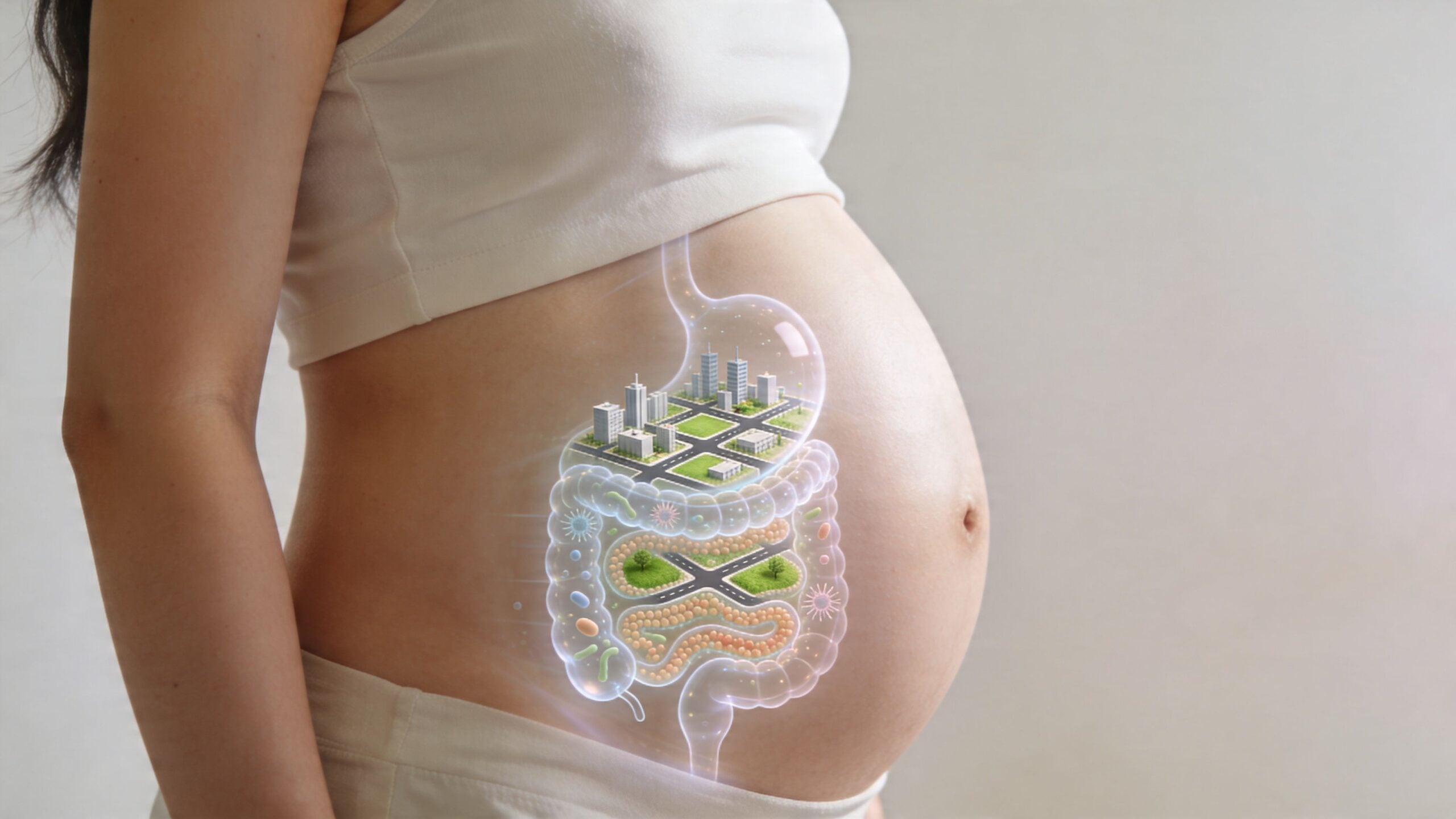
This process helps strengthen the gut lining, making it more robust. A stronger gut barrier is better at keeping unwanted substances out of your system, which in turn supports your immune function—a critical job when your body is working hard to protect both you and your baby. When you understand this mechanism, you can see how probiotics safe for pregnancy can offer gentle, non-intrusive support.
Bolstering Your Gut's Infrastructure
One of the primary jobs of a probiotic is to boost the population of "good" bacteria. These friendly microbes compete with less desirable ones for both space and food, naturally creating a more harmonious gut environment. This friendly competition is important for a few key reasons.
- Improved Digestive Regularity: Certain probiotic strains, like Bifidobacterium lactis, have been studied for their ability to help regulate bowel movements, easing the uncomfortable bloating and constipation that many pregnant women face.
- Enhanced Nutrient Absorption: A healthy gut microbiome is simply more efficient. It does a better job of breaking down food and absorbing essential nutrients, which is vital for ensuring both you and your baby get the nourishment you need.
- Support for Vaginal Health: The gut and vaginal microbiomes are surprisingly interconnected. A balanced gut can contribute to a healthy vaginal flora, which is ideally dominated by beneficial Lactobacillus species that help keep unwanted bacteria at bay.
This internal rebalancing act can help your body better manage the new demands of pregnancy. For a deeper look at how specific strains support female health, check out our guide on the best probiotics for women.
The Gut-Brain-Immune Connection
The benefits don't just stop at digestion. Your gut is in constant communication with your immune system and even your mood through a complex network known as the gut-brain axis. Probiotics can help modulate your immune response, keeping it balanced and ready to respond without overreacting.
By supporting the gut lining and fostering a healthy balance of bacteria, probiotics help maintain a calm and effective immune system. This is especially important during pregnancy when your body is naturally in a state of altered immunity.
What's really fascinating is the emerging research on how probiotics might influence maternal stress. For instance, animal studies from The Ohio State University found that supplementing with the probiotic Bifidobacterium dentium during pregnancy helped mothers and their offspring better process tryptophan. This amino acid is crucial for regulating inflammation and mood, and the probiotic helped buffer some of the negative effects of prenatal stress.
This powerful connection shows how a healthy gut can radiate well-being throughout your body, influencing everything from your immune defenses to your stress resilience. Probiotics aren't a magic pill, but they can be a powerful tool for reinforcing your body’s natural systems during this incredible time.
What the Evidence Says About Benefits for You and Baby
So, we've covered that probiotics are generally safe during pregnancy. But the real story—the exciting part—is what they can actually do for you and your little one. We're not talking about vague wellness promises here; this is about looking at the research and seeing how specific types of good bacteria can lead to tangible, positive outcomes.
Think of your gut microbiome as a complex garden. Pregnancy changes the entire climate, and not every plant will thrive without a little help. Probiotics act like tailored nutrients for that garden. The right one can help your digestive system run smoothly, while another might influence the soil in a way that benefits your baby long after they're born.
The key is knowing which strains do what. You wouldn't use rose food for your vegetable patch, right? The same logic applies here. Let's look at the science to see how the right probiotics can make a real difference during this critical time.
For a Happier, More Comfortable Gut
Let’s be honest: pregnancy can be tough on your digestive system. Hormones, especially progesterone, are famous for slowing everything down, leading to that all-too-familiar trio of constipation, bloating, and gas. This is where certain probiotics can be a game-changer.
Strains like Bifidobacterium lactis have been studied time and again for their ability to improve what's called "intestinal transit time." In plain English, they help keep you regular. By supporting consistent bowel movements, they can provide real relief from the digestive sluggishness that many women experience.
A gut filled with the right kind of bacteria just works better. It's not just about comfort—it’s also about making sure you’re absorbing every last bit of nutrition from your food, which is more important than ever when you're growing a baby.
This kind of internal support helps you tackle the daily physical demands of pregnancy with a little more ease.
Bolstering Your Immune Defenses
Your immune system has a tricky job during pregnancy: it needs to protect you from getting sick while also welcoming your baby as a part of you. Your gut is ground zero for this balancing act, as it's home to roughly 70% of your immune cells. Fortifying your gut with probiotics can have a powerful ripple effect.
This isn't just a theory. A recent study showed just how powerful this connection can be. Researchers gave pregnant women a probiotic with Lacticaseibacillus rhamnosus Rosell-11 and Bifidobacterium bifidum HA-132 from 28 weeks onward. The women taking the probiotic had far fewer infections during pregnancy. But here’s the amazing part: their newborns had less than half the number of sick days in their first month of life compared to the babies in the placebo group. You can read the full immune-boosting probiotic study for yourself.
It’s a profound idea—that by tending to your own microbiome, you could be giving your baby's immune system a head start before they even arrive.
Helping to Maintain Healthy Blood Sugar
Keeping blood sugar in a healthy range is a top priority during pregnancy, and new research is uncovering how probiotics might lend a hand. Some studies are finding that certain strains can help improve the body's response to glucose.
Of course, probiotics are not a treatment for gestational diabetes. But when used as part of a healthy lifestyle, they may offer some extra support. The science is still unfolding, but it seems to involve reducing inflammation and helping your body use insulin more effectively.
- Strains to Watch: Studies in this area often point to species like Lactobacillus rhamnosus and Bifidobacterium lactis.
- How They Might Work: These probiotics appear to influence the metabolic pathways that control how your body processes sugar from the food you eat.
It’s another exciting example of how a balanced gut contributes to a healthier pregnancy from multiple angles.
A Potential Gift for Your Baby's Future Health
Perhaps the most powerful reason to consider probiotics safe for pregnancy is their potential to influence your child’s long-term health. During birth and breastfeeding, you pass on your microbiome to your baby, laying the foundation for their own gut and immune health.
The most compelling research here is on eczema (atopic dermatitis). Multiple large-scale analyses have concluded that when moms take specific probiotics—especially Lactobacillus rhamnosus GG (LGG)—during late pregnancy and while nursing, they can significantly reduce their child’s risk of developing eczema.
The thinking is that these probiotics help "train" the baby's brand-new immune system, teaching it to be less reactive and more tolerant. It’s an incredible example of how the choices you make for your own health today can echo positively in your child’s life for years to come.
Walking into the supplement aisle can feel overwhelming, especially when you're pregnant. With rows of bottles all making big promises, how do you pick a probiotic that's actually effective and safe?
The good news is, you don’t need a degree in microbiology to figure this out. It’s a lot like shopping for a new car. You wouldn’t choose one based on a flashy color alone; you’d look under the hood, check the safety ratings, and make sure it fits your family’s needs. Choosing a probiotic is the same—it’s all about looking past the marketing and understanding what’s really inside the bottle.
How to Decode a Probiotic Label
Your first step is learning to read the label like an expert. This is where you’ll find the three most important pieces of information: the specific probiotic strain, the CFU count, and proof of quality control.
Think of a probiotic's name as having three parts:
- Genus: The broad family, like Lactobacillus.
- Species: The specific group within that family, like rhamnosus.
- Strain: The unique identifier that pinpoints its specific function, like GG.
That last part—the strain—is what matters most. Two probiotics from the same species can have completely different jobs in the body, just like two different dog breeds can have very different temperaments. For targeted benefits, you need the exact strain that’s been proven in research.
What Is a CFU Count (and Why More Isn't Always Better)?
Next on the label, you'll see a number followed by "CFU," which stands for Colony Forming Units. This tells you how many live, active bacteria are in each dose. For pregnancy, most studies use dosages between 1 billion and 20 billion CFUs.
It’s easy to think that a higher CFU count means a better product, but that’s a common myth. The right dose is entirely dependent on the specific strain and the health outcome it was studied for. It’s about getting the right amount of the right bacteria, not just a massive, generic dose. A well-researched strain at 10 billion CFUs is far more valuable than a 100 billion CFU product full of unstudied strains.
A probiotic’s value comes from its clinically studied strain, not just its CFU count. Focus on quality over sheer quantity to ensure you're getting a product with proven benefits.
Look for Quality and Purity
The supplement world isn't regulated as strictly as pharmaceuticals, which means you have to be a smart shopper. A few key markers can help you spot a high-quality product.
Here’s what to look for on the label:
- Third-Party Testing: Look for seals from independent organizations like NSF International or the U.S. Pharmacopeia (USP). This confirms that the product actually contains what it claims to and is free of harmful contaminants.
- Guaranteed Potency: The label should guarantee the CFU count "at time of expiration," not just "at time of manufacture." Bacteria are living organisms, and their numbers naturally decline, so you want to know the dose is still effective at the end of its shelf life.
- Delayed-Release Capsules: Probiotics need to survive the harsh, acidic environment of your stomach to reach your intestines where they do their work. Enteric-coated or delayed-release capsules are designed to protect them on their journey.
Choosing a product with these quality checks gives you the best shot at seeing real benefits.
The infographic below illustrates how certain probiotics can support your health during pregnancy while also potentially benefiting your baby.
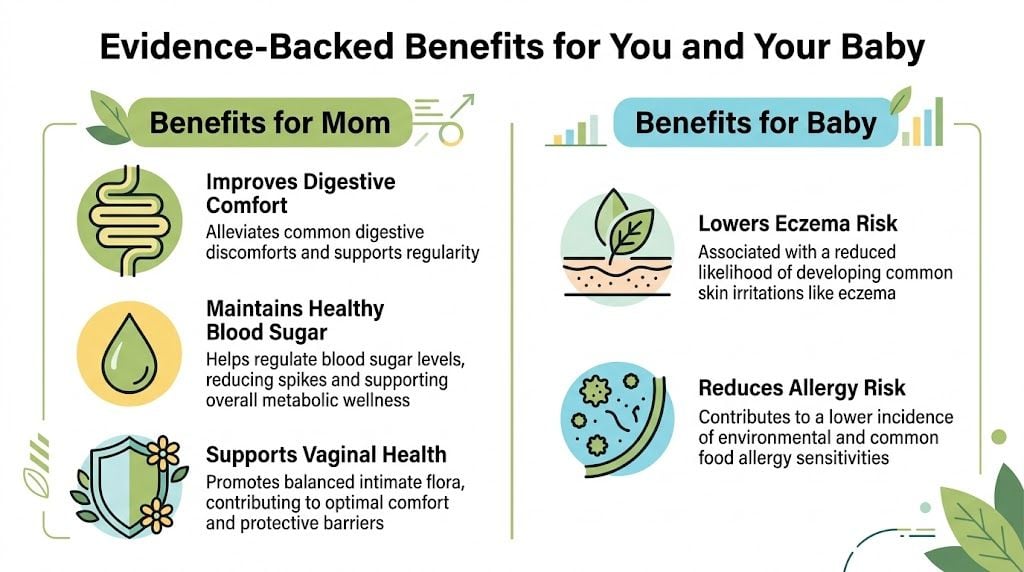
This really highlights how probiotics can play a dual role, supporting your own digestive and metabolic health while also offering potential protective advantages for your developing baby.
Common Probiotic Strains Studied in Pregnancy
Some probiotic strains have been researched far more than others for use during pregnancy. Sticking to these well-studied options is a smart way to choose a product with a strong safety profile and evidence-backed benefits.
The table below breaks down some of the most common strains you'll encounter.
| Probiotic Strain | Potential Benefit | Commonly Studied For |
|---|---|---|
| Lactobacillus rhamnosus GG | Infant Eczema Risk Reduction | Given to mothers in late pregnancy and during breastfeeding to help reduce the incidence of atopic eczema in their babies. |
| Bifidobacterium lactis HN019 | Maternal Digestive Comfort | Improving gut transit time to ease constipation and bloating, which are common complaints during pregnancy. |
| Lactobacillus reuteri RC-14 | Vaginal Health | Used alongside L. rhamnosus GR-1 to help maintain a healthy balance of vaginal flora and reduce the risk of infections. |
| Bifidobacterium lactis BB-12 | Gestational Diabetes & Gut Health | Supporting blood sugar regulation and overall maternal digestive wellness. |
When you see these specific strain names on a label, you can feel much more confident that the product is based on real science.
For a deeper look into how different supplements can support your overall digestive wellness, you might find our guide on improving gut health with the right supplements helpful.
Understanding the Risks and When to Be Cautious
While the vast body of evidence shows that probiotics are safe for pregnancy in healthy women, it's always wise to understand the complete picture. The smart approach involves knowing when to hold off and have a conversation with your doctor. For most women, the risks are very low and easily managed.
Think of it like starting a new workout program. When you first introduce a new probiotic, your body might need a moment to adjust. Some women report a little gas, bloating, or a shift in their bowel habits for the first few days. This is usually just a sign that your gut microbiome is waking up and responding to all the new, friendly bacteria.
This "getting acquainted" phase is typically short. You can make it even smoother by starting with a lower dose—maybe half the recommended amount—for the first week. This lets your digestive system ease into the change before you ramp up to the full dose.
When to Consult Your Doctor First
Even though probiotics are incredibly well-tolerated, they aren’t a one-size-fits-all solution. It is absolutely essential to chat with your healthcare provider before adding any new supplement to your routine, especially if you have an underlying health condition. Their insight is key to keeping you safe.
The main concern is for individuals with a significantly weakened immune system. Probiotics are, after all, live microorganisms. In a severely compromised system, there’s a theoretical risk that these helpful bacteria could cause an infection.
Your doctor's involvement is non-negotiable if you have a compromised immune system. This ensures that any decision is tailored specifically to you, providing the safest path forward for both you and your baby.
This isn't meant to be alarming. It's about empowering you with the knowledge to make the best choices. Open, honest communication with your medical team is the bedrock of a healthy and safe pregnancy.
Who Needs to Be Extra Cautious?
Certain health scenarios require a much more careful approach and a mandatory discussion with your doctor. These situations are uncommon, but it's vital to be aware of them.
- Severely Immunocompromised Individuals: This group includes women undergoing chemotherapy, those with advanced HIV, or people taking high-dose immunosuppressant drugs after an organ transplant. In these instances, the body’s natural defenses are lowered, which slightly raises the risk of infection from any bacteria—even the good kind.
- Critically Ill Patients: If you are in an intensive care unit (ICU) or have a central venous catheter (a line that goes into a major vein), probiotics are generally avoided. This is because of a small but serious risk of the bacteria entering the bloodstream, a condition known as bacteremia.
- History of Pancreatitis: Some studies suggest a potential risk for people with a history of severe acute pancreatitis, though this finding isn't directly tied to pregnancy.
For the overwhelming majority of pregnant women, these conditions simply don't apply. But knowing the exceptions helps you navigate your pregnancy with confidence and care. Your health and your baby's health always come first.
Probiotics for Postpartum Recovery and Breastfeeding
After your baby arrives, the focus naturally shifts to them, but your body is just beginning the crucial fourth trimester. This is a period of intense recovery, and the benefits of a probiotic don't stop at delivery. In fact, this might be one of the most important times to support your gut.
Your body just ran a marathon, and your digestive system is often thrown for a loop. Things can get sluggish and unpredictable. A quality probiotic can be a gentle way to help your system find its rhythm again, which for many new moms means welcome relief from postpartum constipation.
It’s not just about physical recovery, either. The postpartum period brings huge hormonal and emotional shifts. We now know there's a powerful connection between your gut and your brain, often called the gut-brain axis. Nurturing your gut with beneficial bacteria can be a surprisingly effective tool for supporting your mood and emotional balance during this demanding transition.
Supporting Your Baby Through Breast Milk
Here’s where it gets really fascinating: your gut health directly shapes your baby’s. Breast milk isn’t just food; it’s a living substance packed with beneficial bacteria and unique prebiotics (known as human milk oligosaccharides) that are specifically designed to feed a healthy infant microbiome.
When you take a probiotic, some of those helpful strains can actually pass to your baby through your breast milk. This process helps seed their brand-new gut with good microbes, giving their developing immune system an early head start.
Your microbiome is one of the first and most important gifts you give your baby. Supplementing with probiotics while breastfeeding can help seed your infant's gut with beneficial bacteria, potentially influencing their long-term immune health.
This isn’t just a theoretical benefit. For your baby, it can mean a calmer tummy. Some research suggests that when a breastfeeding mom takes a probiotic, it can help reduce colic and general fussiness in her infant. The idea is that these good bacteria help the baby’s immature digestive system better manage things like gas and discomfort.
Continuing Maternal Support Postpartum
While you’re pouring all your energy into your newborn, it’s vital to keep supporting your own body. A balanced gut helps your entire system get back on track after the physical demands of birth.
Probiotics might even offer targeted support against things like Group B Strep (GBS). While more research is needed, some studies have found that strains like Lactobacillus rhamnosus and Lactobacillus reuteri can help reduce GBS colonization. This could be a great microbiome-focused strategy for moms who are concerned about GBS. As your child grows, our guide to the best probiotics for kids can be a helpful next step.
Ultimately, continuing your probiotic after delivery is a simple way to care for two people at once. You're aiding your own recovery while giving your baby a powerful foundation for a healthy, robust microbiome for life.
Your Questions About Pregnancy Probiotics, Answered
It's one thing to read the research, but it's another to figure out how it applies to you. When you're pregnant, every little decision feels important. So, let's walk through some of the most common questions that pop up when considering probiotics.
When Is the Best Time to Start Taking Probiotics?
Honestly, there’s no universal "best" time—it really depends on what you're hoping to achieve.
Many of the studies looking at benefits like reducing the risk of infant eczema have women start their probiotics in the second or third trimester. But if you're dealing with sluggish digestion or constipation in those early weeks, starting sooner might bring you some much-needed relief. The best approach is always a personal one, so chat with your doctor about your health history and what you’re aiming for.
Can't I Just Get Enough Probiotics from Food?
Eating probiotic-rich foods like yogurt, kefir, and kimchi is wonderful for your gut health. Think of it as daily maintenance—a great way to support the diversity of your microbiome. These foods absolutely have a place in a healthy pregnancy diet.
Where supplements come in is for a more targeted, therapeutic effect.
It's like this: foods provide general, broad support for your gut, while a supplement delivers a concentrated, high-potency dose of a specific strain. A supplement can guarantee billions of CFUs of a strain like Lactobacillus rhamnosus GG, an amount that’s nearly impossible to get consistently from food alone.
Are All Probiotic Brands Safe for Pregnancy?
Absolutely not. This is one area where quality truly matters, and not all supplements are created equal. You’ll want to choose a reputable brand that not only uses clinically studied strains but also guarantees its CFU count through the expiration date, not just when it was made. If you see a label with vague strain names or missing information, that's a red flag.
Look for brands that are transparent about their third-party testing for purity and potency. This ensures you're getting a clean, effective product without contaminants. Your doctor or a registered dietitian who specializes in prenatal nutrition can be a great resource for brand recommendations they trust.
Do I Need to Stop Probiotics Before Labor?
For a healthy pregnancy, there’s no medical guideline that says you need to stop taking your probiotic before going into labor or having a scheduled C-section. The risk of continuing is considered extremely low.
That said, clear communication is everything. Make sure your entire medical team—your OB-GYN, the anesthesiologist, and the hospital staff—knows about every single supplement you're taking. They can give you the final word based on your personal health profile and the hospital's protocols.
At Healthy Gut Review, we're committed to providing evidence-based information to help you make confident health decisions. For more expert guides and reviews, explore our resources at https://healthygutreview.com.