
If you’re searching for the best liver detox supplement, the first thing I’d challenge is the word detox. Your liver already detoxifies you all day, every day. It doesn’t need a trendy “flush.” What it may need is support, especially if your diet, alcohol intake, medications, metabolic health, or overall inflammation are putting extra strain on it.
That distinction matters because the supplement market is full of products that promise far more than they can prove. A 2026 analysis of Amazon’s top 20 best-selling liver cleanse supplements found that they generated over $38 million in annual revenue, and 100% claimed to “eliminate toxins” or provide a “detox.” The same analysis found only limited to inconclusive clinical evidence for their main ingredients, including milk thistle and dandelion.
So this isn’t a roundup of miracle cleanses. It’s a practical guide to liver support formulas sold on Amazon, with a skeptical eye on labels, ingredient quality, and safety.
The Problem with Liver Detox Claims
The most popular advice in this category is also the least useful. “Cleanse your liver in 7 days” sounds appealing, but it doesn’t match how liver physiology works.
Your liver isn’t a sink trap that fills up with sludge and needs a rinse. It’s a highly active organ that processes compounds from food, alcohol, medication, hormones, and normal metabolism. That process is continuous. A capsule can’t replace it, and no credible supplement can “pull toxins out” on demand.
What the market gets wrong
Many products sold as liver detox supplements rely on a familiar script:
- Big promises: “Flush toxins,” “deep cleanse,” or “reset liver function”
- Natural halo: herbs are framed as automatically safe
- Hidden dosing: proprietary blends make it hard to know what you’re getting
- Evidence inflation: labels suggest scientific certainty when the evidence is often mixed
That mismatch isn’t minor. It shapes how people buy.
“Detox” is usually a marketing term. “Support” is the more honest clinical term.
The Amazon analysis is a sharp example. The top sellers moved serious volume, yet the evidence behind their formulas remained thin or inconsistent. That doesn’t mean every ingredient is useless. It means the claim is stronger than the proof.
A better standard
When I evaluate a liver product, I don’t ask whether it “cleanses.” I ask:
- Does the ingredient have a plausible mechanism?
- Is there human evidence, even if modest?
- Is the dose disclosed and standardized?
- Is the product made with basic quality safeguards?
- Does it avoid risky hype?
That shift changes everything. Instead of hunting for a quick fix, you start looking for formulas that may support antioxidant status, glutathione recycling, bile flow, or cellular protection.
That’s the right frame for choosing the best liver detox supplement, even if the better phrase is really best liver support supplement.
How Your Liver Actually Works
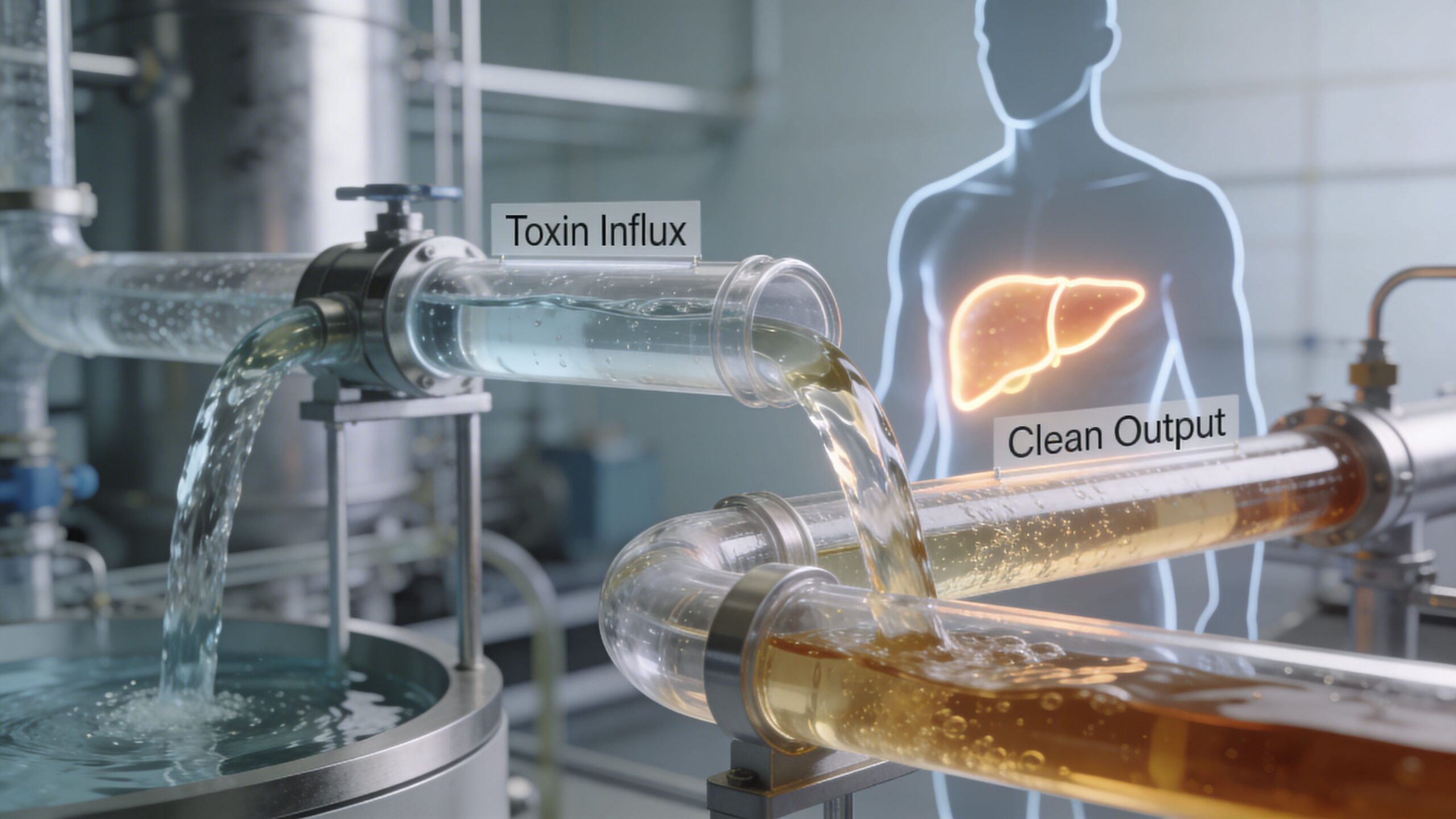
While the liver is often described as “filtering” the body, that word is too simple. A better way to think about it is a two-step processing plant.
Your liver takes compounds that need to be handled, transforms them, packages them, and helps send them out through bile, urine, or stool. Supplements don’t do this job for the liver. At best, they may supply compounds that support parts of the process.
Phase I
Phase I is the liver’s modification step. Enzymes begin to break down substances so the body can deal with them more easily.
That sounds good, but there’s a catch. Some intermediate compounds can become more reactive before they’re safely cleared. That’s one reason antioxidant support gets so much attention in liver formulas.
Phase II
Phase II is the packaging step. The liver attaches compounds to other molecules so they become easier to eliminate. Here, nutrients and amino acids matter. If the body is under stress, that system may not work as smoothly.
N-acetyl-L-cysteine is often discussed here because it helps replenish glutathione, one of the body’s main antioxidant defenses. That’s different from a cleanse. It’s support for an existing system.
Why this changes how you shop
Once you understand the process, labels become easier to judge.
A thoughtful formula usually tries to do one or more of these things:
- Support antioxidant defenses
- Provide precursors for glutathione
- Protect liver cells from oxidative stress
- Encourage healthy bile movement
- Avoid unnecessary stimulant or laxative ingredients
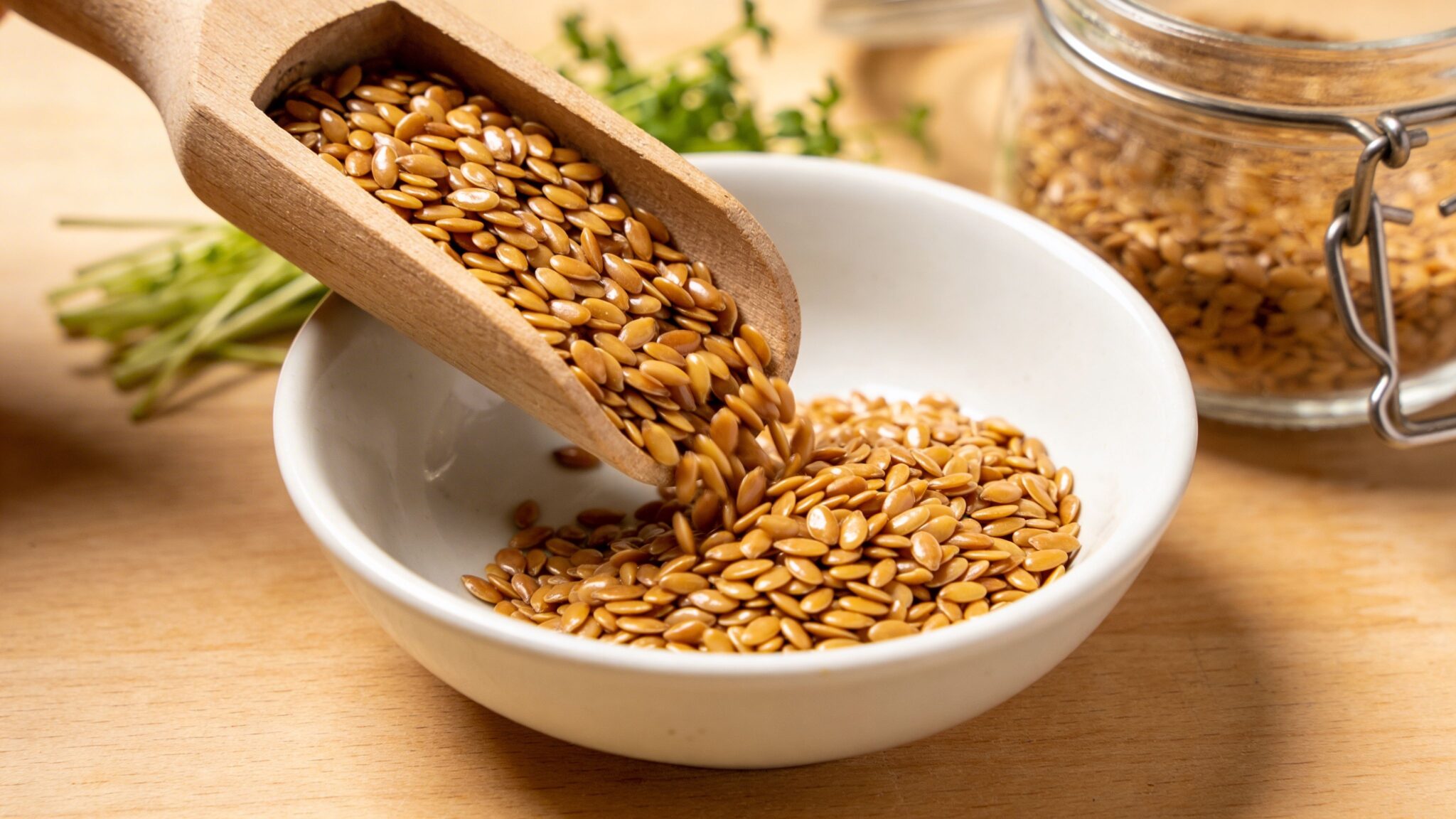
Food still matters more than pills. A pattern built around minimally processed meals, protein, fiber, and steady blood sugar does more for long-term liver health than any “rapid detox” bottle. Even simple whole-food habits, like adding seeds and fiber-rich staples, can make a difference. If you want a visual reminder of what that looks like, this whole flaxseed guide image captures the kind of food-first thinking that supports metabolic health.
Practical rule: If a supplement claims to replace healthy eating, sleep, movement, and alcohol moderation, it’s not a serious liver product.
The best liver detox supplement is never a substitute for the basics. It’s an adjunct, and usually a modest one.
Evaluating Key Liver Support Ingredients
A long ingredient list does not make a liver formula intelligent. In practice, the better products usually rely on a few ingredients with plausible mechanisms, human data, and transparent dosing.
Milk thistle
If I had to start with one herbal ingredient in this category, I would start with milk thistle, specifically an extract standardized for silymarin. It is one of the few liver support ingredients with a meaningful clinical track record, even if that track record is still imperfect. The National Center for Complementary and Integrative Health overview of milk thistle reflects that middle ground well. Research exists, interest is justified, and the evidence is not strong enough to support exaggerated claims.
That matters because many brands use milk thistle as a credibility signal while hiding the details that affect quality. A label that says “milk thistle blend” tells me very little. I want to see the extract form, the standardization, and the dose.
What makes milk thistle worth considering:
- Reasonable biologic rationale, including antioxidant and cell-protective effects
- Human research, though results are mixed and not dramatic
- A better fit for long-term support than for “cleanse” marketing
Where buyers get misled:
- Plain powder can be far less useful than a standardized extract
- Some labels list milk thistle without telling you the actual silymarin content
- Expected benefits are usually modest, not rapid or obvious
NAC
N-acetyl-L-cysteine, or NAC, is one of the more rational ingredients in this field because its role is clear. It helps supply cysteine, which the body uses to make glutathione. That is a real mechanism, not a vague cleansing story.
Evidence for routine supplement use is still narrower than marketing suggests. A review in the journal Nutrients discusses NAC as a promising adjunct in metabolic dysfunction-associated fatty liver disease, while also making clear that study quality and treatment protocols vary (Nutrients review on NAFLD and antioxidants, including NAC). That is how I view it in practice. Promising for selected people, especially in formulas built around oxidative stress support, but not an automatic recommendation for everyone shopping the liver aisle.
NAC tends to make more sense in products aimed at:
- Glutathione support
- Antioxidant defense
- Simple, mechanism-driven formulas
It makes less sense in kitchen-sink blends that use it to make a weak formula sound technical.
Turmeric and dandelion
These ingredients are common because they sell well. That does not mean they are useless. It means the claims often outrun the evidence.
Turmeric has broad anti-inflammatory interest, but liver-specific supplement claims are often stronger than the clinical support. Dandelion has an even bigger marketing problem. Brands describe it with words like cleansing, draining, or flushing, which may sound persuasive but do not tell you much about meaningful outcomes such as liver enzymes, imaging findings, or symptom change.
I do not reject either ingredient outright. I just would not buy a product because of them alone.
Zinc and supportive nutrients
Some formulas add zinc, choline, artichoke, beet root, selenium, or B vitamins. These can be sensible supporting ingredients, especially when the product is trying to address diet gaps or support methylation and bile-related pathways. They are still supporting ingredients.
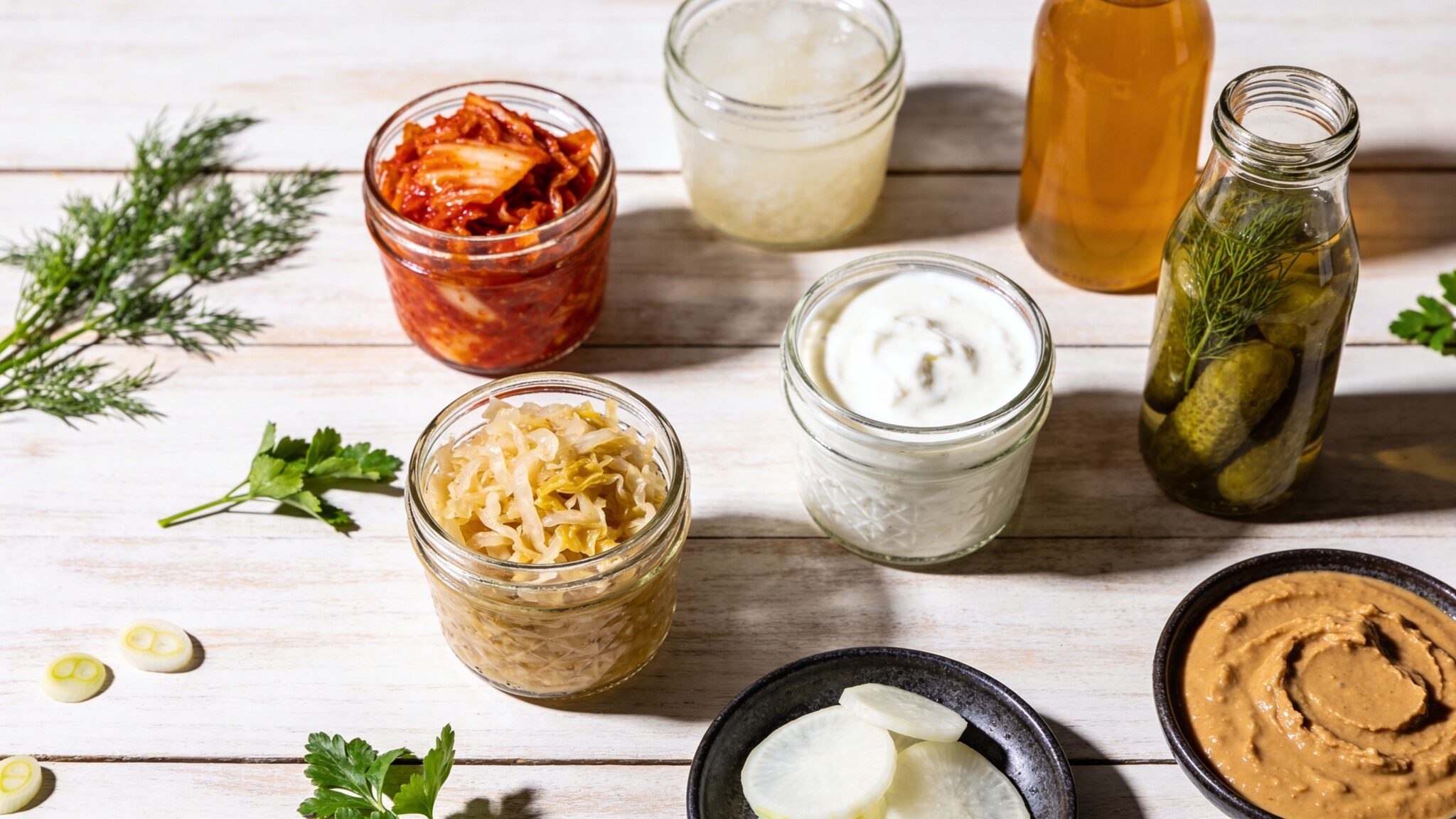
The better question is whether the formula shows restraint. A product with three or four well-dosed ingredients is often stronger than one with twelve botanicals sprinkled in for label appeal. That same logic applies outside the supplement bottle. Diet quality, protein intake, fiber, and metabolic health still do more of the heavy lifting over time. Even simple habits that support digestion can matter. This visual guide to fermented foods for gut health is a good reminder that steady food-based support usually beats flashy “detox” positioning.
My bias is simple. Choose ingredients with a clear reason to be there, doses you can verify, and claims modest enough to trust.
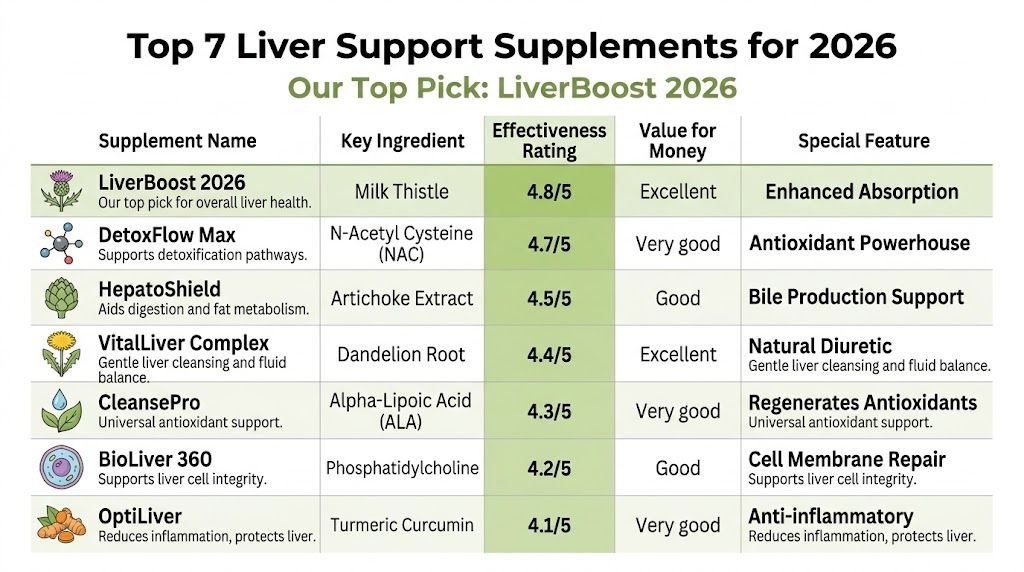
Our Top 7 Liver Support Supplements for 2026
If you want my short answer first, the winning product in this roundup is a standardized milk thistle formula with transparent labeling and third-party testing. That’s the most sensible balance of evidence, simplicity, and safety.
The products below are all Amazon products commonly sold in the liver support category. I’m not treating customer reviews as proof of efficacy. I’m using them only as a practical note on user experience, taste, capsule size, or tolerance.
Top 7 Liver Support Supplements Comparison
| Product | Primary Ingredient(s) | Third-Party Tested? | Best For | Price |
|---|---|---|---|---|
| Jarrow Formulas Milk Thistle | Standardized milk thistle | Brand testing disclosed, verify current listing | Best overall | Mid-range |
| NOW Foods NAC | NAC | Brand testing disclosed, verify current listing | Antioxidant support | Budget to mid-range |
| Thorne S.A.T. | Milk thistle, artichoke, turmeric | Strong brand quality reputation, verify listing details | Premium blend | Premium |
| Gaia Herbs Liver Cleanse | Milk thistle and botanical blend | Brand testing disclosed, verify current listing | Herbal blend users | Mid to premium |
| Nature’s Bounty Milk Thistle | Milk thistle | Brand quality controls, verify listing details | Value pick | Budget |
| Life Extension Advanced Milk Thistle | Milk thistle extract | Brand testing disclosed, verify current listing | Higher-spec extract shoppers | Mid-range |
| Irwin Naturals Liver Detox & Purify | Multi-ingredient softgel blend | Verify current listing carefully | Broad blend users | Mid-range |
1. Jarrow Formulas Milk Thistle
Why it made the list
This is the kind of product I usually like best in this category. It focuses on the ingredient with the cleanest evidence base among common liver herbs, and it doesn’t try to impress you with a sprawling “detox matrix.”
Best for
People who want a straightforward, evidence-leaning liver support supplement without too many moving parts.
Pros
- Standardized extract: easier to evaluate than raw herb powder
- Simple formula: lower chance of buying into kitchen-sink marketing
- Practical fit: good option for readers who want a milk thistle-first product
- Usually easy to compare: labels tend to be clearer than many blends
Cons
- Not a miracle product: effects are usually modest
- Single-ingredient approach: won’t appeal to shoppers who want a broader formula
- Listing quality can vary: always confirm current dosage and testing info on Amazon
“I wanted something simple, not a flashy cleanse. This fit that goal.”
Bottom line
For Amazon shoppers, this represents a rational default. It aligns with the evidence better than most “detox” formulas.
2. NOW Foods NAC
Why it made the list
If milk thistle is the strongest herb here, NAC is the most interesting non-herbal support ingredient. It doesn’t sell the fantasy of washing toxins away. It supports glutathione biology, which is much more credible.
Best for
People who want antioxidant support and already know they tolerate NAC well.
Pros
- Clear mechanism: supports glutathione production pathways
- Usually transparent dosing: better than many proprietary liver blends
- Widely available: easy to find and compare
- Good for minimalist stacks: especially if you don’t want multiple herbs
Cons
- Not ideal for everyone: some people get nausea or digestive discomfort
- Not a broad liver formula: it’s more targeted than extensive
- Routine use is still situational: stronger logic than stronger real-world certainty
User review
“No gimmick. I picked it for NAC specifically, not for the detox label.”
Bottom line
This is my top alternative for readers who don’t want milk thistle or want a more biochemical approach.
3. Thorne S.A.T.
Why it made the list
This is a premium formula built around silymarin, artichoke, and turmeric. I like the brand’s general quality reputation and the fact that the formula has a coherent purpose instead of random filler.
Best for
People willing to pay more for a cleaner, more curated blend.
Pros
- Thoughtful formula design: not just a label stuffed with buzzwords
- Good brand reputation: often a plus when quality control matters
- Useful for people who want a blend: without dropping into heavy proprietary hype
Cons
- Higher price point: the main drawback
- Turmeric adds a caution note: especially for people on medications or with liver concerns
- Less minimalist: harder to know which ingredient is doing what
User review
“More expensive than the big brands, but the formula looks more intentional.”
Bottom line
This is a strong premium pick, but not my winner because price and complexity work against it.
4. Gaia Herbs Liver Cleanse
Why it made the list
Gaia products are often attractive to shoppers who want a plant-based, herbal feel. This formula leans into that approach more than I usually prefer, but it still earns a place because the brand generally provides a more polished presentation than many Amazon-only supplement names.
Best for
People who strongly prefer herbal combinations and are willing to read the label carefully.
Pros
- Herbal-forward formula: appeals to traditional supplement users
- Recognizable brand: often easier to trust than unknown sellers
- Good option for blend shoppers: especially if milk thistle is included meaningfully
Cons
- “Cleanse” naming: stronger than the science supports
- Can be more complex than necessary: harder to isolate tolerance issues
- May include ingredients with thinner support: compared with milk thistle or NAC
User review
“I like herbal products, but I still checked every ingredient before ordering.”
Bottom line
Reasonable for herbal enthusiasts, but I’d still choose a more transparent single-ingredient product first.
5. Nature’s Bounty Milk Thistle
Why it made the list
This is a value-oriented option. It often attracts shoppers who want basic milk thistle without a premium price.
Best for
Budget buyers who want to start with a simple ingredient.
Pros
- Affordable entry point: useful if you’re testing tolerance
- Simple positioning: easier to understand than complex blends
- Accessible on Amazon: usually easy to find
Cons
- May not be as specialized: as higher-end standardized formulas
- Label details matter a lot: especially extract form and standardization
- Quality isn’t something to assume: confirm the current listing
User review
“It was an easy place to start before trying anything more expensive.”
Bottom line
A fair starter option. Not the strongest pick if you want the highest-confidence formulation.
6. Life Extension Advanced Milk Thistle
Why it made the list
Life Extension often appeals to shoppers who want a more technical supplement profile. This formula usually presents milk thistle in a more upgraded way than bargain products.
Best for
Shoppers who want milk thistle but also care about a more supplement-savvy presentation.
Pros
- Milk thistle-centered: which keeps the logic clean
- Brand tends to provide detail: better than many generic labels
- Good middle ground: between budget and premium
Cons
- May cost more than basic milk thistle products
- Still depends on the exact listing: Amazon pages change
- Can look more advanced than it really is: it’s still a support supplement, not a treatment
User review
“This felt like a better-spec version of a basic milk thistle product.”
Bottom line
A solid option if you want a more refined milk thistle choice without moving into the highest-price tier.
7. Irwin Naturals Liver Detox & Purify
Why it made the list
This is the kind of broad multi-ingredient product many people picture when they search best liver detox supplement. It tries to cover a lot of angles at once.
Best for
People who strongly prefer multi-ingredient softgels and are comfortable reviewing complex labels.
Pros
- Broad ingredient spread: can feel extensive
- Softgel format: some users prefer it over capsules
- Appealing to blend shoppers: especially those who like an all-in-one approach
Cons
- Complex formulas are harder to judge
- More ingredients means more variables
- “Detox” branding can oversell what’s realistic
User review
“I liked the convenience, but I had to look closely at the full ingredient panel.”
Bottom line
This is the least aligned with my personal buying style. I’d choose it only if you specifically want a blend and have already ruled out simpler options.
Product images
Because Amazon listings change often, the safest way to view current product images is directly on each product’s live Amazon page before purchase. That also lets you confirm the present-day label, serving size, and ingredient panel.
Which type of formula wins
If I rank formula styles rather than brand names, this is my order:
- Standardized milk thistle
- NAC-only or NAC-forward formulas
- Focused blends from established brands
- Large proprietary detox blends
That ranking reflects one principle. The best liver detox supplement usually looks less exciting than the marketing leaders.
How to Choose a Safe and Effective Supplement
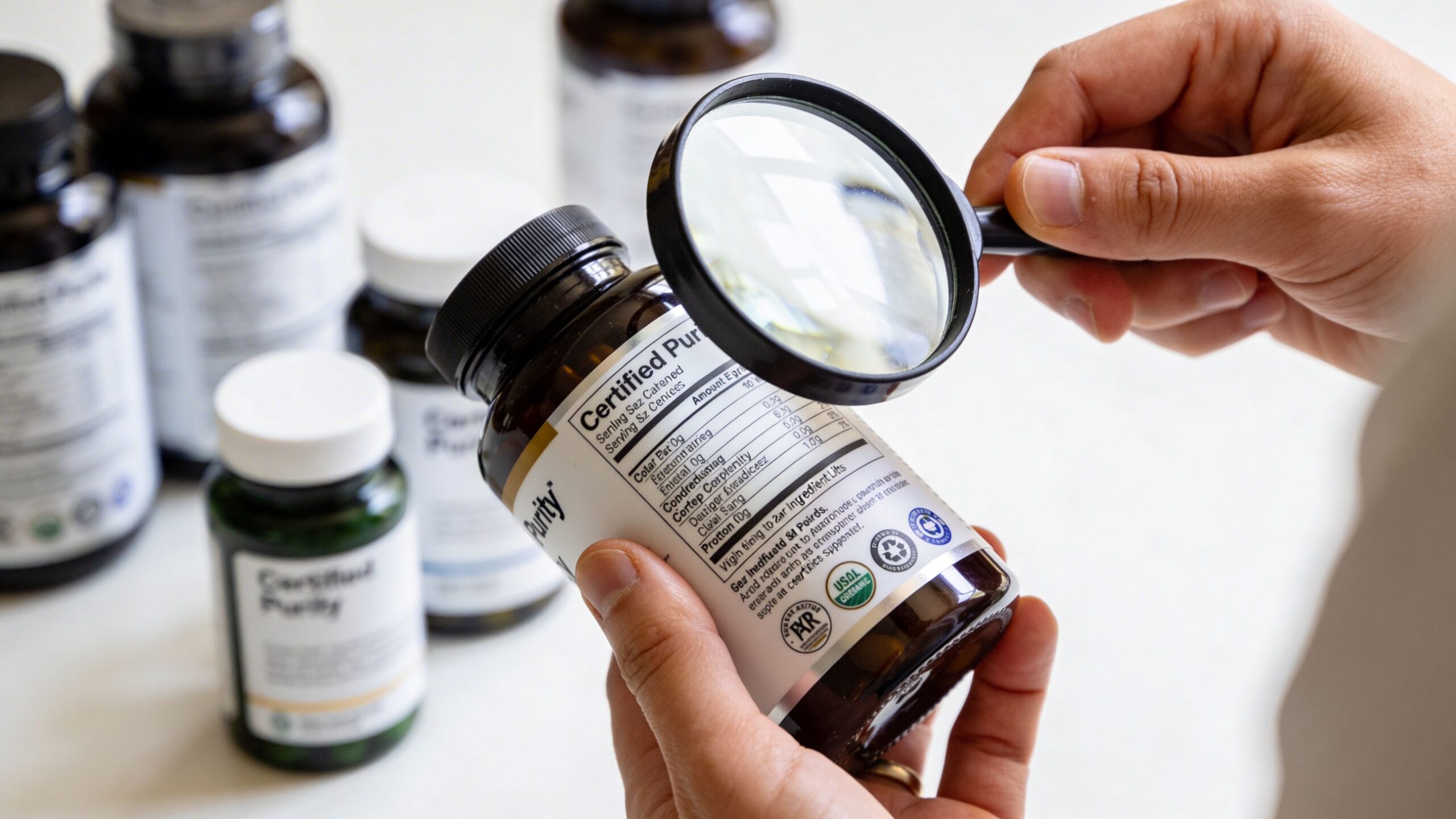
Most mistakes happen at the label, not in the checkout cart. People buy based on the front of the bottle, when the full picture is on the back.
What to look for first
A good liver support product should pass a short checklist.
- Standardized ingredients: If you’re buying milk thistle, look for a standardized extract rather than vague “seed powder.”
- Full dose disclosure: Avoid blends that hide individual ingredient amounts.
- Manufacturing quality: GMP language can be useful, though it’s not a guarantee of excellence.
- Testing transparency: Third-party testing is a plus, especially when clearly disclosed.
- Rational formula design: Fewer, better ingredients usually beat longer labels.
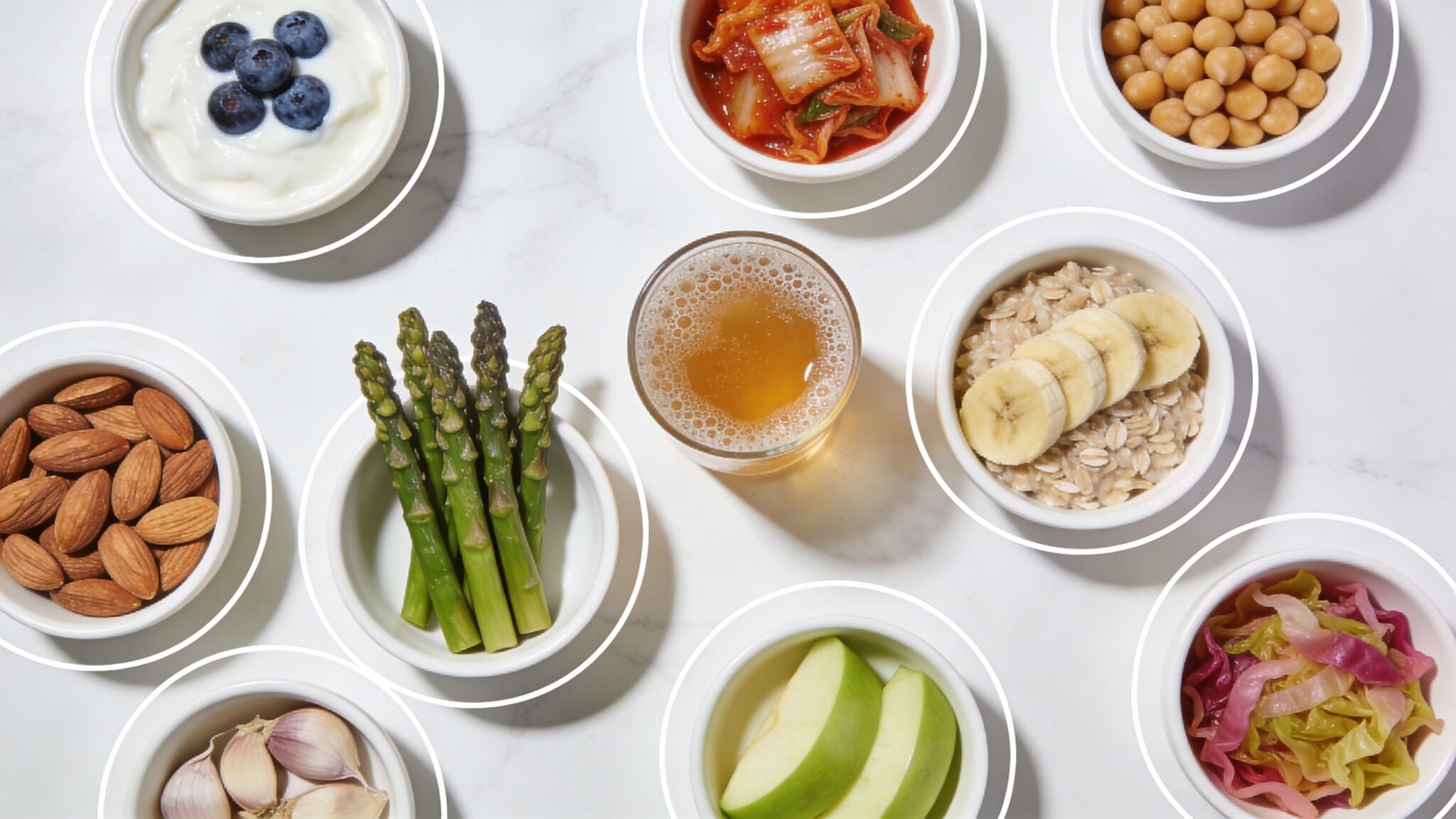
One of the simplest ways to support the liver is to support the gut and metabolism alongside it. That includes real food patterns, not just supplements. This visual on top foods for gut health is a good reminder that label quality and daily diet belong in the same conversation.
Red flags I take seriously
Some warning signs should stop you immediately.
- Disease language: “Treats cirrhosis,” “reverses liver damage,” or similar claims
- Fast-acting promises: “Flushes toxins overnight” is not credible
- Overcrowded blends: too many herbs with no dosage clarity
- Mystery branding: weak company information, poor label photos, unclear sourcing
If a product spends more space promising a cleanse than explaining the ingredient form, I move on.
A quick explainer can help if you want a basic framework for sorting good products from bad ones.
My simple buying rule
If you’re unsure, choose the product with the simpler formula, clearer dosing, and fewer claims. That rule eliminates a lot of weak supplements fast.
Safety Side Effects and Important Interactions
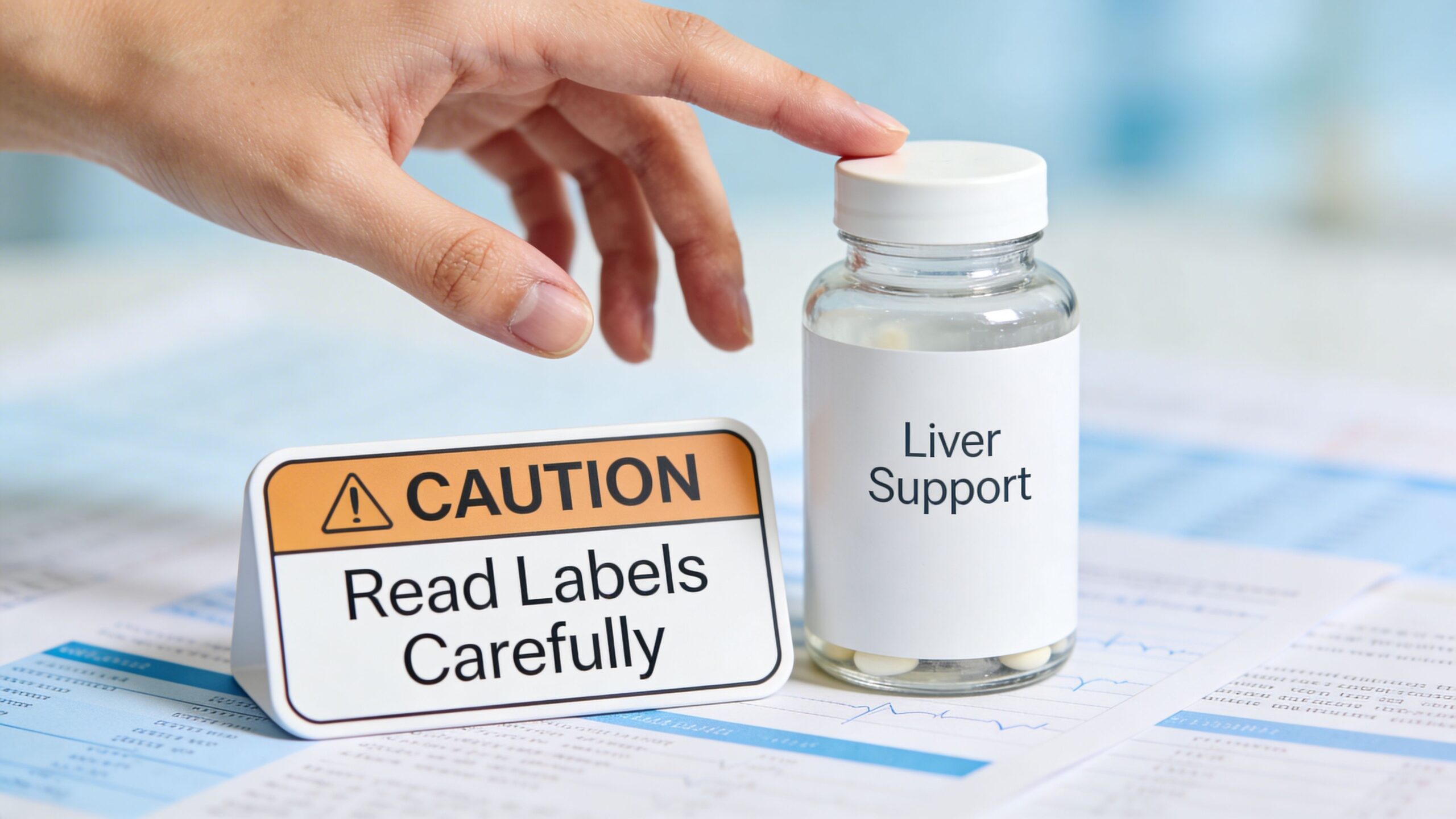
Natural doesn’t guarantee safe. That’s one of the biggest blind spots in this category.
A JAMA Network Open report on supplement-related liver risk noted that herbals and dietary supplements are a growing cause of drug-induced liver injury. The Acute Liver Failure Study Group reported that HDS-related acute liver failure rose from 12.4% to 21.1% in under a decade. That matters because many shoppers assume liver supplements are automatically gentle, even when they contain concentrated botanicals such as turmeric.
Who should be cautious
Use extra care, and ideally medical guidance, if you:
- Take prescription medications: especially blood thinners, diabetes medications, or multiple daily drugs
- Have known liver disease: “support” formulas can still cause problems
- Are pregnant or breastfeeding: I don’t recommend routine liver supplement use here without direct clinician oversight
- Have a history of reacting to herbs or supplements
Common issues I see
Some products cause simple tolerance problems. Nausea, digestive upset, reflux, or loose stool aren’t rare. Multi-ingredient blends are usually more problematic because you can’t tell which ingredient is causing the issue.
Turmeric deserves special caution in liver formulas. It’s popular, but popular isn’t the same as risk-free.
Start one product at a time, not a full “detox stack.” If something goes wrong, you need to know what caused it.
If you develop new fatigue, dark urine, abdominal pain, itching, or yellowing of the eyes or skin, stop the supplement and seek medical care promptly.
The Winner and Our Final Recommendation
The winner in this roundup is Jarrow Formulas Milk Thistle.
It gets the nod because it matches the most defensible approach to this category. The formula is simple. The main ingredient has the strongest evidence among common Amazon liver support options. It avoids the usual “detox blend” trap, where a long ingredient list creates more excitement than clarity.
If you want the best liver detox supplement, I’d choose a standardized milk thistle product over a flashy cleanse formula almost every time. For readers who prefer a non-herbal route, NOW Foods NAC is my runner-up.
My final advice is simple. Buy the product with the clearest label, the fewest exaggerated claims, and the most sensible ingredient profile. Then pair it with the habits that protect the liver.
Frequently Asked Questions
Can I take a liver support supplement every day
Sometimes, yes, but not automatically. Daily use makes more sense for simpler formulas with transparent dosing than for aggressive multi-ingredient blends. If you take medications, have liver disease, or want to use a product long term, check with your clinician first.
What works better than supplements for liver health
The basics work better. Alcohol moderation, weight management when appropriate, regular exercise, better blood sugar control, and a less processed diet do more for the liver than any cleanse product.
How long does it take to notice anything
That depends on what you mean by “results.” Some people notice only practical things like easier digestion or no noticeable change at all. Meaningful changes in labs or liver status aren’t something you should expect to feel quickly, and supplements aren’t a substitute for medical monitoring.
Is milk thistle better than a full detox blend
Usually, I’d say yes. Not because milk thistle is magical, but because it’s easier to evaluate and usually safer to troubleshoot. A clean, standardized single-ingredient formula often beats a crowded blend with vague dosing.
Should I choose NAC or milk thistle
Choose milk thistle if you want the most established herbal option. Choose NAC if you want a more targeted antioxidant and glutathione-support approach. If you’re unsure, milk thistle is usually the simpler place to start.
If you want more evidence-based supplement reviews, digestive wellness guides, and practical nutrition advice, visit Healthy Gut Review. It’s a useful resource for comparing products, understanding labels, and building a smarter gut and liver support routine.